Now Is Not the Time to Increase Your Burn Rate
I can’t think of a time in my career when capital has flowed this actively yet so little of it has seemingly gone towards extending runway.
Lately, it seems like not a day goes by without an announcement of a gigantic round of funding or another unprecedented acquisition. In fact, these announcements have become so frequent that it can feel like capital is virtually unlimited.
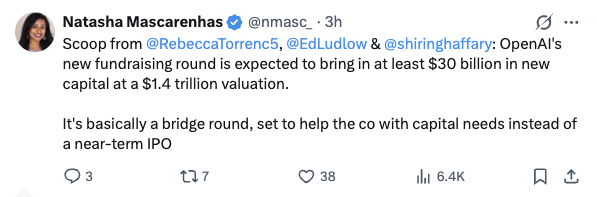
But it’s a dangerous time for many founders.
When it seems like investor capital is virtually unlimited is exactly when we make decisions that we wouldn’t otherwise make (especially if we knew that there was no more capital available). And right now a lot of founders are making such decisions, only to find out that the well has run dry.
Last week, I wrote about the bifurcation in VC behavior happening at Series A. That shift followed similar bifurcations at the Seed stage earlier in the year and at Pre-Seed in 2025. In all three cases, the behavior that investors converged on was the same: a small number of hot, fast-growing companies now draw the vast majority of investor interest, while other startups (including many that would have been seen as compelling only a few years ago) struggle to raise.
What hasn’t been written about is the impact this behavior is having on extensions and bridge rounds. And it’s not good.
Historically, most VCs who lead early-stage rounds allocate an additional amount of capital as part of their fund thesis to “bridge” a subset of their portfolio companies. These are companies that, for whatever reason, weren’t able to hit the milestones necessary to raise their next round of funding but made enough progress that their existing VCs still have confidence in them (and believe that with additional capital, they will be able to hit those milestones).
Anecdotally, it seems like fewer of those rounds are happening right now. In an era when fast-growing companies are becoming the norm, many Pre-Seed and Seed VCs seem less willing to bridge companies that aren’t hitting their milestones. In fact, many seem far more likely to cut their losses early and redirect capital they had previously earmarked for bridge rounds to other companies in their portfolio or net new investments.

The rate at which VCs invest in bridge rounds naturally ebbs and flows, but I can’t think of a time in my career when capital has flowed this actively yet so little of it has seemingly gone towards extending runway. What makes it even more dangerous for founders is how easy it is to misread the reality of our current situation.
Over the past few months, I’ve been aware of an unusually large number of startups who “misread the situation” in a very particular way:
Each one sharply increased their burn rates in order to “go faster”
They indeed accelerated, but didn’t have enough runway to hit the milestones that their investors identified as necessary to raise the next round of capital
The founders were surprised to find that those same investors were unwilling to commit more capital to extend their runway
In fact, I know of three companies this week that were told by their lead VCs that no more funding was forthcoming after the founders dramatically increased their burn rate and ran out of runway.
While it might seem easy to dismiss these as the actions of naive or egotistical founders (or, conversely, blame the VCs for encouraging them to go faster), the reality is far more subtle. In each case, the founders looked at what has been going on in the market and — regardless of what their investors told them — reached the conclusion that there would be more capital available so long as their velocity increased sufficiently.
That’s not an irrational read of the market at a macro level. But it is definitely a misread of the founder-investor dynamics at a micro level.
When the market collapsed at the end of ZIRP in 2022, I wrote a post encouraging founders to check with their VCs if they still loved them (i.e. would their investors be willing to invest more capital into the company if they didn’t hit their milestones?). I started that post by writing:
“When times are good and term sheets are flowing, founders don’t think a lot about whether or not their investors will follow-on in the future. But in times like these, when the pace of deals is slowing, it’s essential that founders know where they stand with their investors. And most don’t have a clue.”
The current venture capital market is unprecedented in that it can seem like there is infinite capital available for startups, when the reality is far closer to a slow-moving bear market than a fast-moving bull market for the majority of them.
To be clear: it is unequivocally a CEO’s prerogative to increase, decrease or adjust their spend as they see fit (investors are, generally speaking, not your boss). However, if your VCs tell you that if you don’t hit a particular milestone, it’s going to be a challenge to raise additional funding, you should assume that perspective applies to bridge funding too.
So be warned. Now is not the time to unilaterally increase your burn rate. Check in with your investors to see how they feel about any unplanned spend or change in strategy. Most investors will be upfront about the conditions under which they will / will not invest additional capital. You just need to ask them.
And believe them when they tell you.
What’s Going On with Series A?
What’s happening in Series A right now is the natural evolution of the AI-driven shift that started at Pre-Seed in early 2025 and flowed through the Seed stage beginning in Q4.
Venture capital is an industry in which certain changes take time to propagate. From the outside, it can seem as though VCs are a single, fast-moving herd, collectively spinning on a dime the moment they sense a change in the air. But in reality, it’s more like a high school cafeteria: the 9th graders are all in one corner, the 10th graders in another, and so on. Each group has their set of beliefs about what is “cool” at the moment. And while they’ll occasionally co-mingle and take cues from one another, for the most part they stick to themselves.
Unlike in high school, where younger students frequently take cues from the upperclassmen (but never the other way around), changes in venture capital can flow in either direction. Sometimes a shift will flow “upstream”, from later stages to early stages. For example, something might happen to IPOs that first impacts growth stage investors, which in turn has an effect on Series B VCs, and eventually flows all the way “up” to the early-stages. Other times, we see changes flow “downstream”: a shift in behavior at Pre-Seed might impact the Seed stage a year, then Series A a few quarters after that, and so on.
It’s like dominos falling in slow motion.
And right now we’re witnessing the Series A domino slowly start to fall on a downstream shift that started at Pre-Seed early last year.

Back in June 2025, I wrote about changes that were happening in Pre-Seed fundraising as the result of an emerging bifurcation of venture capital. I wrote at the time:
“…what we’re witnessing today in the early-stage market is both a realignment of the investment strategies of many early-stage VCs and a fundamental shift in how the best founders raise capital.
…fewer rounds are happening, but those that do are oversubscribed, resulting in higher valuations.”
Nine months later, I published a similar post titled, What’s Going On with Seed Rounds? Seed VCs typically make investment decisions by evaluating a company’s early traction against its stated market hypothesis. But at the start of this year, many Seed VCs were struggling to figure out what to do:
“AI is changing so many things at such a high velocity that many Seed VCs are struggling with how to evaluate startups when they no longer have conviction that the market hypothesis will hold over their 7-10 year investment horizon.
“[As a result,] capital is concentrating at the Seed stage…fewer deals are happening with larger average deal sizes [as] Seed VCs increasingly acting like Pre-Seed VCs when it comes to their investment decisions.”
As if to put an exclamation mark on that point, valuations for the top 5% of Seed rounds went stratospheric in Q4 of 2025 and the first two quarters of 2026 (though we saw a slight downshift in late-May as summer came early to Startupland™). Six months after my post on Seed rounds, we’re now starting to see the impact of last year’s bifurcation of venture capital hit the Series A market.
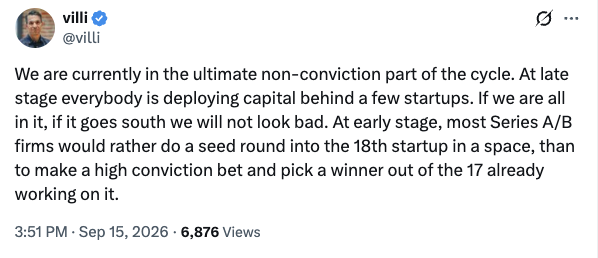
What’s happening in Series A right now is the natural progression of the downstream AI-driven shift that started at Pre-Seed in early 2025 and flowed through the Seed stage beginning in Q4.
Series A VCs have now encountered enough startups graduating from Seed to Series A on AI-driven “super-trajectories” that they’re being forced to re-evaluate their investment theses. Do they exclusively chase these extreme outliers, regardless of valuation? Do they maintain their price discipline, even if it means missing out on generational companies? Or do they take a different approach?
Chris McCann of Race Capital recently posited that, “Series A is not just harder, it has become discontinuous.” He wrote:
“Five years ago, $1M in ARR often gave a software company a credible path toward a Series A. Then the bar moved to $2M. Then $3M, $5M, and $7M. Today I see companies at a $10M run rate, with real customers and multi-year contracts, and it still is not enough.
…Downstream investors have changed their first question. It used to be: Is this a strong company at the right price? Now it is: Could this company become an extreme outlier? If yes, Series A investors will underwrite a startup with almost no revenue and fight to get into the round. If not, cutting the price often does not create demand. A genuinely good company can end up with very few, if any, viable institutional bids.
…Capital hasn't disappeared, but it’s concentrating around a smaller set of perceived breakouts. Series A used to behave more like a curve, where strong companies could find a price, now it is becoming binary.”
Chris’ last point is an important one. What’s happening at Series A right now is not a repeat of the Series A freeze of 2023, when virtually all Series A activity stopped post-ZIRP. Rather, Series A VCs are actively fighting to invest in a small number of companies they perceive to be extreme outliers while drastically slowing all other activity as they re-evaluate their long-term approach to investing (much like what happened at the Seed stage earlier in the year).
Some of this behavior, as Chris alluded to, is being influenced by what Series A VCs are encountering downstream from them. Rick Zullo of Equal Ventures shared the following anecdote a few weeks ago:
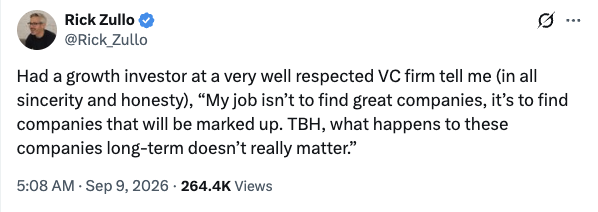
That may seem like a shocking statement to make, given that VCs generally don’t make money unless an exit occurs (management fees notwithstanding). But at this moment in time most VCs are far more concerned about whether or not they will be able to raise their next fund than they are long-term financial results. So many of them are unapologetically chasing logos (much like early-stage startups do before fundraising 😉).
Venky Ganesan of Menlo Partners described this behavior in more detail in an exceptional post on the current state of venture capital that I strongly encourage you to read. Venky observed that, “…right now is the most disorienting period in venture capital I can remember, and I have been doing this for a while.” He went on to share that,
“As far as I can tell, there are two groups on the dance floor.
The first group got in early. Firms like ours were in some of these AI companies before the numbers got silly, and the paper gains are enormous. When you are sitting on gains like that, you start to feel like you're playing with house money. I have been around long enough to know that house money is the most dangerous kind, because you don't respect it the way you respect money you had to earn.
The second group missed the early rounds and knows it. Their LPs know it too. So they are trying to make up for lost time by writing very large checks very late, which is the one strategy almost guaranteed to turn a missed opportunity into a real loss.
House money on one side, FOMO on the other, and reflexivity feeding both. That's the whole story. Everyone has a reason to keep dancing, and the reasons are different, which is why nobody can talk anyone else off the floor.”
So what does all of this mean for founders trying to raise a Series A?
For starters, unless you are showing clear signs of being an extreme outlier or are well north of $5M ARR, I would encourage you to plan as though you won’t be able to raise a Series A (at least, not for a few quarters). While a small number of Series A VCs have already adjusted their investment theses to lean into companies with “traditional” Series A traction, the vast majority are currently focused on hunting extreme outliers. By all means go out and test the waters (I always believe you should do that regardless of the what anyone tells you), but now is definitely not the time to spend 3 - 6 months fundraising.
Instead, figure out what the plan is if there isn’t Series A funding around the corner. Start off by having “the talk” with your existing investors and figuring out if they are willing and able to provide additional funding. Research alternative sources of funding that might exist. And, of course, figure out a clear path to profitability.
I suspect that in 12 to 18 months we’ll begin to see more options at Series A for great companies that aren’t AI-driven super-outliers, but right now the cold, hard truth is that a lot of great companies are learning the hard way that there isn’t a market for them at Series A (at any price).
What Do VCs Talk About When Nobody’s Listening?
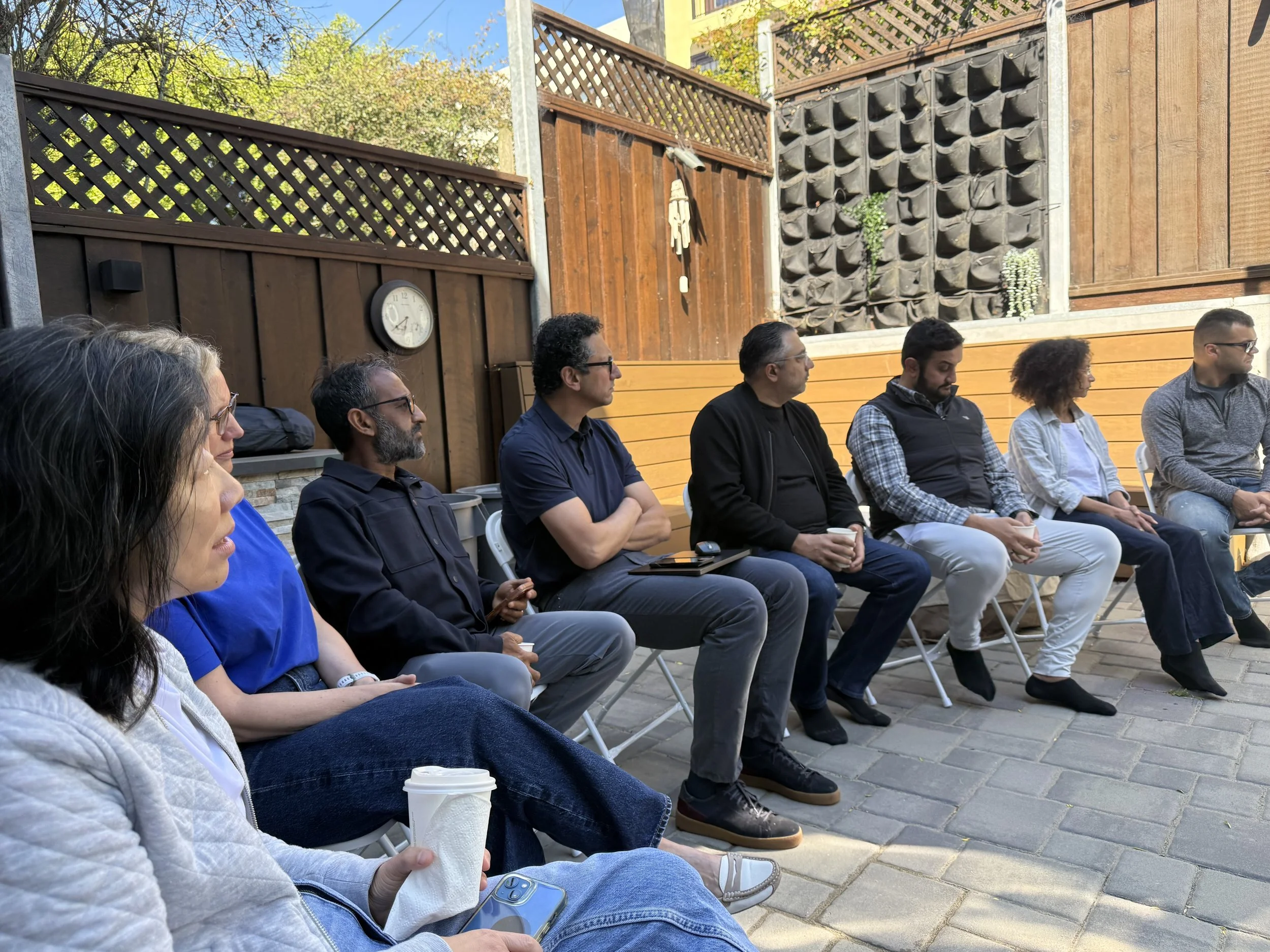
Last week, I hosted an emerging manager summit in San Francisco with VCs from across North America. Guess what we talked about?
Last week, I hosted an emerging manager summit in San Francisco with more than two dozen early-stage VCs from across North America. GPs from Austin, Toronto, Seattle, Vancouver, Montreal, Missouri, Los Angeles, Halifax and more joined San Francisco and Silicon Valley colleagues for a day of sessions on the changing startup and VC landscapes.
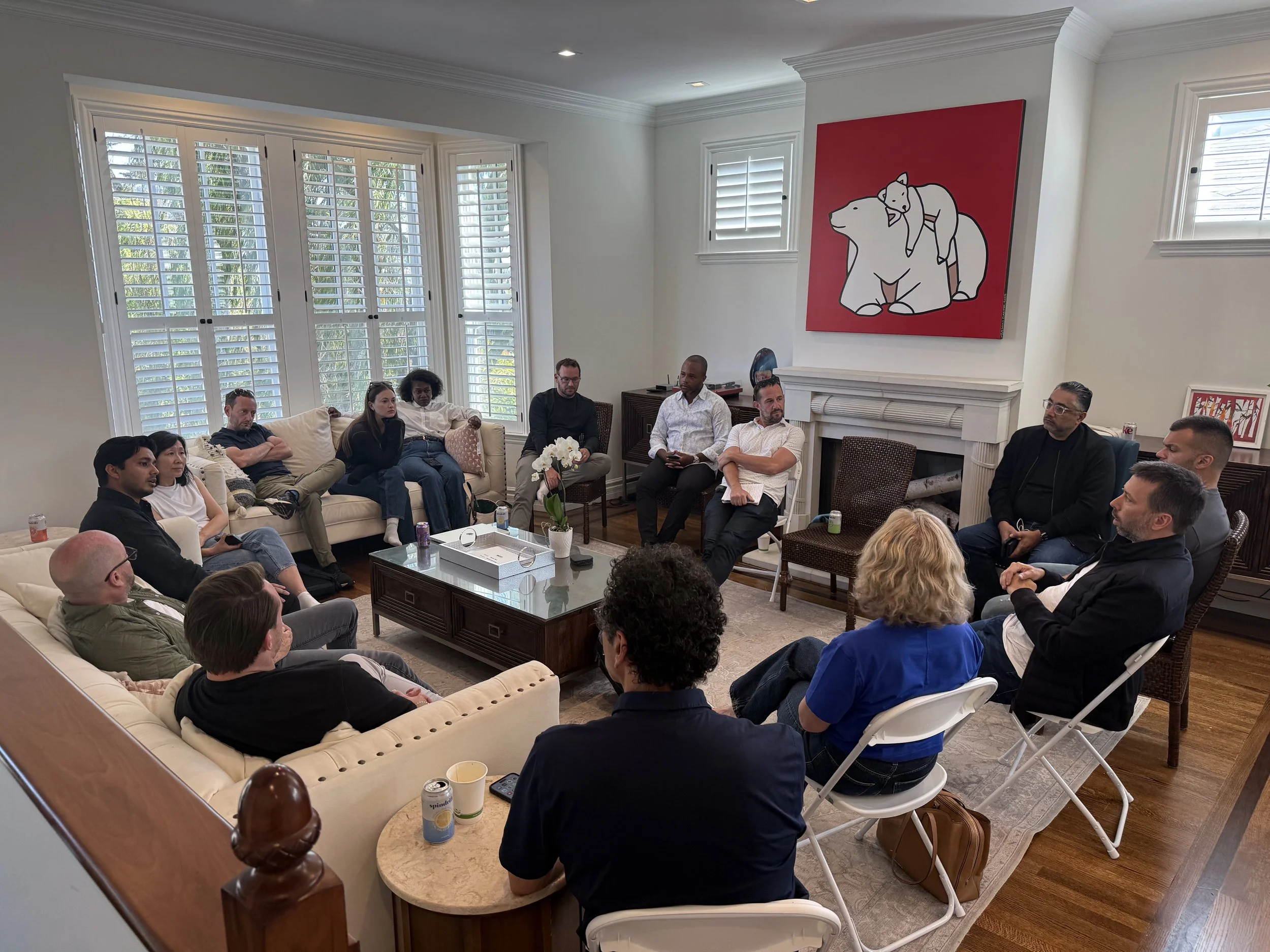
So what exactly do VCs talk about when no one is listening?
Here are 5 topics that were top-of-mind for the VCs at our emerging manager summit:
1. Liquidity
Everyone at the summit was accutely aware of the upcoming end to the SpaceX investor lockup period. The debate amongst the group was how much of an impact would that newfound liquidity have on LPs? Would emerging managers start to see more appetite to invest from family offices and institutional investors who had been waiting on DPI, or would it take another major IPO from the likes of Anthropic or OpenAI for things to shift?
2. Valuations
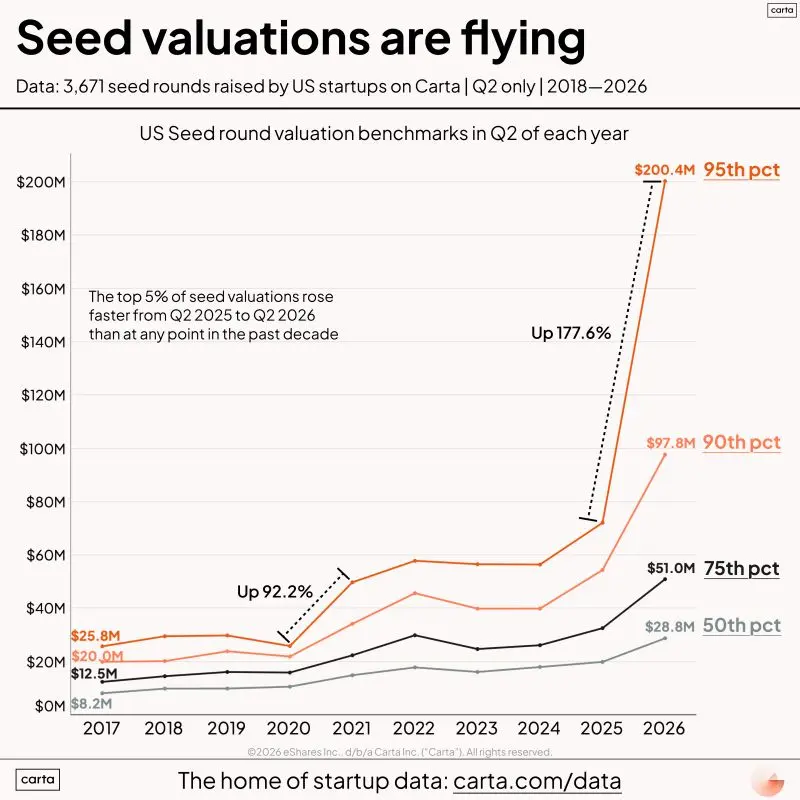
Like most residents of Startupland™, our group of VCs was eager to discuss the trend of skyrocketing Seed valuations and its potential impacts. With YC’s most recent crop of companies reportedly commanding valuations north of $40M and the most recent Carta data showing the top 5% of Seed valuations surpassing $200M, there was plenty to talk about.
3. Ownership Targets
I’ve previously written about why VCs care a lot about ownership when investing in startups. Skyrocketing valuations are challenging a number of long-held assumptions when it comes to VC fund models.
Most emerging Pre-Seed and Seed funds target 3 - 5% ownership. But rising valuations have made those ownership targets increasingly out of reach — especially for hot companies. Should smaller funds forgo ownership targets and strive to be in the best deals no matter the price? Should they remain disciplined in their approach to investing (even if that means passing on hot companies)? Or perhaps a combination of the two?

Towards the end of the day, our group of GPs was joined by the cofounder of one of Silicon Valley’s largest megafunds, who pulled back the curtain on how multi-billion dollar funds think about price and ownership. That led to an incredible back-and-forth amongst our GPs on the future of early-stage investing and the opportunities for smaller funds.
4. The Changing Age of Founders
Another hot topic at our emerging manager summit was the changing demographics of founders — specifically, age.
For more than a decade, many VCs have held a noticeable bias towards founders in their 30s, as reports repeatedly showed the average age of “successful founders” hovering around the mid- to late-30s. But the rise of AI has turned that on its head. Over the past few years, the average age of VC-backed founders has plummeted. Today, many investors are once again exhibiting a strong preference towards younger founding teams, betting that their AI-native sensibilities will trump any lack of experience.

Several of the GPs in attendance — including our guest megafund manager — shared recent data from their portfolios to quantify the trend. That led to a robust discussion that included the rise of residencies and hacker houses, the pros and cons of degen behavior, and how to evaluate founder velocity vs. experience.
5. The Opportunities in AI
Of course, we couldn’t possibly have had a gathering of tech investors without spending a considerable amount of time talking about tech. More than half of the participating VCs came from technical backgrounds. Not only does that fact have a significant impact on their propensity to invest in napkins, but it enabled us to have deep, thoughtful conversations on the state of AI and its potential future trajectories.
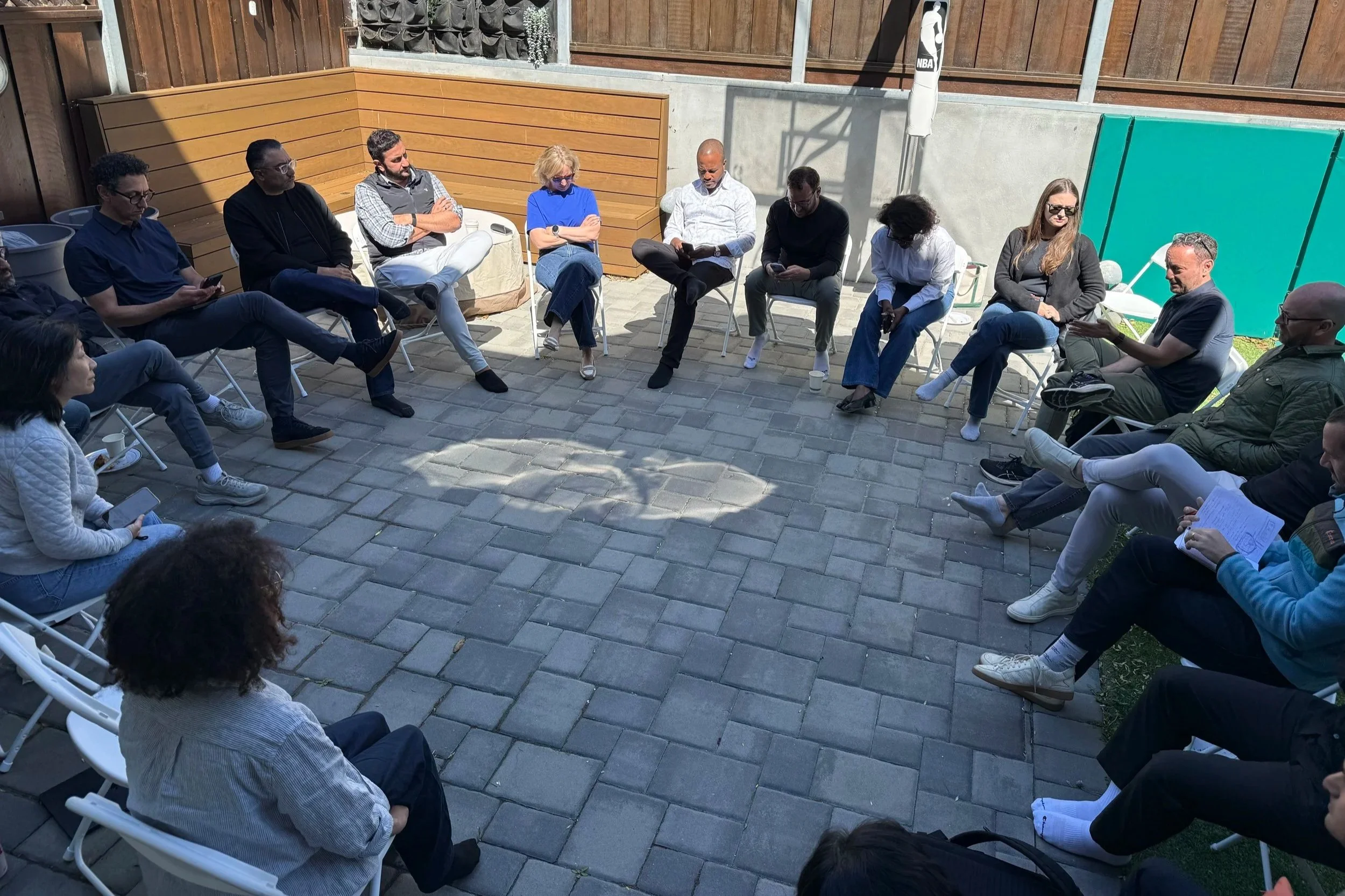
Open vs. closed weights, on-prem vs. cloud, the merits of forward-deployed engineers and thoughts on what will happen when the true cost of AI compute gets passed on to end customers were just a few of the topics we touched on during our technical sessions.
What’s Going On With Accelerators?
With more accelerators and fellowships than ever, it might seem like there’s an overabundance of options for founders to choose from. What we’re seeing is actually a clustering around two very specific approaches to hands-on investing.
I’ve written a lot lately about the ongoing bifurcation of venture capital and its implications for fundraising (both in my quarterly updates and in dedicated posts, like this one on early-stage investing).
One prediction I made last year was that we would start to see more early-stage investors lean in to the “hands-on” styles of investing that were more common in years past. As megafunds ramped up their early-stage activity, many Seed VCs would be crowded out. They would in turn head upstream to the “safety” of Pre-Seed. The increased competition at Pre-Seed would force investors to find new ways to differentiate themselves in the eyes of both founders and LPs.
And that would lead to more accelerators,
“…we’re seeing a resurgence of both small, dedicated accelerators and offerings from Seed-specialist VCs…it feels like the pendulum is swinging solidly back from the “hands-off” investing style of the ZIRP era to the more “hands-on” style of years past. At a time when AI is making it cheaper than ever to get a company off the ground, I think we’re going to quickly see a new level of competition amongst credible accelerators (and between accelerators and pre-seed VCs).”
Sure enough, the accelerator landscape has gotten a lot more crowded since I wrote that post.

Since the beginning of the year, megafund a16z significantly ramped up their speedrun team (I might have done reference calls for some people they were looking to hire 👀). They followed that up by launching a new fellowship program called “alpha” a few weeks ago.
Speaking of alpha, the big dog of accelerators, YC, didn’t sit long with its earlier assertion that, “…the total number of startups going through the program each year will hold steady at about 500…” The recently completed W26 batch had nearly 200 companies (i.e. they’re currently on pace to invest in 800 startups in 2026).
And that’s just the start. Here is some of the other activity that took place across the accelerator landscape during the first quarter of 2026:
London-founded fellowship program Entrepreneurs First completed its move to San Francisco and unveiled a fresh $200M fund
Accelerator upstart Neo announced a new Residency program for college students
Montreal-based AI research institute Mila launched a new venture-building program for AI research scientists as part of a $100M “venture scientist fund” announced earlier in the year
South Park Commons shared its plans to raise a new $500M fund for its self-proclaimed “anti-accelerator”
Taken together, it might seem like there’s now an overabundance of programs for founders to choose from. But if you look closer, what we’re seeing is actually a clustering around two very specific approaches to hands-on investing:
Accelerators as the New MBA
Fellowships as the New Montessori
Let’s dig deeper into each of these trends.
Accelerators as the New MBA
In the early days of accelerators, programs like YC, Techstars and 500 Startups didn’t have nearly the prestige of today’s industry leaders. In fact, it was quite the opposite. Amongst many founders and investors in the startup world, accelerators were seen as something of a crutch. They were the thing you went to if you couldn’t figure it out on your own.
Fast-forward 20 years and the perception is very different. Not only are accelerators broadly accepted as a reasonable path for first-time founders to take, but having simply attended a top accelerator is seen by many as a mark of credibility and prestige. Sound familiar?
“You got into Harvard…you must be smart!”
“You got into YC…you must be smart!”
Last year, David Crow wrote about the increasing similarities between top accelerators and universities. He noted that,
“In the past, ambitious graduates invested in themselves by going to grad school. They spent $100,000 on an MBA, law degree, or medical program as their path to impact.
Today, ambitious people might choose YC or Speedrun instead…
YC and Speedrun are not just accelerators; they’re the new professional schools of venture.”
I’ll take it a step further: not only are ambitious individuals increasingly looking at top accelerators as a credible path to advance their careers, accelerators are increasingly selecting founders in ways that look a lot like how elite MBAs choose students.
And I’m not the only one.
I recently caught up with a friend who spent many years as a VC at one of Silicon Valley’s top-tier funds (he also happens to have an MBA from a prominent business school). In discussing the evolution of the early-stage landscape, he suggested that top accelerators have very intentionally moved towards a model for selecting founders that mirrors how top MBA programs select students:
“At this point, [top accelerators] know the “shape” of founders that Tier 1 VCs like to invest in. The schools they went to, the companies on their resume, the traction points that matter. The things that get an IC* comfortable investing in a company that maybe hasn’t done anything yet.
It’s the same way MBA programs cater to top employers. What undergrad did the student go to? Where did they intern? What test scores do they need if they came from a lesser-known school? They’re trying to maximize the chances that an incoming student will land a job with a name brand employer, regardless of what they actually do during business school.”
* investment committee
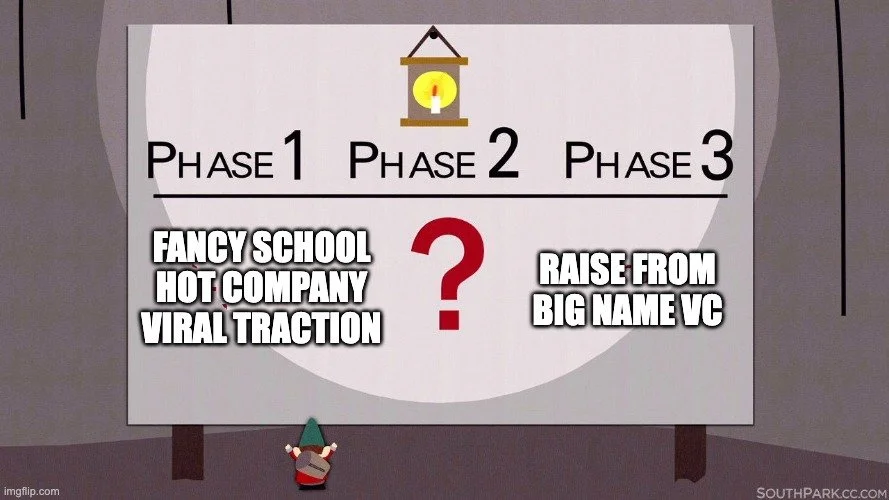
If you read my recent post on Hunters vs. Farmers, you might be getting a sense of deja vu. That’s because what we’re talking about here is the approach that “hunters” typically take, but within the context of a segment of venture that we historically think of as “farmers”:
“Early-stage hunters focus on pedigree and traction as their primary signals. Things like:
Graduating from a top school or program (Stanford, MIT, Waterloo, IIT Bombay, Thiel Fellowship, etc.)
Early employees that left “hot” companies
Repeat founders
Hot sectors
Virality / significant early traction
They’re generally betting on the correlation between pedigree and outcome (or, at least, pedigree and quick markups).”
This is exactly what elite MBA programs do. They bet on the correlation between pedigree and outcome, where outcome is “gets hired by a top-tier employer”. Today’s top accelerators are increasingly converging on a similar model. And you can see it in their marketing,
“Want to maximize your chances of landing a job with [top employer]? Apply to Harvard!”
“Want to maximize your chances of raising a round from [top VC]? Apply to YC!”
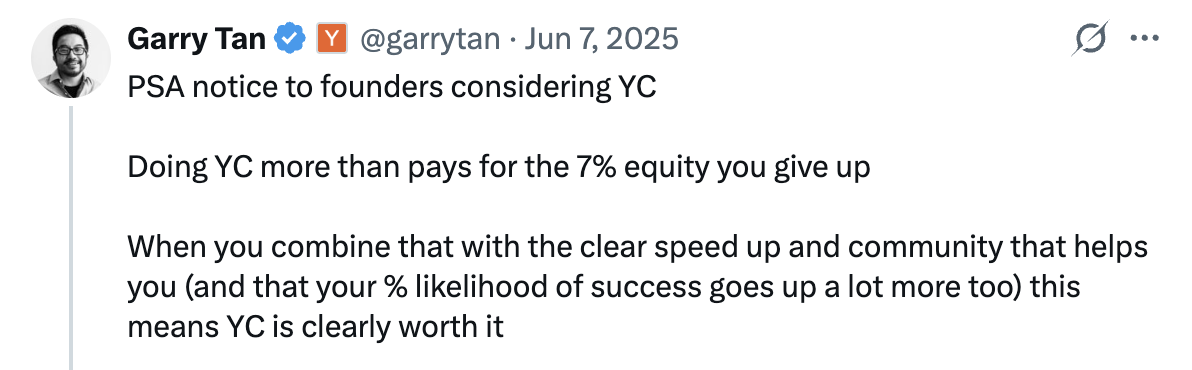
This certainly isn’t a bad approach — for either the accelerators or the founders.
That said, it’s worth noting that what’s happening at the top of the accelerator pyramid right now is very much influenced by a considerable imbalance in supply and demand. More and more qualified founders are looking for the “cheat codes” that come with the brand recognition and alumni networks of top accelerators. Yet there are very few programs that credibly deliver consistent outcomes along these dimensions (particularly in the aftermath of 500 Startups and Techstars both effectively failing). With so many qualified startups and so few spaces available in each program, founder pedigree naturally becomes a more prominent factor in selection.
Which means that a significant number of ambitious founders — especially founders outside of California and those from schools, companies and backgrounds that don’t neatly fit the typical Silicon Valley mold — are struggling to gain acceptance into these elite programs.
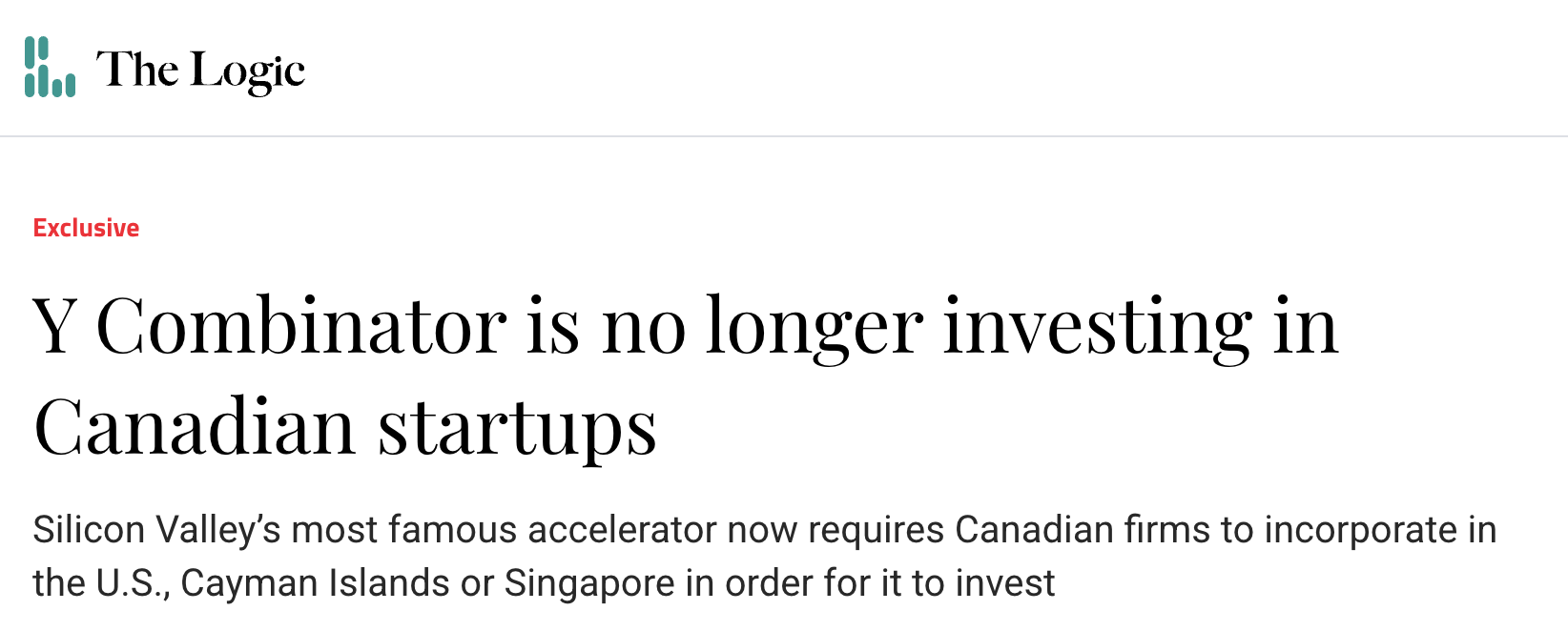
When the supply-demand curve is so imbalanced that an entire country doesn’t make the cut
So why aren’t we seeing more “elite MBA programs” emerge if the supply-demand curve is so imbalanced?
Despite the incredible demand for top tier Silicon Valley-based accelerators, only two platforms founded in the past decade have found success: Neo starting in 2017 and speedrun (from a16z) in 2023.
It turns out that creating a full-fledged accelerator platform from scratch is hard. It takes a lot of resources, investors who are experienced evaluating startups with virtually no traction, and an incredible number of high-quality, properly incentivized mentors. Creating a high-quality accelerator is, in fact, really, really hard.
But it is doable. Not only that, with so much latent opportunity — especially when it comes to startups outside of California — more elite Silicon Valley-based platforms are undoubtedly going to emerge. It’s just a question of when.
In the meantime, the majority of early-stage investors that have started rolling up their sleeves are taking a different approach. One that focuses almost entirely on the potential of individual founders while forgoing much of the complexity of a full-blown accelerator…
Fellowships as the New Montessori
If accelerators like YC and speedrun are the new MBA, then fellowship programs like South Park Commons, HF0 and Entepreneurs First are the new Montessori school.
If you’re unfamiliar with the term “Montessori”, it is an approach to early childhood education that focuses on encouraging children’s natural interests rather than providing formal, structured education. Montessori programs are designed around student-directed work, with a particular emphasis on uninterrupted work periods. The approach is based on the idea that children are naturally eager for knowledge and the primary role of teachers is to guide and mentor them.
At a high level, Montessori schools take a group of highly-motivated individuals and place them in a room with a handful of experienced, light-touch mentors in the hope of creating magic.

A Montessori “hacker house”
Which brings us to fellowships.
Fellowship programs invest in aspiring founders based primarily on their experience and pedigrees. These individuals are placed into a cohort and participate in activities designed to guide them towards founding high-potential companies (with a particular emphasis on ideation and cofounder matching). In other words, they take a group of highly-motivated individuals and place them in a room with a handful of experienced, light-touch mentors in the hope of creating magic.
Over the past few years, the number of fellowship programs has exploded. Not only are there an increasing number of standalone platforms (like South Park Commons, HF0 and Entepreneurs First), but many existing VCs have launched fellowship offerings as a means to increase their access to high-potential founders at the earliest stages. Some examples include a16z’s “alpha” fellowship (mentioned above), Conviction Partners’ “Embed” program, and Afore Capital’s “Founder in Residency” program.
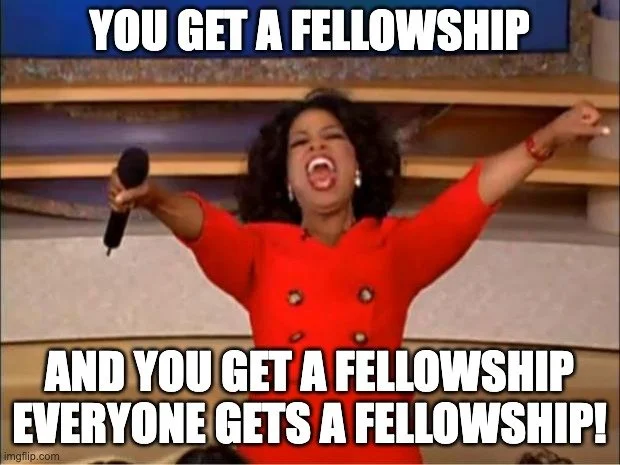
Earlier, I alluded to the fact that fellowship programs forgo much of the complexity of a full-blown accelerator. Let me expand on that point — as it’s key to understanding why so many fellowship programs are emerging.
Both fellowship programs and Montessori schools are rooted in the notion that individual participants are highly-motivated and eager for knowledge. The corollary of that belief is that mentors need not be heavy-handed (either in their depth of programming or the help they provide). Montessori programs don’t so much teach children as they guide them on where to look for their own answers. Similarly, fellowship programs don’t focus on the type of “startup 101” programming that accelerators historically delivered. Instead, they provide frameworks for aspiring founders to search for answers while making introductions and connections to help them progress.
Guess what? That approach means fewer mentors, less time and effort developing programming, and significantly lower costs.
The simplest form of a fellowship offering is a VC partner providing regular mentorship and occasional connections to an aspiring founder. Which is exactly what many VCs have done for years through entrepreneur-in-residence (EIR) programs. From the perspective of traditional VCs, fellowship programs are little more than the cohort-ization (is that a word?) of something they were already doing.
Want to have your mind blown even further? Y Combinator — the world’s foremost accelerator — actually started out more like a fellowship program. Here is how Paul Graham originally described YC (then referred to as the “Summer Founders Program”):
The Summer Founders Program preserves many features of a conventional summer job. You have to move here (Cambridge) for the summer, as with a regular summer job. We give you enough money to live on for a summer, as with a regular summer job. You get to work on real problems, as you would in a good summer job. But instead of working for an existing company, you'll be working for your own; instead showing up at some office building at 9 AM, you can work when and where you like; and instead of salary, the money you get will be seed funding.
…
We'll have some smart people who are willing to talk over your plans with you, and suggest pitfalls and new ideas. We may also have connections to companies you'd like to do deals with. But how much you want to take advantage of our advice and connections is up to you.
We'll organize dinner once a week for all the Summer Founders, so you can meet one another and compare notes. We'll try to get some expert in technology, business, or law to speak at each dinner. But beyond that we'll be hands-off.

The first batch of YC’s “fellowship program”
To be clear, today’s top-tier fellowship programs provide significantly more that just a la carte mentoring and connections. They are full-blown platforms with programming and mentorship strategies that have been developed and iterated over many years. But the low “entry price” of starting a basic fellowship program, combined with the dramatic supply and demand imbalance I alluded to earlier (more and more founders looking for “cheat codes” but relatively few credible accelerators), is driving what I believe to be just the start of a wave of new fellowship offerings.
To recap:
The bifurcation of venture capital is forcing many VCs to invest earlier-and-earlier
Increased competition at the Pre-Seed stage is driving those investors to find new ways to differentiate themselves — which, for many, involves getting more hands-on with founders
Creating a new accelerator is difficult and prohibitively expensive for most VCs (a16z can afford to throw a ton of money at creating a new accelerator, but the funds who are moving upstream specifically because they can’t afford to compete against a16z most certainly cannot)
However, “systematizing” mentorship and/or scaling an existing EIR program is much more approachable for most VCs (and easy to justify from an ROI standpoint)
Bottom line: expect to see more and more fellowship programs emerge in the coming months (particularly from mid-sized Seed funds that are trying to figure out how to effectively compete at Pre-Seed).
On Terms and Terminology
Before I wrap things up, I want to share two final thoughts on terms and terminology:
On Terms
Many accelerators and fellowships are increasingly trumpeting large numbers when it comes to their investment amount. It’s not uncommon to see programs seemingly offering $1M of investment to startups.
But don’t believe everything you read.
The vast majority of accelerators and fellowships make either milestone-based or follow-on based investments. That means that (a) you might not receive the full amount, and (b) if you do, you may end up giving away a much higher portion of your company than you realized.
Consider the following examples:
Y Combinator
Top-line number: $500K
Actual initial investment: $125K for 7%
Follow-on investment: $375K (MFN)
a16z Speedrun
Top-line number: $1M
Actual initial investment: $500K for 10%
Follow-on investment: $500K (contingent on follow-on funding)
Entrepreneurs First (US)
Top-line number: $250K
Actual initial investment: $125K for 8%
Follow-on investment: $125K (MFN)
South Park Commons
Top-line number: $1M
Actual initial investment: $400K for 7%
Follow-on investment: $600K (contingent on follow-on funding)
Strictly speaking, there’s nothing wrong with this approach (in fact, it very much represents a standardization of the traditional venture capital strategy of “investing early and doubling down on winners”). But as a founder, it’s important that you read the fine print (here is a somewhat dated post on accelerator terms that I wrote a few years ago).
On Terminology
I’m not going dive into the etymology of (or debate over) terms related to accelerators / incubators / startup schools / etc., but I do think it’s important to share one point as it relates to fellowships (as they’re relatively new on the startup landscape and the language is still in flux):
The term “residency” is often used interchangeably with “fellowship” (e.g. Neo refers to its fellowship program as “Neo Residency”). However, it is also increasingly being used to differentiate between full-blown fellowship programs and lighter-touch coworking offerings that standalone fellowship programs are using to attract potential candidates (e.g. the Entrepreneurs First Residency and the South Park Commons Residency).
If you are considering a fellowship program, be sure to pay attention to the terminology and make sure you understand exactly what you’re applying to (lest you mistake one for the other).

What’s Going on with Seed Rounds?
Another major shift is underway and, this time, it’s throwing off founders, angel investors, and Pre-Seed VCs alike.
As we near the end of the first quarter of 2026, yet another major shift is underway in the funding / fundraising landscape. And this time, it’s throwing off founders, angel investors, and Pre-Seed VCs alike:
Seed VCs are increasingly not acting like Seed VCs.

“Let’s see who this “early-stage VC” really is!”
Rather than dive into a full history of early-stage investing, I’ll anchor this post with the following loose — but by no means dogmatic — definitions of early-stage VCs (at least, as we’ve come to define them over the past decade or so):
Pre-Seed: The first institutional round of capital. Often comes before any revenue or pilots. The investment decision is primarily based on an evaluation of the team, their initial idea, and its market potential.
Seed: The first round of capital where traction plays a factor in the investment decision. Initial traction (revenue, pilots, etc.) provides early evidence that the product solves a real problem in the market and that customers are willing to pay to solve that problem.
Series A: The first round of capital where traction is at the forefront of the investment decision. At this point, there is enough traction to demonstrate that there is a real market for the product and that initial traction wasn’t a “fluke”. The investment decision focuses on how large and how fast the company can scale its early wins.
To frame it another way, the key variable around which the investment thesis is built for each of these stages is:
Pre-Seed: Team
Seed: Market Hypothesis
Series A: Traction
The Market Hypothesis
If you are unfamiliar with the term “market hypothesis”, it’s the statement that underpins a startup’s primary focus and typically takes the following form:
“There is a market X in which problem Y exists and customers are willing to pay for solution Z.”
If this concept seems vaguely familiar, it’s because of its close relationship to product-market fit (PMF). One definition for product-market fit is the point at which a market hypothesis is proven to be true (through the creation of a product/solution that slots into the hypothesis statement):
“There is a market X in which problem Y exists and customers are willing to pay for our solution Z.”
At the Pre-Seed stage, a market hypothesis may or may not be fully formed. Even if it is, investors typically incorporate into their investment decision an expectation that one or more aspects of it may turn out to be incorrect (and, thus, focus primarily on the team and their ability to iterate in search of product-market fit).
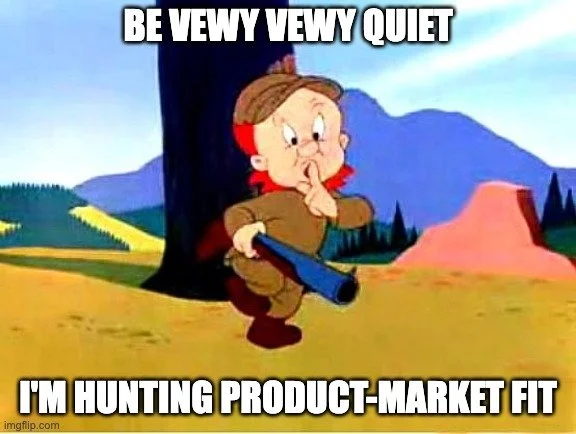
At the Seed stage, the market hypothesis is (historically) at the center of the investment decision. While it may not be in its final form, VCs evaluate potential investments through the lens of the market hypothesis that founders provide. Do they believe that the market is big enough? Do they believe that the startup has the right team to go after that market? To what degree does the early traction support the notion that their solution (a) solves the problem the founders are describing, and (b) demonstrates that customers are willing to pay for that particular solution?
(This is why it’s so important that founders spend time refining their positioning and market hypothesis before fundraising!).
What Has Changed?
While Seed-stage investments have been anchored around the market hypothesis for more than a decade, in the past few months things have shifted considerably. And the reason starts and ends with “AI”.
AI is changing so many things at such a high velocity that many Seed VCs are struggling with how to evaluate startups when they no longer have conviction that the market hypothesis will hold over their 7-10 year investment horizon. Consider the following:
“There is a market X…” — will that market still exist in 10 years?
“…in which problem Y exists…” — will this still be a problem in 10 years?
“…and customers are willing to pay for our solution Z” — will they still be willing to pay for this in 10 years?

Live footage of a Seed VC
While the above comments might seem facetious, it’s important to understand that these are real questions within the context of the role that Seed VCs have historically played. For the past 10+ years, Seed VCs have been primarily responsible for funding companies from the point at which they had a clear market hypothesis and early signals supporting that hypothesis through to product-market fit.
What happens when Seed VCs can no longer rely on those market hypotheses being stable?
How Seed VCs are Reacting
According to Crunchbase, the number of Seed deals in North America has fallen for 3 consecutive quarters — despite the fact that total deal volume by dollars remaining relatively strong. That means capital is concentrating at the Seed stage.
In other words, fewer deals are happening with larger average deal sizes.
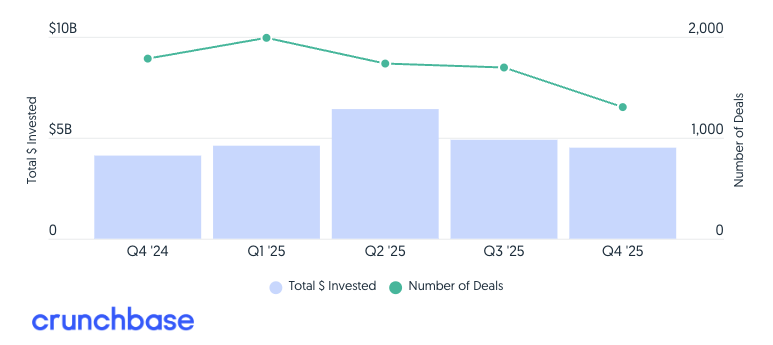
North American Seed Investment Through Q4 2025
Beneath the surface, Seed VCs are broadly reacting in one of three ways:
1. Reducing the Number of Deals
Some Seed VCs have reacted by doing fewer deals.
Over the past few months, I’ve spoken with a number of institutional LPs concerned by the fact that some of the funds they’ve invested in aren’t actively deploying capital. One early justification was the need to “slow things down” while they adjusted their investment theses to an increasingly bifurcated VC landscape. But at this point, it appears that some Seed VCs remain inactive / less active because they are simply unsure of what to do.
2. Chasing Repeat / Pedigreed Founders
Many Seed VCs are reacting by investing more in repeat founders and/or founding teams with a strong “pedigree” (graduated from top schools, worked at prominent companies, YC graduates, etc.).
Pitchbook showed a significant increase in the early-stage deal sizes commanded by repeat founders in recent years (in the chart below, “serial” founders are repeat founders who had an exit, while “unproven” founders are repeat founders whose prior companies failed).
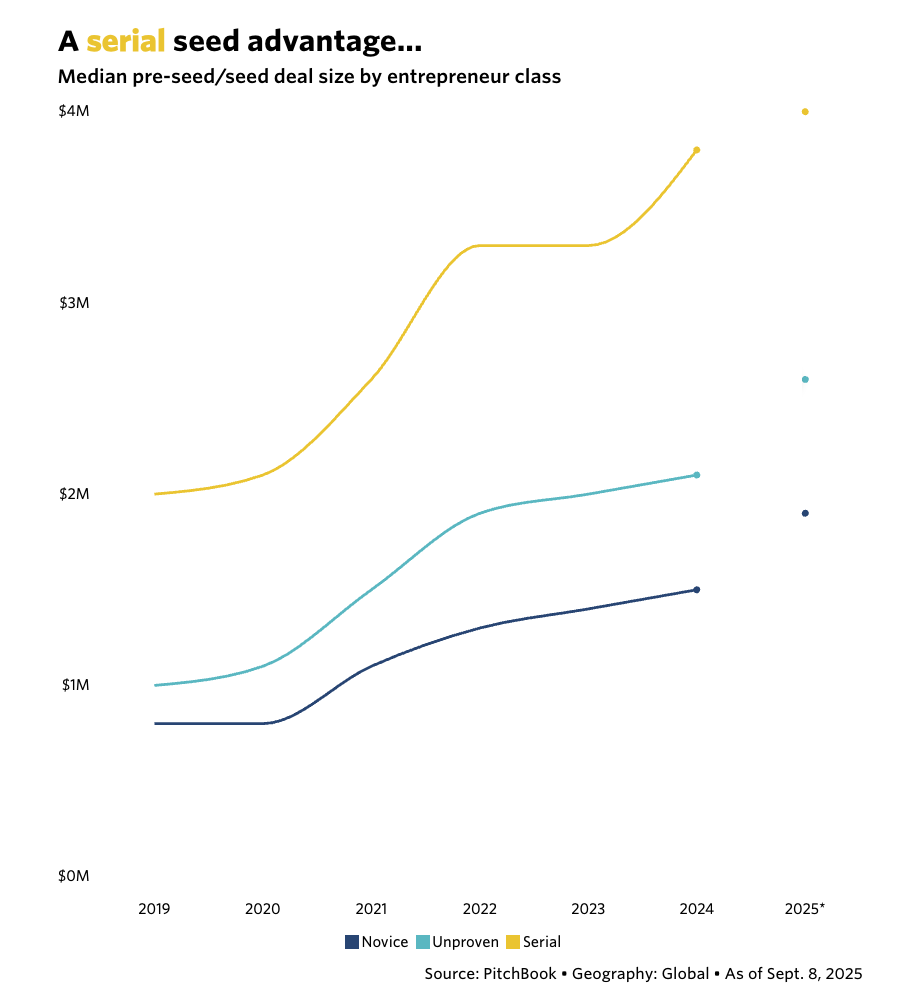
In the absence of conviction about the underlying market hypothesis, these investors are betting on the prior experience of the team.
“They figured it out before, so (hopefully) they can figure it out again.”
3. Focusing on Early Traction
The third trend has been to chase signs of early traction.
Early, disproportionate traction has always been something of a cheat code for startups. At the Pre-Seed stage, we often see deals happen quickly when a team comes to the table with unusually strong traction (revenue, users, GitHub stars, etc.), even if they don’t have a fully-formed market hypothesis.
The bet here involves a similar benefit-of-the-doubt as the one given to repeat founders:
“They figured out how to get to X traction, so (hopefully) they can leverage that to build a real product / get to product-market fit.”
Wait a Minute…
Ok, so to summarize what we’re currently seeing in the early-stage fundraising market:
Pre-Seed VCs generally discount the market hypothesis and focus primarily on the team and their ability to iterate in search of product-market fit
Seed VCs are increasingly discounting the market hypothesis and…focusing primarily on the team and their ability to iterate in search of product-market fit???

That’s right. Seed VCs are increasingly acting like Pre-Seed VCs when it comes to their investment decisions.
There’s a lot to unpack when it comes to the potential long-term implications of this shift. It’s especially fascinating within the context of the ongoing bifurcation of VC (and explains why some Seed VCs continue to sit on the sidelines — they simply don’t know how to invest based solely/primarily on the potential of a team). For now founders, angel investors and Pre-Seed VCs need to understand the following about what’s happening at the Seed stage:
Outside of markets that are unlikely to be disrupted by AI, the rubric with which many Seed VCs are evaluating potential investments has changed. Specifically,
The focus on traction has increased — not because it shows more evidence in support of the market hypothesis, but because it shows more evidence in support of the team’s ability to execute.
The focus on a team’s track record has increased.
The impact of whether or not a company is building in a “hot space” has increased.
While Seed VCs are increasingly acting like Pre-Seed VCs, it’s not exactly the same as raising another Pre-Seed round.
For starters, Seed VCs have a lot more data to analyze about your team and your trajectory (especially when it comes to velocity, the one metric that matters most).
It’s also important to understand that Seed VCs have promised their LPs a shorter path to returns than Pre-Seed VCs. In other words, they still need to get an exit in the same amount of time that they did before. This means that you have to be able to demonstrate meaningful progress towards something valuable (it’s not a do-over if you’re still wandering around in the woods in search of PMF).
Finally, this dynamic is most prominent with generalist Seed VCs. Specialized Seed VCs — particularly those in deep tech — are relatively unchanged in their behavior.

If you’re preparing to raise a Seed round, keep the following in mind as you fine-tune your pitch: in addition to analyzing the usual details on problem, solution, traction, etc., many Seed VCs are now asking themselves the following question as part of their investment process:
Can this team win (generate a return) even if one or more of their core assumptions is disrupted by AI? (In other words, can they still win if their market hypothesis gets disrupted?)
Unfortunately, it’s not at all clear yet how Seed VCs are testing for this. As a result, I suspect that we’re going to see a significant “crunch” at the Seed stage in the next few quarters. Startups that historically could raise funding based on a clear market hypothesis and reasonable early traction will struggle, especially if they can’t convince investors that the market hypothesis is viable over a long-term horizon.
Most Seed VCs don’t know what the future is going to look like, so they’re increasingly betting on founders who they believe can figure-it-out.

Hunters vs. Farmers
What does it mean if a VC is a “hunter” or a “farmer” and why does it matter?
Over the years, I’ve interacted with hundreds of VCs — first as a founder and, later, as an investor myself. And I’ve heard hundreds of investors pitch their funds. There is a distinct bifurcation in how VCs approach investing and, if you listen carefully to the words they choose to describe themselves with, that approach shows through.
The two approaches are known as “hunting” and “farming”.
I’ve written before about hunting vs. farming within the context of how investors generate returns. In venture capital, “hunting” refers to going out and winning new deals (investing in new companies) while “farming” refers to increasing the likelihood that a company will succeed through post-investment support and services. In theory, investors should do both. In reality, VCs operate across a spectrum, with most firms focusing their efforts on one or the other.
I was recently at an investor conference filled with emerging managers (the VCs behind new, up-and-coming firms). As I listened to pitch-after-pitch from these aspiring VCs, it dawned on me that most founders probably don’t know how to recognize the signs that indicate if an investor is a hunter or a farmer. All VCs seems to use the same “value add” language when talking about why their fund is special, so how can you actually tell?
And why does it matter?
The Difference Between Hunters and Farmers
At a high level, “hunters” are VCs who spend most of their time and effort trying to get into the best deals. For the most part, they focus on companies that are (or will become) “consensus investments” — startups that at subsequent stages will be the hot companies that follow-on investors fight to get into.
Early-stage hunters focus on pedigree and traction as their primary signals. Things like:
Graduating from a top school or program (Stanford, MIT, Waterloo, IIT Bombay, Thiel Fellowship, etc.)
Early employees that left “hot” companies
Repeat founders
Hot sectors
Virality / significant early traction
They’re generally betting on the correlation between pedigree and outcome (or, at least, pedigree and quick markups).
Farmers, on the other hand, tend to cast a wider net. They’re betting on their ability to identify high-potential, non-consensus companies/founders and help them outperform. It’s not that farmers won’t invest in “hot” companies or founders with pedigree. It’s that they believe their edge comes from looking beyond those traditional signals.
It’s important to understand that both of these are valid investment strategies that can lead to great success. Not only that, you can find investors who do both to varying degrees at almost every stage of investment. Consider this map showing a selection of pre-seed investors:
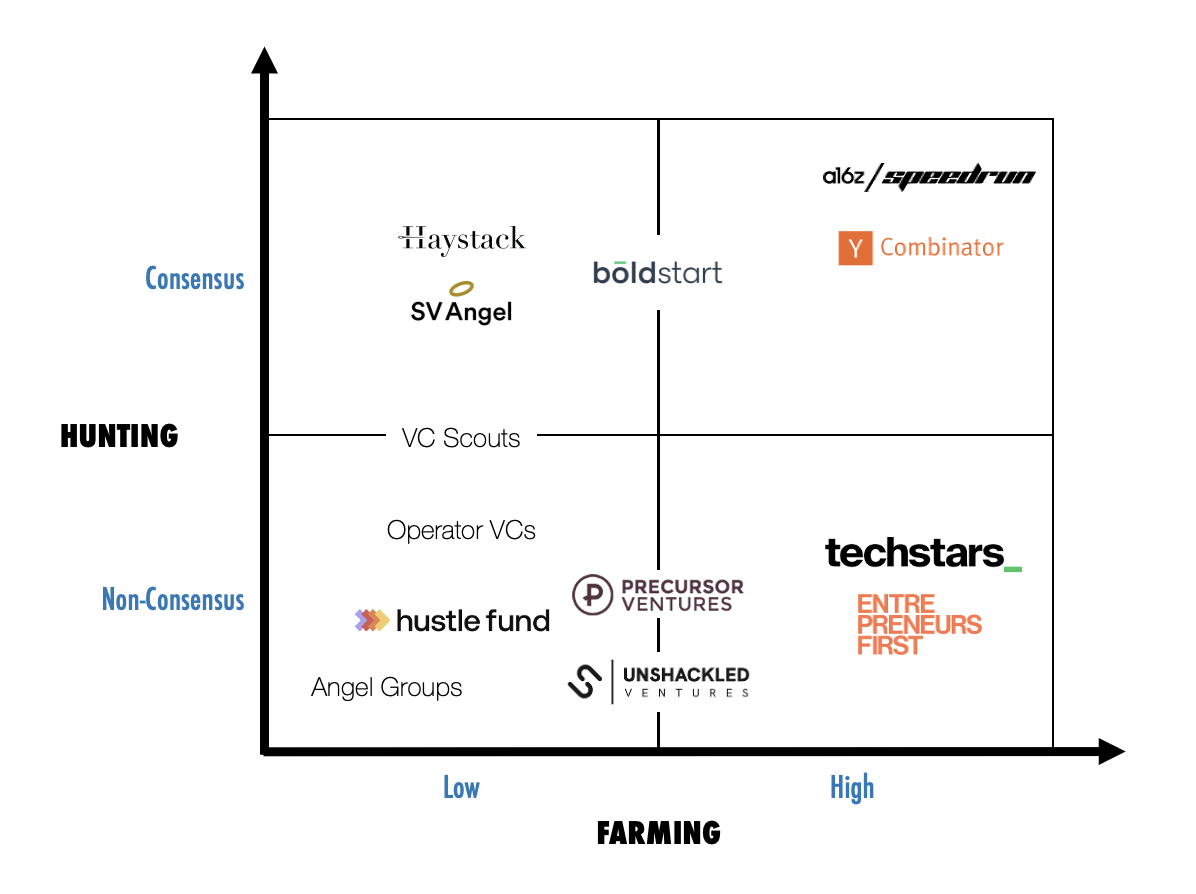
On the far right, you have accelerators. In the middle, are “hands-on” pre-seed funds (of which there are many). On the far left, you have hands-off investors, scouts and angel groups.
The Different Types of Farmers
You might be a bit confused looking at the above image, particularly given that many of the investors on the left side of the chart are known to be “very helpful” to portfolio founders. So let me specific about what I mean by farming. I consider a VC with a high degree of farming as one who regularly communicates with a founder (on at least a weekly basis) and provides hands-on help from the point at which they invest through at least the completion of their next round of funding. Accelerators and incubators typically have the highest degree of farming.
Investors with a low degree of farming might still be incredibly helpful, but that help is generally less frequent and/or lower touch. It might come in the form of on-demand introductions to potential customers, partners and follow-on investors or through “one-to-many” services.
Here is a very non-scientific ranking of the different types of VC farmers:
Passive Investors - After they invest, you rarely if ever hear from them (except occasionally in response to an investor update). Some can be very helpful with introductions and expertise but, generally speaking if you don’t call them, they won’t call you.
Automated Investors - These investors provide access to a selection of one-to-many resources (prerecorded videos, tutorials, webinars and online communities). Almost every email you get from them is from an automated system. One-on-one help is rare.
“Our Partners are Very Important People” Investors - These investors present as farmers — they often talk a big game about how they support portfolio companies — but after the deal is done, your point-of-contact suddenly switches from a partner to an associate or another lower-level member of the team. This approach is typically borne from VC firms trying to prioritize the “very important” partners’ time for hunting, as well as supporting the development of junior employees at the firm. While that sounds great on paper, it often feels like a bait-and-switch to portfolio founders (particularly when the “value-add” is provided by generalist team members with little or no real-world experience).
Board-Centric Investors - This category comprises a significant percentage of smaller VC firms (those with little or no support staff). Founders have a direct line-of-communication to their board partner (the partner who led the investment), but have little if any contact with anyone else at the firm. The board partner is often very hands-on, but the value provided is entirely dependent on what that individual brings to the table.
“We’re All Here for You” Investors - This is the next step up the farming ladder for smaller firms. In this case, founders have a direct (if infrequent) line of communication to all of the partners at the firm The board partner takes the lead on most matters, but the culture is such that founders are invited to reach out to any partner if they think they can help. Foundry Group (who invested in DataHero) had this approach — and I’ve always felt it to be the best strategy for small firms to take.
“We’re All Here for You” Investors II - Many mid-sized VC firms leverage analysts and associates to provide additional value add, like helping with research, market studies and financial analysis. The key difference between this category of VCs and “Our Partners are Very Important People” investors is that the associates/analysts provide services in addition to what the partner bring to the table instead of as a replacement for it.
Investors with a “Platform Team” - VCs with a platform team take the idea of additional support one step further by hiring experienced subject-matter experts to provide specific services to their portfolio companies. These hires can include recruiters, marketers, designers, media experts and even technical resources. Some of the larger traditional firms (most famously a16z) employ hundreds of people on their platform teams.
“We Have a Program” Investors - At the top of the farming pyramid are VC firms with “a program.” The difference between regular platform teams and platform teams at “We Have a Program” VCs is that startups who receive investment from the latter go through a formal program staffed by members of the platform team (as opposed to just receiving ad hoc support). Accelerators are the most well-known in this category, but an increasing number of traditional firms now have some form of post-investment programming (ranging from large firms like a16Z and Sequoia to smaller ones like Conviction).
(Strictly speaking, venture studios are at the tippy-top of the farming pyramid, but since most don’t invest in startups that are already up and running, I’ve omitted them from this discussion.)
How To Identify Hunters vs. Farmers
If all VCs seem to use the same, generic “value add” language when talking about their fund, how can you tell if they’re a hunter or a farmer? By listening to the subtleties in how they describe their approach.
In my experience, there are two topics where you can usually tell how a VC thinks about hunting vs. farming:
How the describe the founders they invest in
How they describe what they bring to the table (why they’re special / different / better than other VCs)
1. Who They Invest In
When describing the types of founders they invest in, hunters often use language that hints at pedigree and exclusiveness. Farmers, on the other hand, tend to emphasize the fact that they back founders from a variety of geographies, backgrounds and experiences:
| Hunters | Farmers |
|---|---|
|
"We only back the best founders" "We're looking for the top founders." "We invest in the top 1% of founders we meet." (Note: most VCs invest in about 1% of the founders they meet, but hunters often go out-of-their-way to make that point.) |
"We back founders from across North America." "We invest in founders from a variety of backgrounds." "We're less concerned with where you went to school and more interested in what you accomplished there." "We invest in founders from overlooked geographies." |
2. What Their Value-Add Is
When describing what their differentiation / value-add is, farmers tend to describe what they do (specific services / support offerings that they provide founders post-investment). Hunters, on the other hand, often focus on who they know.
| Hunters | Farmers |
|---|---|
|
"We know all of the top Series A investors." "We can introduce you to almost any C-level executive in your industry." "We host an annual CEO summit that brings together all of the founders in our portfolio with [insert celebrity CEOs here]." "We regularly host intimate/curated founder dinners with key industry stakeholders." |
"We facility monthly webinars with CEOs / CTOs / CROs across our portfolio to discuss specific topics." "We have a regular speaker series with subject-matter experts." "Each quarter, we host a fundraising bootcamp for companies preparing to raise their next round." "We have a number of resources on our platform team at your disposal. For example, we have a head of recruiting who can help you with executive hiring...." |
VCs can generate returns from almost any combination of hunting and farming. Which makes it essential to think in advance about what your ideal investor looks like.
Do you want a hands-on investor that will coach and mentor you through the next stage?
Do you feel confident in how to get from A to B, but need help with introductions?
There’s no right or wrong answer here, which makes diligencing a potential investor so important.
So when it’s your turn to ask an investor questions, turn the tables on them and ask the go-to question that so many VCs use:
“Why are you doing this, when there are so many other things you could be working on?”
“No, really. Why is this the thing you’re dedicated the next 10+ years of your life to?”
Then sit back and listen. You’re likely to learn more than anything you’ve read about them online.
The Myth of the Magical Money Fairies
The myth of Silicon Valley’s magical money fairies is deeply entrenched in many ecosystems around the world.
There are a lot of myths and misconceptions that exist around the world when it comes to Silicon Valley. In my experience, no topic is more misunderstood (and, frankly, misrepresented) than fundraising.
It makes sense. Silicon Valley is by far the largest source of capital for tech startups. Combine that with the fact that most folks in other ecosystems learn about its dynamics through click-bait funding announcements loosely wrapped as “journalism” and its easy to understand how perceptions can be skewed.
There’s one myth in particular that I’ve seen do more damage to startups around the world than any other: it’s the myth of the magical money fairies.

The myth of Silicon Valley’s magical money fairies is deeply entrenched in many ecosystems around the world. And it really is a myth in the truest sense. For millennia, human folklore has contained popular stories about treasures and fortunes that have some grain of truth, but are vastly overstated in terms of likely outcome. For example, most children learn the old Irish myth about leprechauns with pots of gold at the end of a rainbow. All you need to do is catch one and, voila!
Replace “leprechaun” with “Silicon Valley VC” and you’ll see where I’m going with this one.
(As an aside, the leprechaun myth had its origins back when vikings invaded Ireland, buried looted treasure around the island and eventually left while leaving some of their stolen gold behind to eventually be discovered by locals…).

So what exactly is the myth of the magical money fairies?
Simply put, there is a pervasive belief around the world that it is easier to raise money in Silicon Valley, because VCs there are more risk-taking / willing to invest / willing to “take a chance”. Like magical money fairies, they will obviously be willing to invest. You just need to get to them.
Like any myth, there are grains of truth at its core. For example, VCs in Silicon Valley are more willing to invest in pre-prototype companies than VCs in other ecosystems. But it’s not because they’re more risk-taking, it’s because more of them have the technical background needed to “invest in napkins”.
Similarly, it is broadly true that founders can raise a round of funding quicker in Silicon Valley than in other ecosystems (which can feel like the investors are more risk-taking / willing to invest / willing to “take a chance”). In reality, there are two key dynamics at play:
There are generally more VCs in Silicon Valley that invest in a given industry than in other ecosystems (which makes it possible to have more credible pitches in a shorter period of time).
Silicon Valley VCs have learned to perform deep diligence much faster than VCs in other ecosystems (and often in ways that are imperceptible to founders). That can feel like they’re doing less diligence, though I promise that’s not the case.
What makes this myth particularly dangerous is the unrealistic expectations that many founders (and ecosystem proponents) have when it comes to Silicon Valley VCs as a result of it. Here’s a dynamic I’ve seen play out hundreds of times:
A founder tries to fundraise locally, but struggles.
They receive consistent, repeated feedback from multiple local investors. Rather than paying attention to the feedback and addressing it, they attribute it to “risk aversion” and keep going.
Emboldened by fundraising books, blogs and well-meaning supporters who loudly cheer “you just need one yes”, they keep going. They limp along from investor to investor, often for months.
As they approach the end of their runway, having lost 6+ months of time fundraising (and having not addressed the core challenges of the business or made further progress), they spend their last bit of money on a “Hail Mary” trip to San Francisco.
Landing in the Bay Area, they finally meet Silicon Valley VCs. All of whom see the exact same weaknesses in the business that their local investors saw, plus a company with no runway and a founder who wasn’t willing to listen to feedback.
The fundraising trip fails and the founder returns home, closing the business shortly thereafter.
Unfortunately, those stories rarely make it back into the ecosystem. Many founders who travel this path eventually realize their folly, but are too embarrassed to share their experiences publicly in ecosystems that are more likely to punish failure than celebrate the attempt.
Absent these important stories, the myth of the magical money fairies perseveres — in part because the handful of outlier founders who do end up raising in the Valley typically make a lot of noise about it.

It is, of course, true that Silicon Valley VCs often see things differently than investors in other ecosystems. But that goes both ways.
Silicon Valley VCs might see an opportunity that local investors don’t. They might be willing to take a chance on a founder that local investors aren’t convinced about (Jesse Rodgers refers to this as small-town bias).
But they’re just as likely to be skeptical about a business that local investors are tripping over themselves to back. I’ve seen plenty of startups over the years fail to raise in Silicon Valley, despite their hometown investors being incredibly bullish (a different perspective on revenue and growth is often the culprit).
Despite what many founders and ecosystem supporters continue to believe, it isn’t easier to convince a given VC in Silicon Valley to invest in a company — it’s much, much harder. But there are far more VCs in Silicon Valley than in other ecosystems and, generally speaking, they make faster decisions.
So what is a founder to do with this information?
Simple. If you are trying to raise a fundraising round, you should absolutely include Silicon Valley VCs in the mix. But don’t do it at the end of your process, do it in parallel. Understand that the vast majority of early-stage funding rounds happen locally — the mythical U.S. lead investor does not, in fact, exist. But fundraising is a numbers game and the more potential investors you have in the mix, the more likely you are to succeed.
Just don’t expect Silicon Valley VCs to gloss over legitimate concerns that local investors have raised. VCs in different ecosystems do see the world differently. But none of them are charities. Their job is not to “give you a chance”, it’s to generate a return on investment.
In that sense, they are actually magical money fairies…for their LPs.
Why Do 99% of Startup Accelerators Fail?
Why do 99% of startup accelerators fail to live up to their expectations?
In 2005, Paul Graham, Trevor Blackwell, Jessica Livingston, and Robert Morris decided to run an experiment. Paul had a hypothesis that undergraduates were undervalued when it came to starting companies. At a time when almost all VC’s required a “business cofounder” to run the company (aka a CEO with an MBA from a fancy school), Paul et. al. believed that the world was changing,
“This summer, as an experiment, some friends and I are giving seed funding to a bunch of new startups. It's an experiment because we're prepared to fund younger founders than most investors would. That's why we're doing it during the summer—so even college students can participate.
We know from Google and Yahoo that grad students can start successful startups. And we know from experience that some undergrads are as capable as most grad students. The accepted age for startup founders has been creeping downward. We're trying to find the lower bound.”
Their summer 2005 experiment — referred to as the Summer Founders Program — is today better known as Batch #1 of Y Combinator.
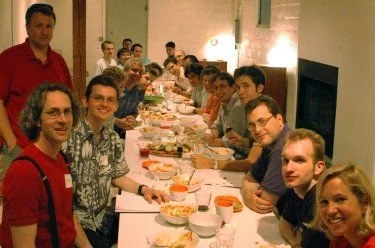
SFP included Alexis Ohanian (Reddit, Initialized Capital, 776 Ventures), Justin Kan (Kiko, Twitch) and Sam Altman (Loopt, OpenAI)
Fast forward twenty years and there are self-proclaimed “startup accelerators” around the world. Yet despite all of the innovations that have occurred over the past two decades — technologically, socially, and business-wise — YC remains the world’s preeminent accelerator — and it’s not even close.
So why is it that 99% of accelerators fail to live up to their expectations?
What is a Startup Accelerator?
Let’s start with a definition, to make sure we’re all on the same page.
The key characteristic of a startup accelerator is that it accelerates a startup.

You might think I’m being facetious, but I’m not. A startup accelerator is a program that is purpose-built to accelerate the trajectory of a high-growth tech startup. Implicit in that definition is that the participants are founders/cofounders of a startup with a clearly-defined market hypothesis (a business idea). They are not founders in search of an idea, a cofounder or a market for their technology.
This distinction is crucial (and we’ll get back to it later).
What Do Startup Accelerators Do?
The basic concept of a startup accelerator has changed very little since the Summer Founders Program. In October 2005, Paul Graham shared some of his learnings from the initial batch. It’s incredible how many of those observations remain at the core of today’s accelerators:
Mentorship
“Some we helped with technical advice-- for example, about how to set up an application to run on multiple servers. Most we helped with strategy questions, like what to patent, and what to charge for and what to give away. Nearly all wanted advice about dealing with future investors: how much money should they take and what kind of terms should they expect?”
Pitch Practice and Demo Day
“The weekend before the demo day for investors, we had a practice session where all the groups gave their presentations. They were all terrible. We tried to explain how to make them better, but we didn't have much hope. So on demo day I told the assembled angels and VCs that these guys were hackers, not MBAs, and so while their software was good, we should not expect slick presentations from them.
The groups then proceeded to give fabulously slick presentations. Gone were the mumbling recitations of lists of features. It was as if they'd spent the past week at acting school. I still don't know how they did it.”
Investor and Customer Intros
“I was surprised how much time I spent making introductions. Fortunately I discovered that when a startup needed to talk to someone, I could usually get to the right person by at most one hop. I remember wondering, how did my friends get to be so eminent? and a second later realizing: shit, I'm forty.”
Peer Learnings
“Just as happens in college, the summer founders learned a lot from one another-- maybe more than they learned from us. A lot of the problems they face are the same, from dealing with investors to hacking Javascript.”
Batch Format
“Another surprise was that the three-month batch format, which we were forced into by the constraints of the summer, turned out to be an advantage. When we started Y Combinator, we planned to invest the way other venture firms do: as proposals came in, we'd evaluate them and decide yes or no. The SFP was just an experiment to get things started. But it worked so well that we plan to do all our investing this way, one cycle in the summer and one in winter. It's more efficient for us, and better for the startups too.”
Twenty years later, startup accelerators around the world all follow roughly the same approach as that first Y Combinator batch:
Cohorts of startups / founders participate in a program that takes place over a defined period of time
The accelerator invests on standardized terms (typically at a lower valuation than a traditional VC would provide — thus pricing in the perceived benefit of the program)
Founders benefit from both peer learnings and the peer pressure that comes from being in a class / batch
The organizers provide mentorship and facilitate introductions to customers and potential investors
Most programs conclude with a “demo day” event, where potential investors can meet all of a program’s startups at once
The most significant evolution of accelerators has been the addition of standardized content intended to streamline learnings that almost all first-time founders have, such as:
Go-to-market (sales/marketing best practices)
Finding product-market fit
Fundraising
Startup Schools are Not Accelerators
A significant percentage of programs offered to startups around the world are not, in fact, accelerators. They are startup schools.
Startup schools teach founders the basics of running a company along with various concepts and methodologies related to entrepreneurship. But they do not accelerate a company in a fundamental sense.
True acceleration changes the trajectory of a startup by instilling founders with the best practices and work habits needed to succeed. And if we’re talking about building world-changing companies, then what we’re referring to is specifically, “instilling founders with the best practices and work habits needed to create billion-dollar companies.”
How does that happen? Through one-on-one mentorship.
If the definition of a startup accelerator is “a program that accelerates startups” and the primary means through which these programs effect change is through mentorship, then the quintessential requirement of a good startup accelerator is good mentorship.
But what is “good” mentorship?
The One About Youth Sports
Let me tell you about my friend Kenndal McArdle.
Like me, Kenndal is an early-stage investor. He is also a former founder. Kenndal and I have kids that are the same age and we both coach their sports teams. But there’s one big difference in what we bring to the table in that regard.
You see, one of us was a first-round draft pick of the Florida Panthers and played in the NHL. And one of us is me.

While we can both teach our kids the fundamentals of playing sports, only one of us has first-hand experience in the best practices and work habits necessary to reach the highest echelons of professional sports. Kenndal has a gold medal from the 2007 World Junior Championships. I watched the 2007 World Junior Championships on TV. We are not the same.
At a basic level, this is the fundamental flaw with 99% of startup accelerators. The mentorship in almost all of the world’s “accelerators” is provided by well-meaning individuals who have zero personal experience at the highest echelons of tech. Many have genuine experience building and/or investing in startups, but the vast majority have no firsthand experience building billion-dollar companies (as a founder, employee or investor).
They can teach topics, but they don’t actually know what it takes to reach the pinnacle.
Spotting Opportunity is Only the First Step
Almost all accelerators are founded by individuals who observe specific problems and/or opportunities within their ecosystems.
Y Combinator’s founding was a response to Paul Graham’s observation that “hackers” (specifically, undergraduate hackers) were not getting as much funding as he felt they deserved and that there was an investment opportunity to be had in addressing that need.
Techstars was founded in the tiny community of Boulder, Colorado by David Cohen, Brad Feld, David Brown and Jared Polis, who believed that there was a lack of funding available to founders in middle America and that there was an investment opportunity to be had in addressing that need.

Boulder is a wild place 🤘
500 Startups’ origins came from the observation that women, minority and foreign founders did not have access to the same degree of funding that white male Stanford graduates had access to and that there was an investment opportunity to be had in addressing that need.
So why did these accelerators flourish while so many others failed? It starts with the experience of the founders:
Y Combinator: YC cofounders Paul Graham and Robert Morris previously cofounded Viaweb, the world’s first application service provider. They subsequently sold the company to Yahoo! and witnessed Yahoo!’s meteoric rise through the dotcom bubble.
Techstars: David Cohen, David Brown and Jared Polis all cofounded multiple successful tech startups while cofounder Brad Feld cofounded both startups and VC firms (most notably Foundry Group).
500 Startups: In addition to founding his own startups, Dave McClure was a member of the famed PayPal Mafia and an early employee at Simply Hired.
In all three cases, the founders had firsthand experience working at globally-successful tech startups. While they were not the founders of those companies, they had experience working with (and observing) the habits of exceptional founders both as employees within such companies and as investors later on. They understood from multiple angles what exceptional looked like.
But, more than that, they also had direct relationships with dozens of other founders and early employees who had similar firsthand experience inside the world’s biggest tech companies. Relationships that they could leverage for the benefit of the startups that went through their programs. (Recall Paul Graham’s observation from Y Combinator’s first batch: “I discovered that when a startup needed to talk to someone, I could usually get to the right person by at most one hop.”)
Anatomy of a Premier Accelerator
Let’s get back to the topic of mentorship.
What sets the world’s best accelerators apart is the strength of the teams working with founders. The quality of the mentorship, as well as the introductions that mentors can potentially make.
This starts with the employees of the accelerator. The best accelerators employ partners, entrepreneurs-in-residence and even operational staff who have firsthand experience working in some of the world’s fastest-growing tech companies.
Here are just a few of the people I had the privilege of working with at 500 Startups back in its heyday:
Jake Gibson (previously Cofounder of NerdWallet)
Sheel Mohnot (previously Founder of FeeFighters, which he sold to GroupOn where he became VP of Business Development)
Marvin Liao (previously head of international markets for Yahoo!)
Arjun Dev Arora (previously Founder of ReTargeter)
Binh Tran (previously Cofounder of Klout)
Elizabeth Yin (previously Cofounder of Launchbit)
Eric Bahn (previously Founder of Beat the GMAT and early employee at Instagram)
Mike Sigal (multiple time cofounder with both acquisitions and IPOs under his belt)
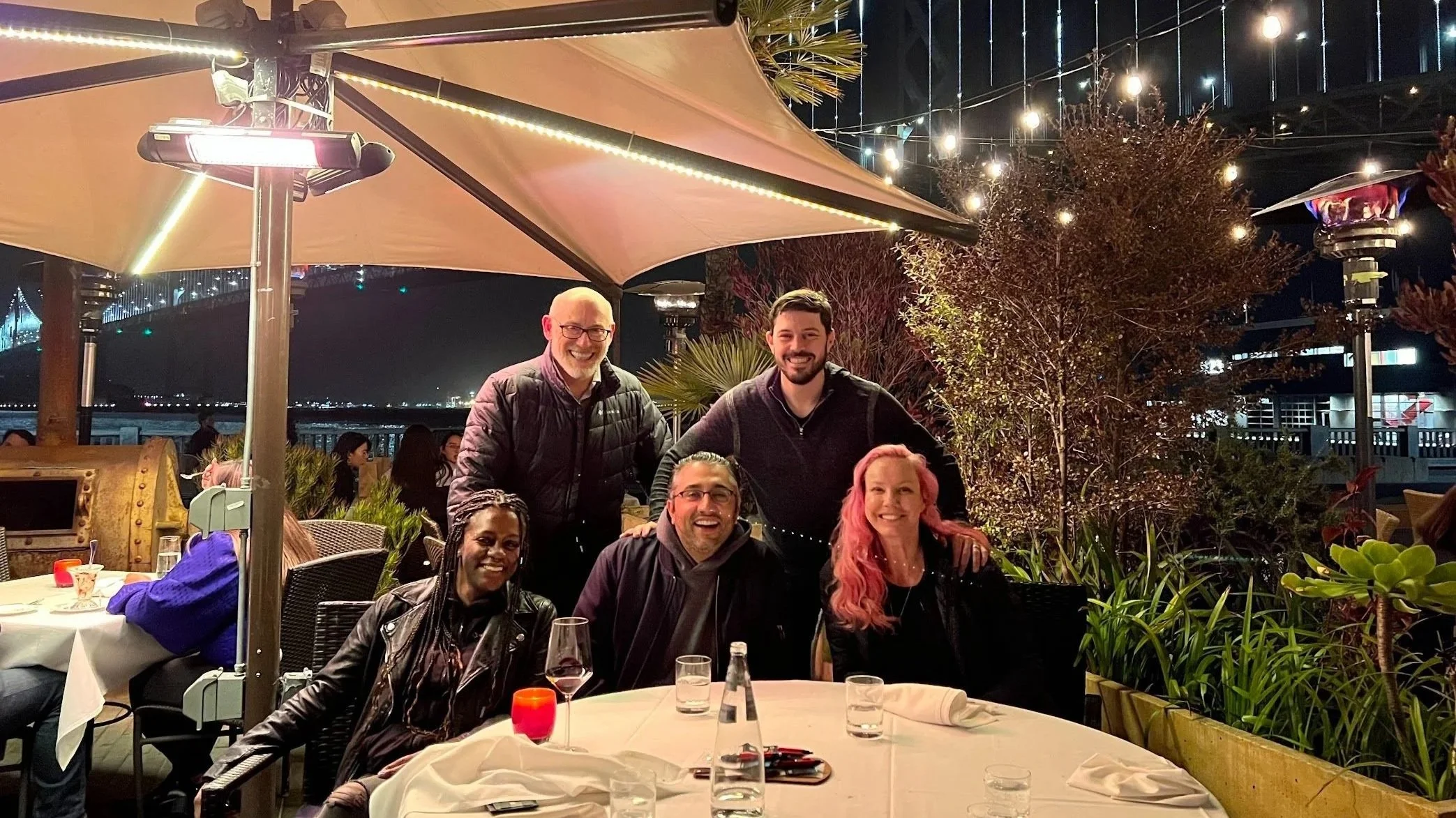
A gathering of a few old friends
A few of these individuals were founders of unicorns. But all of us had direct, firsthand experience with billion-dollar tech companies (as key employees, founders/early employees of companies that were acquired into unicorns, and as investors). We had each seen firsthand the best practices and work habits necessary to reach the highest echelons of tech.
That experience is key. But it’s not just the employees. It’s their personal networks and the multiplier effect that comes from them.
On Density and Mentorship
The world’s best accelerators surround founders with mentors and subject-matter experts who have directly contributed to some of the world’s most successful tech companies. Some of those mentors are employees of the accelerator. Many more come from the employees’ personal networks.
It’s this ability to provide founders with a wide variety of high-quality mentorship that differentiates the best accelerators from the rest. Ultimately, quantity of “good” mentors matters to the ongoing success of an accelerator almost as much as quality.
The companies within an accelerator batch are generally trying to solve vastly different problems in a variety of markets. While some of the mentorship topics (e.g. fundraising) have commonality across the batch, many more — from sales and marketing to product development — differ. So being able to pair each founder with multiple mentors who have direct experience in their industry and with the specific problems they’re trying to overcome matters.
If you think about my friend Kenndal, he’s a phenomenal mentor for anyone who wants to play professional sports. But he has far more to offer someone whose specific goal is to play left wing in the NHL than others. As a mentee strays further away from his lived experience (from left wing to other hockey positions and from hockey to other sports), his experiences and mentorship will necessarily be less relevant and specific. Introductions that he can potentially make will similarly be fewer and less direct.
This is why accelerators in smaller ecosystems generally fail over the long term. Even if there are a handful of unicorns locally, the specific experience and advice of the mentors coming from those companies will only resonate with a subset of founders. You can also only call on those same people so many times. If you think about it as a “snowball effect”, it’s a lot harder to build a snowman when there isn’t much snow on the ground.
This is why Silicon Valley has such an advantage when it comes to startup acceleration: experience and mentorship compounds.
When I was at 500 Startups, if I wanted someone with a particular type of experience to stop by (for office hours, to meet with a specific company or to deliver a talk), I could easily reach out to multiple people at multiple companies and find someone willing and able to drop by our San Francisco office. That’s simply not possible anywhere else in the world.
Even YC — which originally split batches between Silicon Valley and Boston/Cambridge — ultimately shifted entirely to the Bay Area. In 2009, Paul Graham wrote the following:
“I think it will be better for the startups we fund to all be in the Valley. We never tried to claim to the startups in the summer cycles that it was a net advantage to be in Boston. The most we could claim was that we could mitigate the disadvantages sufficiently well—for example, by flying everyone out to California to present to investors at our Mountain View office. But we did worry that the Boston groups were losing out. Boston just doesn't have the startup culture that the Valley does. It has more startup culture than anywhere else, but the gap between number 1 and number 2 is huge; nothing makes that clearer than alternating between them.”
But, But, But…
“But wait!” you say, “What about all of those big name accelerators around the world?”
How could the above claim hold true if so many prominent accelerators have created programs in cities around the world?
Simple.
Those “global” programs aren’t actually startup accelerators. They’re mostly government- and corporate-funded startup schools.
About 10 years ago, governments and corporates started approaching some of Silicon Valley’s accelerators with a proposition: if we pay you money, will you run a program locally in our ecosystem / for our specific industry?
At first glance, there seemed to be clear synergies. Founders in underrepresented geographies or industries would get programming, education and mentorship from experienced Silicon Valley founders and investors. Accelerators would gain exposure, access to new markets and revenue. They could expand their impact globally (which many genuinely wanted to do). But it didn’t take long before the shine wore off.
It turns out that few, if any, of these programs consistently birthed companies that the accelerators actually wanted to invest in. So while the first few batches were typically led by experienced Silicon Valley founders and investors excited to visit new ecosystems, before long the quality of mentorship plummeted as the accelerators shifted resources. Out of town experts were soon replaced with inexperienced local mentors, augmented by a roving band of “digital nomad” mentors who travel the world, offering their services to any accelerator or incubator willing to pay their room and board (trust me, there’s a lot of them).
Over time, many of these accelerators became addicted to the (very significant) revenue that governments and corporates around the world offered. They created entire divisions dedicated to selling and staffing such programs (in some cases, those divisions became larger than the actual core fund / accelerator). A focus on DPI was replaced by an obsession with program margin, often with disastrous consequences.
But There Have Been Successes Outside of Silicon Valley
Yes and no.
Over the past 20 years, there have been a number of examples of accelerators operating successfully for brief periods of time outside of Silicon Valley. But almost none of them succeeded over the long-term. In many cases, these programs were founded in nascent startup ecosystems hungry for any sort of cohort-based programming and benefited from an initial "burst” of extremely high quality founders. In others, an initial set of high-quality mentors eventually gave way to inexperienced replacements, with the quality of the program (and its results) soon following. We really haven’t seen accelerators form outside of Silicon Valley that have repeatedly, consistently shown an ability to take early-stage startups and accelerate them into unicorns.
What we have seen come out of other geographies are some of the most incredible, innovative “pre-acceleration” programs. Recall my earlier assertion that a startup accelerator is a program that is purpose-built to accelerate the trajectory of a high-growth tech startup. What about before then?
In 2011, Matt Clifford and Alice Bentinck founded Entrepreneur First in London. Their observation: that there was a lack of mentorship and guidance available for talented individuals who had the potential to be founders but didn’t necessarily have a specific idea in mind.
In 2012, Ajay Agarwal founded Creative Destruction Lab at the University of Toronto. His observation: too many PhD researchers were being hired directly into large tech companies instead of commercializing their research.
Both of these organizations have become globally impactful, each with billions of dollars worth of equity value created and multiple unicorns emerging from their programs.
(At this point, I’ll admit that the line between accelerator and pre-accelerator is a blurry one at best. YC, for example, is known to accept some founders whose ideas aren’t yet fully formed, while both Entrepreneur First and Creative Destruction Lab accept incorporated startups. The distinction as I see it is about whether the program primarily focuses on helping founders figure out whether or not a concept could be massive vs. instilling the best practices and work habits necessary to accelerate and ultimately reach that level of success.)
Accelerating the Rest of the World
We’re getting to the finish line here, I promise!
If the quintessential requirement of a good startup accelerator is good mentorship and only Silicon Valley has a sufficient quantity and diversity of mentors to cater to a wide diversity of founders, how can we reasonably accelerate startups in the rest of the world?
By leveraging Silicon Valley’s talent.
Side note: I’ve found over the years that, for some reason, this simple, seemingly innocuous statement offends a lot of people.
If I were to say to a minor league hockey coach, “I can bring some former NHL players to come work with your kids for a week,” or “We’re running a camp on the sidelines of this year’s all-star game and we’d like to invite some of your kids to join,” every single coach would be over the moon. No one would respond, “No, no…we don’t need that. One guy from our town made the NHL 15 years ago. We’re good.” Yet for some reason that’s the reaction that comes from many ecosystem builders when it comes building connections with Silicon Valley.
I’m not going to go down the rabbit hole of why this happens (it’s surely a deep one). Suffice to say, the idea of leveraging the world’s largest pool of startup experience to augment local mentors shouldn’t be a controversial one.
In any case, there are two obvious ways to leverage Silicon Valley experience for the benefit of global ecosystems: bring Silicon Valley’s mentors to the world or bring the world’s startups to Silicon Valley.
Both approaches can work. In fact, they’re not even exclusionary.
I won’t go into a discussion of how to do this — that’s a post for another day. Instead, I’ll conclude with the following observation:
Like many things in Startupland™, the majority of accelerators around the world have failed as a result trying to replicate something that can (at least today) only work at scale in Silicon Valley. But that doesn’t mean there can’t be successes elsewhere.
They just won’t look like “the YC of X.”

Why Do VCs Make Startups Pay Their Legal Fees?
Why do VCs ask founders to pay their legal bills? How common is this practice and what should you do about it?
One of the most annoying surprises many founders encounter during fundraising is when they finally get a term sheet, only to discover a clause buried towards the end specifying that the startup must pay the investor’s legal fees.
WTF…?
This moment of shock happens so often that, every few months, a new thread pops up on social media decrying the widespread practice.
The initial post is inevitably followed by a pile-on of founders and armchair pundits dunking on greedy VCs. Then come the proud interjections of “founder-friendly” investors bragging about how they don’t make founders pay their legal bills (“not like those other guys…”).

What’s the deal here? How common is it for VCs to make founders pay their legal bills? Why is that even a thing (and what should you do about it)?
Why Do VCs Ask Founders to Pay their Legal Fees?
Let’s start off with the basic question of why VCs do this to begin with.
Don’t VCs have a lot of money?
If a VC is putting $5M into my company, why do they need me to pay $25K for their lawyers?
Venture capital firms actually have two distinct budgets:
1. The fund budget (the money a VC invests in companies)
2. The operating budget (the money a VC uses to operate the firm)
Whenever we talk about the size of a VC (e.g. “VC X is a $100M fund” or “VC Y is a billion-dollar firm”), what we’re referring to is the fund budget. Most founders are shocked to discover that the operating budget for a typical venture capital firm is only a tiny fraction of the fund size.
The majority of VC firms have only one source of revenue: management fees (the fees that a VC charges LPs to invest and manage their money). The standard management fee for VCs is 2% per year. Let’s do the math on that:
A VC managing a $100M fund has an annual operating budget of $100M x 2% = $2M / year
A VC managing a $250M fund has an annual operating budget of $250 x 2% = $5M / year
A VC managing a $1B fund has an annual operating budget of $1B x 2% = $20M / year
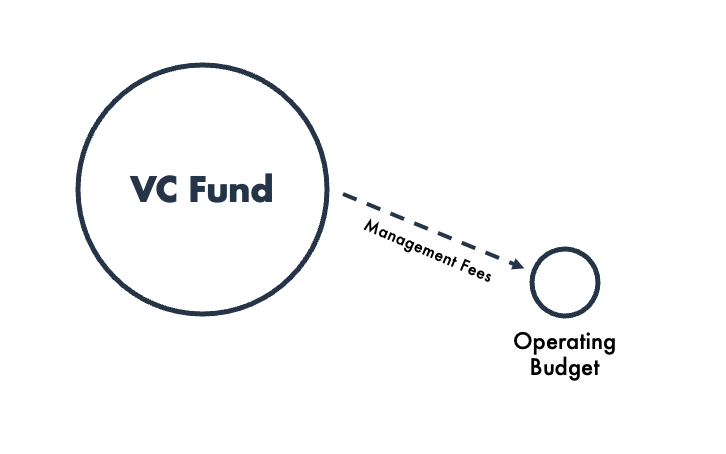
(For the purposes of this post, I’m not going to worry about billion-dollar funds — since those are pretty healthy budgets) — instead, I’ll focus on the more typical-sized funds that you’ll encounter as a founder.)
If a $100M VC firm did 8 deals each year that incurred $25K in legal fees, they would be paying 8 x $25K = $200K / year in deal-related legal fees. If they paid those fees from their operating budget, it would be about 10% of their annual budget. That’s a lot for any business — especially one that has no ability to increase it’s revenue.
Cry Me a River — Why is This My Problem?

I know, I know. This probably feels like me asking you to play a very teeny, tiny violin for the “poor, starving” VCs. But if you step back for a moment, what we’re really talking about is balancing budgets.
I promise you that VCs don’t like paying legal bills any more than founders do. All of the VCs I know would much rather spend their limited operating budgets on finding and supporting founders than paying lawyers. They also don’t want you to do it.
Seriously.
The last thing any investor wants to do is hand you a bunch of money and have you turn around and spend it all on legal bills. In most situations, that’s not helping anyone win (except maybe the lawyers).

What if I told you that for all the bluster, this isn’t strictly about VCs getting founders to pay their legal fees?
It’s about two things:
Getting the LPs who invest in VCs to pay their legal fees
Getting the prior shareholders who invested in the company to pay their legal fees
How VCs Get LPs to Pay their Legal Fees
I mentioned before that most VCs have limited options when it comes to increasing their revenue. But there are two ways that they can offload these expenses.
The most straight-forward way of doing this is to bill the legal fees back to their LPs as a “fund expense”. In venture capital, fund expenses are the costs of running and managing the fund, which include management fees, administrative costs, legal and accounting fees, and due diligence expenses. In other words, a VC firm can simply pass along the legal fees to the VC fund and get reimbursed. Case closed.

From a founder’s perspective, this is perfect. But it’s not ideal for the VC, for two reasons:
It directly reduces the amount of “investable capital” that the VC has (i.e. the amount of money that a VC has available to invest in startups).
The VC has no control over the scale of those legal expenses.
Many founders presume that if the legal diligence and closing costs get too high, then it must be the fault of the VC. But there are many reasons outside of the VC’s control that can lead to unusually high legal fees, including:
Inexperienced legal representation for the startup
Complex cap table situations that need to be resolved as part of the funding
Amendments to preexisting legal documents that need to be made
Multi-country complexities
IP issues
(One could obviously argue that a VC should know what they’re getting into before legal closing starts, but this isn’t always the case — particularly if a founder left out crucial details or didn’t realize that a particular situation might cause problems during closing.)
Which leads to the second option: offload the legal fees to the company.
How VCs Get their LPs and a Startup’s Shareholders to Pay their Legal Fees
When a VC asks a startup to pay their legal fees, this is what’s actually happening.
A VC can effectively transfer money from their fund budget to their operating budgeting by (1) investing in a startup and then (2) having that startup pay for something on their behalf.

Where do the startup’s other shareholders come in? By virtue of the effective dilution caused by those legal fees being shared across the cap table.
When our hypothetical VC invests $5M in a company and then asks that company to pay $25K in legal fees, the company only ends up with $4.975M. That’s $25K that could otherwise be used to generate a return for shareholders (which includes the incoming VC and all preexisting shareholders — founders, angel investors, other VCs, etc.).
More precisely, the payment of those legal fees results in a loss of value of the startup immediately following the close of the round of $25K (the money paid to the VC’s lawyers from the company’s bank account), which translates into a proportionate loss in the portfolio of each of the startup’s shareholders.
e.g. if our hypothetical startup has a post-financing cap table that is comprised of of 20% New VC, 15% Prior VC, 10% angel investors and 55% founders, then the effective loss of value incurred by each of those groups is:
New VC: -$5,000
Prior VC: -$3,750
Angel Investors -$2,500
Founders: -$13,750
By virtue of this strategy, the VC gains two benefits:
They offload their legal fees to both their LPs and the startup’s other shareholders (without directly reducing their investable capital).
They provide a “soft incentive” to control the overall legal fees (as everyone would now share the pain of out-of-control legal fees).
One More Thing…
There’s one additional (subtle) point to make about this that might not be apparent:
Regardless of how their legal fees get paid, the VC will ultimately end up paying a proportion of the startup’s legal fees (by virtue of the fact that those fees are typically charged after the round closes).

One could argue that the incoming VC will have taken into account the value of the startup post-legal fees when negotiating a valuation, but that’s never actually the case. So if each side ends up with $25K in legal fees — which isn’t unheard of — those fees are proportionately paid by all of the shareholders:
New VC: -$10,000
Prior VC: -$7,500
Angel Investors -$5,00
Founders: -$7,500
(For the VC, this is still very much a win, but it’s not quite the “slam-dunk” that folks who argue about this practice being founder-unfriendly might have you believe.)
What About the VCs Who Don’t Make Startups Pay Legal Fees?
I mentioned at the start of this post that whenever a social media thread on startup legal fees gets going, it inevitably becomes a “me too!” list of VCs bragging about how they don’t do that.
Guess what? A lot of those investors are Pre-Seed VCs. And almost all Pre-Seed VCs invest on SAFEs.
In other words, many of the VCs bragging about how they don’t make founders pay their legal fees generally don’t incur any legal fees when they make new investments.
When I was a partner at Panache Ventures, we did not charge founders legal fees related to our investments. We could do that without reducing our investable capital because almost all of our deals were done on a standard SAFE with a standard, pre-written side letter. Occasionally, we would incur legal fees when some peculiarities arose in the deal or we were following another lead in an equity round, but those were typically a drop the bucket of our operating budget and not worth passing along (to either the startup or our LPs).
To say it differently, a Pre-Seed VC bragging that they don’t charge founders legal fees is like someone puffing their chest after buying you lunch — when all you ordered was a $3 coffee.

“I insist…”
There are absolutely some VCs that don’t ask startups to pay their legal fees, but it’s still relatively rare (and mostly done by established firms with more substantive operating budgets and/or larger funds).
Tips for Founders
Let’s wrap this post up with a few quick tips:
You should expect VCs to ask you to pay legal fees on equity rounds. Generally, this starts at Seed or Series A.
If it’s your first equity round, the costs should be relatively low (as most countries have standardized agreements). Of course, this assumes that you’re coming in with a relatively straight-forward situation.
Most term sheets that ask you to pay legal fees have a cap. That’s good for everyone.
Most reputable legal firms offer fixed pricing for early fundraising rounds.
Make sure your legal team has experience working with startups. Nobody wants you to end up with a giant legal bill because of inexperienced lawyers marking up standardized documents.
If an investor asks you to pay their legal fees on a SAFE round, it may be a red flag. Ask them why they included that clause.
If a Pre-Seed VC wants to do an equity investment instead of a SAFE round, ask if they’re willing to pay the associated legal fees (I personally have no qualms about Pre-Seed equity rounds, but if you’re in a competitive situation where the other offers are all on SAFEs, don’t be afraid to bring this up).
Last but not least, if you’re really annoyed by this, you can always ask the VC to increase the round size to neutralize the effective dilution. Usually, this is a small fraction of the round size — so it might not be the hill to die on if there are other, larger issues to negotiate — but it’s certainly an option.
Bottom line, this practice is neither completely innocuous to founders nor is it a nefarious plot hatched by greedy VCs to take advantage of them.
At the end of the day, the goal on all sides is to get across the finish line and get back to building your business. And everyone wants you to have as much money as possible to do that.
VCs are Changing Their Tune on Conflicts
VCs generally do not invest in startups that compete directly with existing portfolio companies. But that norm is changing.
Founders and investors aren’t always on the same page.
But for most of the history of Startupland™, there has been one industry norm that both sides agreed on: in general, VC firms do not invest in startups that compete directly with existing portfolio companies. In fact, most VCs go to great lengths to ensure that (1) there are the no direct competitors in their portfolio, and (2) there is enough “room” between portfolio companies to allow them to pivot without risk of running into one another.

I previously wrote about this norm in a post titled Don’t Talk to Your Competitor’s Investors. The post walks through the historical reasons for this norm (both moral and legal), while noting that,
“The best investors don’t want to be in a position of conflict. They don’t want to have to choose between your company and their portfolio company, so the moment they sniff an overlap, they’ll pump the brakes.”
But the tides are changing and this long-accepted norm may soon be a thing of the past.
Last week, Charles Hudson of Precursor Ventures suggested that, with multi-stage funds getting larger and larger, the tradition of venture firms not investing in competitive companies may soon go away:
“As venture fund sizes keep getting larger, I do think that the tradition of venture firms having a norm (if not a stated policy) to not invest in competitive companies is likely to go away. This is simply a function of the fact that as venture funds have grown larger, it has become increasingly essential for those firms to be associated with the biggest and most important companies. The larger the fund, the more important it is to be an investor in the companies that are true outliers; there is no way to make the fund math work if you are not in those companies unless you are in other, similarly-situated companies. My sense is that there is more money chasing outliers at the moment than there are outlier companies to fund.”
Charles goes on to suggest some approaches that large funds can take to reduce the impact of such conflicts-of-interest, though he also notes that, “this is an issue where the business model for funds is at odds with what most founders want.”
His post focuses mostly on the dynamics of large multi-stage funds, but smaller funds and single-stage specialists are also starting to rethink their approach to competitive investments.
Why the Change of Heart?
Before you rush to the conclusion that this shift is simply another case of greedy VCs behaving badly, it’s worth noting that a couple of significant changes have happened in the past few years that fundamentally change some of the assumptions underpinning venture capital portfolios:
1. Companies are Staying Private Longer
Venture capital firms have historically been built on an assumption that most exits would occur within 7 - 10 years. Over the past decade, that number has crept higher, as many businesses have chosen to stay private longer. Add to that the many macroeconomic shocks we’ve had in recent years, and its increasingly common for early-stage VCs to hold positions in their winners for 15 years or more.
Think about what you were doing 15 years ago.
In my case, Aster Data was raising its Series C (it wouldn’t be acquired for almost another year — and DataHero wouldn’t be founded for a year after that). The cloud wasn’t really a thing yet. Neither Stripe nor Snowflake had been founded. And peer-to-peer anything hadn’t caught on.
So yeah…
2. Technology is Changing Faster
Step back and think of everything that has come into being technologically speaking over the past 15 years. Now think about how much faster innovation is happening as a result of AI.
In the past, it was reasonable (and, in many cases, prudent) for an early-stage fund to remain steadfast in its commitment to avoiding portfolio conflicts even after 10 years. After all, the fact that a company survived to its tenth birthday suggested that it was probably doing well. Moreover, a slower rate of change of technology implied that a new startup entering the same sector was likely to be a genuine competitor.
Things are different now. Even if two companies with an age gap of 10 years are likely to be competitive from a sector standpoint, chances are their technologies, target personas, and value propositions are fundamentally different.
3. Startups are Pivoting Sooner
A third major shift that’s occurred as a result of AI is that startups are able to validate (or invalidate) concepts sooner than ever before. It’s now increasingly common for investors to back a company, only for the founders to pivot within months of the investment closing.
In the past, it might take a company 6 - 9 months to determine that its original hypothesis wasn’t going to work, and then another 3 - 6 months to come up with something new. Today, startups can achieve both of those in a single quarter. In addition, we’re seeing early-stage startups pivot further away from their original ideas, making it harder than ever before for VCs to ensure adequate “space” between portfolio companies.
At this point, some early-stage VCs are investing with the presumption that the original idea will fail. They’re backing strong teams, but with no real idea of what the ultimate product will be (an approach founders typically love, but one that can result in unintended consequences — especially when it comes to portfolio conflicts).
4. Companies are Living Longer
Last but not least, many more startups that failed to achieve product-market fit have found ways to survive longer than ever before. Historically, if a VC-backed company didn’t achieve its goals, that company would either be acquired or shut down. Today, we’re seeing many more companies transition into long-term sustainable (but slower growing) businesses. While that can be great for the founders, it’s not necessarily the outcome investors signed up for.
The problem occurs if a company has changed trajectories to one that no longer fits the VC business model, yet the founders expect their investors to continue to uphold a moratorium on investing in potential competitors.
What Can Be Done?
First off, I agree with Charles’ assertion that the norm of VCs not investing in competing companies is going away. As a former founder, I hate this. But as an investor, I understand it.
From the perspective of multi-stage funds, they simply have to chase extreme outliers, portfolio conflicts be damned. Mega funds will increasingly do this until it’s widely-accepted behavior (hopefully, with some of the best practices Charles suggests).
On the other hand, I think that most early-stage / single-stage investors continue to believe that “the norm of not investing in competitive companies [is] a feature, not a bug” (I sure do!). The best Pre-Seed and Seed stage VCs are so involved with their portfolio companies that any conflict — real or perceived — is going to cause problems. So my assertion from two years ago — “the best investors don’t want to be in a position of conflict.” — still holds true.
That said, it’s no longer pragmatic for early-stage investors to think about conflicts in such absolute terms. Especially not over a 15-year horizon.
As we look ahead, I think there are some practical approaches that Pre-Seed and Seed-stage VCs can take to reasonably mitigate conflicts and maintain strong founder relationships, while future-proofing their ability to make reasonable new investments. All of which require clear, transparent communication with founders. For example:
Adopting an “expiration date” policy for avoiding portfolio conflicts — Instead of having a blanket moratorium on investing in competitive companies, consider a policy that expires after a certain amount of time or under certain conditions (e.g. no material forward progress in 36 months). The goal here isn’t to abandon companies that are struggling or to normalize “do-overs” (though I’m sure some investors will do that). Rather, it’s to provide clear guidelines as to when the investor might reasonably consider a competitive investment. Conceptually, this is closer to a standard employment non-compete (which founders and investors alike are very familiar with).
No guarantees in the case of a pivot — This is a touchy one for founders, but from an investor’s perspective, it can be challenging to support a competitive moratorium after a startup makes a significant pivot. Especially if the VC is not confident in the pivot (or in the team’s ability to execute the pivot). Early-stage VCs generally have little control over a startup deciding to pivot. Most still want to back their portfolio companies after a pivot — at a bare minimum, they have a financial incentive to do so — but if the pivot is into an area that the founding team has no prior experience in, it’s not unreasonable for the investor to want to keep their options open.
No guarantees below a minimum ownership — This is another one I’ve seen cause problems (in both directions). On the one hand, I’ve seen founders squeeze investors down to an inconsequential amount of ownership, only to expect that VC to not invest in competitors. On the other hand, I’ve seen VCs intentionally write small scout checks, then use the information they gain to make large investments in competing companies. Making clear the expectations in both directions will go a long way towards a smoother, long-term relationship.
Interestingly, I think that founders will broadly “get over” a shift in behavior by multi-stage funds and that conflicts within early-stage funds will end up being more prominent. (We generally don’t expect good service from Chase or Comcast, so we’re not disappointed when our experience sucks.) Conflicts within smaller funds — particularly those known to be more “founder-friendly” are where we’re likely to see the drama.
How investors choose to adapt their policies on competitive investments — and how transparent they are about those policies — may very well become a future marketing point. Regardless, founders should absolutely ask potential new investors what their current policy is on investing in competitive companies, how they view that in light of pivots, and whether or not they expect it to change in the future.
Some final thoughts from Charles:
“Most founders lack significant “hard power” (i.e., the right to block an investment) in these negotiations; funds can and do invest in competitors if they choose to do so. However, there will always be a set of founders who possess soft power and will utilize it to encourage their investors not to engage in such behavior. The universe of founders with meaningful soft power to influence this is very small, but that universe of founders is very powerful.”
I Don’t Know Who You Are. I’m Sorry.
There’s one aspect of being an investor that fills me with shame. Despite my best efforts, chances are I have absolutely no idea who you are.
Last week was Startupfest, Montreal’s annual outdoor celebration of early-stage startups. It’s been one of my favorite events to attend each year since I was first introduced to it while I was at 500 Startups. Founders and investors from across Canada descend on La Belle Province to catch up, swap stories, and check out what the next generation of founders is up to.

I use it as an excuse to make questionable fashion statements
Startupfest also marks the end of a two month gauntlet of tech events that take place across Canada each year. Kicking off in late-spring, the industry’s “festival season” now includes Web Summit, Invest Canada, NACO Summit, Toronto Tech Week, Creative Destruction Lab’s Super Session and more. By the time summer comes around, my default introvert is in full rebellion and desperately in search of a recharge.
But no matter how tired I am by the end of it, I simply can’t get enough of events like these. It’s been almost 10 years since DataHero was acquired (damn…) and I still absolutely love the energy that comes from being around other founders. The excitement. The ambition. The creativity. The velocity. Each and every conversation I have with a founder genuinely invigorates me.
But there’s one aspect of my experience navigating Startupland™ as an investor that fills me with shame. Despite my best efforts, chances are I have absolutely no idea who you are.

As a former founder, this is unquestionably one of the most frustrating aspect of transitioning to being an investor. I remember how impactful each-and-every interaction I had with an investor was to me. That’s why I try to always bring my full, focused self whenever I meet founders.
It’s also what makes this particular aspect of being an investor so frustrating. Even after a decade, I’m still struggling to come to terms with how inverted the dynamic is from the other side.
Maybe it’s just me, but I can still remember almost every conversation that I had with a VC during my days as a founder. Sure, some of the interactions were negative, but the vast majority felt sincere and genuine. Many of these conversations changed my trajectory as a founder — and, thus, the trajectory of my life.
When I first started the next chapter of my career as an investor, I reconnected with many of these same people to get their advice. Inevitably, I brought up some interaction that we had had years before and how impactful it was to me. In almost every case, the VC shifted awkwardly in their seat, looking visibly uncomfortable.
They. Didn’t. Remember.

In some cases, the VC admitted as much. In others, they tried to play it off. At first, it was disconcerting and discouraging. How could so many people not remember moments that were so impactful to me? Was I imagining their sincerity? Was I foolish enough to believe that they cared about me or my future? Was it all a facade?
Now that nearly 10 years have passed, I’ve realized that, no, it’s not a facade (at least, not with most investors). The vast majority of VCs absolutely try to bring their full, focused self to every interaction they have with founders. Unfortunately, most investors do so thousands upon thousands of times each year. Despite the fact that many of these conversations are impactful (or, at least, memorable) to the founders, from the investor’s perspective they are but one of dozens each day.
And the majority of people can’t retain that. Which means that if I’ve only met you once or twice, chances are I don’t remember you.

For founders who are giving everything to their startup, this can feel like a hard pill to swallow. Especially if that initial conversation was particularly impactful to you. But you can reconnect with VCs (or, really, anyone where there is a similar asymmetrical dynamic) in a way that increases your likelihood of a positive outcome: by providing context with grace.
The insight comes from a simple observation: nobody likes to feel uncomfortable in a conversation. And it’s corollary: if you actively remove a discomfort from a conversation, the other person will not only appreciate it, they’ll be more likely to remember it.
The trick? Providing context with grace.
Consider these three examples:
“It’s great to see you again.”
“It’s great to see you again. Do you remember our last conversation?”
“It’s great to see you again. You probably don’t remember, but we met last year at Startupfest during a Braindate session.”
These three slightly different openers leave the other person with vastly different feelings if they don’t remember the prior meeting. The first puts the person on edge (who is this? are they going to ask me something about our last conversation? I don’t want to look dumb…). The second is even more challenging, as it serves as an interpersonal pop quiz (I have no idea who this person is…why are they expecting me to remember?). The third, however, gracefully provides context from the prior interaction with no expectation that the other person remembers.
Using the third approach might spur the person’s memory. But even if it doesn’t, it provides a safe re-introduction. Moreover, it signals that you have a high enough EQ to remove a potential barrier to this new conversation (thus increasing the likelihood that they’ll remember it).
Epilogue
Years ago when I was a graduate student at Stanford, I met a visiting politician at an event. We spoke briefly — 1 or 2 minutes of small talk in which he asked where I was from, what I was studying, etc. Ten years later, I encountered that same politician at another event. Before I could say anything, he commented, “Haven’t we met before? At a Stanford event, right?”
That’s just not fair.
What’s Going on with Early-Stage Founders?
What now we’re seeing the manifestation of the shift Everett Randle warned about back in 2021.
A few weeks ago, I shared my thoughts on what’s been happening recently in the early-stage investment market, which is more bifurcated than it’s ever been. In short, I believe that we’re currently witnessing both a realignment of the investment strategies of many early-stage VCs and a fundamental shift in how the best founders raise capital. In my previous post, I dug into the first part of that statement. This week, I’m going to dig into how and why top founders are changing their approach to fundraising and the impact it’s having on the venture capital industry.
To set the context, let’s start with an overview of a fundamental shift that’s currently taking place in venture capital.
Venture Capital is Dead!
Right now, there are an incredible number of hot takes about venture capital. Try searching “venture capital is dead” and you’ll see pages upon pages of blogs and opinion pieces on why VC is dead (or, at least, VC as we know it). Read a little further and you’ll quickly realize that the majority of these takes were written by people who provide alternative products to venture capital or who have a philosophical opposition to the VC model. Add to that a handful of well-meaning but inaccurate posts written without the benefit of knowing the numbers behind-the-scenes (I promise that a handful of multi-billion dollar funds registering as RIAs does not portend the death of venture capital 😉), and you’re forgiven for believing that, this time, VC really is dead.
I’m sorry to say, VC is not dead. But it is definitely changing.
The Bifurcation of Venture Capital
The past decade saw the emergence of VC “megafunds”, as leading firms raised larger and larger funds in order to expand their capabilities and competitive advantages. That trend went into overdrive following the ZIRP crash, with institutional LPs desperate for safety as exits dried up.
Last year, 9 firms raised half of all VC capital in the US (more than $35 billion). The top 30 firms accounted for 75% of all capital raised by US VCs:

At the other end of the spectrum, emerging funds — in particular, those less than $50M in size — saw an increase in capital raised. At the extreme end of this trend are microfunds — funds less than $10M in size — which accounted for 42% of the funds closed in 2024.
In contrast to the perceived safety of megafunds, LPs tend to invest in sub-$50M funds because of the combination of (1) a focused thesis and (2) a disproportionate potential to generate outsized returns. As one longtime investor put it,
“There are a dozen ways to 10x a $30M fund; there’s only one way to 10x a $3B fund.”
Rex Woodbury describes these two categories as “artisans” and “scaled asset managers”:
“Artisans focus on people; they invest capital, sure, but their value really shines in hands-on partnership…Asset managers are more about the money—their form of venture is less about craft than about putting dollars to work.”
The Tail Wagging the Dog
Ultimately, LP investment dollars follow returns. And returns come from the ability of VCs to successfully invest in the best founders and companies.
So while it’s interesting to talk about the bifurcation of venture capital in terms of LP dollars raised, this is actually a lagging indicator of a behavioral shift on the part of founders.
Everett Randle of Kleiner Perkins predicted this shift back in 2021. Specifically, he foresaw the “middle squeeze” that we’re currently seeing in venture as akin to what happened in retail during the decades prior. Since the turn of the millennia, consumers have increasingly chosen luxury brands (e.g. Tiffany) and mass-market retailers (e.g. Walmart) over the middle ground. Everett noted,
“The most exposed and vulnerable will be funds stuck in the “middle”. When choosing between capital providers, sometimes founders will want the $12 Amazon Prime 1-day-shipping Carhartt T-Shirt, sometimes they’ll want the $1,500 Gucci Cardigan, but very rarely will they want the $22 J.C. Penney Hoodie. You really, really don’t want to be the VC version of J.C. Penney.”
Today, Founders Really Do Have the Power
There was a time not so long ago when the power disparity between founders and VCs was so extreme that investors held virtually all the chips. In the early days of Aster Data, we needed to raise $1M in order to buy the physical servers that we needed to develop and test our software on. There was no “bootstrapping” for enterprise software companies in those days. Either we raised venture capital or the company would not exist.
Fast forward 20 years later and the tables have turned, primarily as the result of three major shifts:
Reduced Costs - AWS drastically reduced the overhead costs of developing and deploying software. The resultant cloud / SaaS offerings drastically reduced the overhead costs of building a company. The combination meant less capital required to get many new startups off the ground. The recent innovations in AI have put this dynamic on steroids.
Shorter Time to Revenue - Not only have technical advancements reduced the cost of bringing software products to market, they’ve also reduced the time to initial revenue. The potential for global distribution from day one has fundamentally changed the revenue trajectories for many startups.
More Funding Options - In parallel with these fundamental changes in company formation, we’ve seen an explosion in funding options for startup founders. The emergence of microfunds, operator VCs, crowdfunding and a proliferation of angel investors — combined with an increased willingness by VCs to invest globally — has led to far more capital options for founders than ever before.
Which brings us back to the bifurcation of venture capital…
How Founders Today Think about Venture Capital
What we’re seeing with early-stage founders today is the manifestation of the shift Everett Randle warned about back in 2021. With more options (and, thus, more power) than ever before, the world’s best founders are increasingly rejecting the “VC version of J.C. Penney.” Some are rejecting venture capital outright. Others are taking the “seedstrapping” approach to fundraising, wherein they raise a single round to get things off the ground and strive for profitable growth from then on. Those who do seek out external funding are overwhelmingly choosing between one of two options:
Scaled Asset Managers: Megafunds, with their globally-recognized brands, deep pockets and comprehensive resources
Artisans: Emerging Managers, with their focused specializations, narrow investment theses, and clearly-defined value-adds
In the past three years, this massive shift has contributed to more than 2,000 VC firms globally shuttering their doors.

If you’re surprised by the scale of the numbers above, it’s because the U.S. tech media (which is the source of much of the world’s news on all things tech), really hasn’t covered this. And that’s because such seismic shifts have happened there before. The first such shift happened in the early-2000s, after the dot-com bubble burst. The second occurred after the financial crisis of 2008. In both cases, a significant percentage of under-performing VC firms failed, only to be replaced by a new generation of emerging firms.
Case-in-point: megafund a16z was founded in 2009.
But in the rest of the world, this is really the first time that domestic venture capital industries have experienced an existential crisis of this magnitude. Up until now, they’ve mostly been sheltered by virtue of:
A hesitancy by U.S. VCs to invest internationally
A hesitancy by local founders to seek capital internationally
In other words, until recently, many VCs around the world benefited from a local advantage.

But if our earlier retail analogy is anything to go by, that local advantage is about to disappear forever.
In the consumer bifurcation of the past two decades (towards focused, direct-to-consumer brands and cheaper, mass-market retailers), one of the biggest losers was generic local retailers who depended on a local advantage but offered little more than higher prices to their shoppers. It turned out that, when presented with options, the vast majority of consumers simply weren’t willing to pay a higher price solely to subsidize a local retailer.
The same is proving true when it comes to venture capital.
Today’s founders — empowered by the realization that they hold more power than ever before — are increasingly unwilling to accept a lower-quality product from investors simply because those investors are local. And many mid-sized VCs around the world are waking up to the reality that they may, in fact, be the J.C. Penney of VC.

Before I go any further, I want to be clear: I’m not suggesting that there is zero value in local venture capital. Quite the contrary.
I believe that a strong domestic VC industry — especially at the early stages — is an essential component of any tech ecosystem. Despite all of the technological and cultural shifts that are happening, the vast majority of Pre-Seed and Seed deals are led by local investors. Which means that the availability of strong local early-stage funding options is critical to the success of startups around the world.
But once you’ve got a product and/or some early traction, all bets are off. At the later stages (and, increasingly, at Pre-Seed and Seed for top founders), the competition for the privilege of investing in their companies is now global.
Jack Newton, the intensely patriotic CEO and Founder of Canadian unicorn Clio, recently highlighted this perspective, noting that,
“Though it might be nice for Canadian investors to reap the returns of domestic companies, the creation of jobs and homegrown talent is the most important thing,”
So how are VCs around the world reacting? Surprisingly similar to how local retailers did twenty year ago when threatened by “big box” retailers. In a striking parallel to local business associations of the past, venture capital associations around the world are increasingly trying to tie the survival of their members to that of the ecosystems in which they operate.
For example, outgoing CVCA president Kim Furlong recently inferred that a drop in deployment by Canadian VCs in Q1, “…threatens the innovation economy we’ve worked hard to build.” But the data doesn’t support her assertion. While funding from Canadian VCs into Canadian startups fell in Q1, overall funding in Canadian startups actually rose according to PitchBook, with U.S. investors participating in 80 per cent of Canadian venture capital investments that quarter.
Adapt, Evolve, Compete or Die
Today’s founders are emboldened by choice and, just as with consumers of the past, there’s no going back to mediocrity for them. As Everett Randle predicted, the most exposed and vulnerable funds are those currently stuck in the “middle” — surrounded by heavily-resourced megafunds on one side and a growing number of laser-focused emerging funds on the other. That leaves such VCs with the choice first posed by famed hedge fund manager Paul Tudor James: “adapt, evolve, compete or die.”
Thankfully, there are many paths forward for fund managers to take. They can reorient around a more focused thesis, as Canadian firm Two Small Fish and U.S. firm Susa Ventures did with deep tech (the latter via spinout fund Humba Ventures). They can develop compelling platform offerings, as many U.S. VCs did post-2008. Or they can even double down on a geographic advantage, demonstrating to local founders that they understand their needs better than anyone, as Toronto-based Golden Ventures recently did in spearheading the inaugural Toronto Tech Week.
In the coming years, we will see a number of prominent VC firms reorient around new strategies as this shift progresses. We will also see many shutter their doors as they fail to react to the changing landscape. But rest assured, ecosystems around the world will survive and thrive. With more and more new funds being created, founders will continue to have plenty of options even if J.C. Penney, Kmart or Hudson’s Bay close their doors.

What’s Going on with Early-Stage Investing?
I have never seen a more bifurcated fundraising environment. What’s going on?
“I have never seen a more bifurcated fundraising environment.”
I recently shared this observation on LinkedIn in response to a post from the amazing Amanda Robson (“Robby”) of Modern Technical Fund:

Amongst the various responses — both sincere and snarky — to Robby’s post and mine were questions from a number of commenters,
“What do you mean?”
“Was there a time when this wasn’t the case?”

My instinct was to immediately respond, but I quickly realized that I didn’t know how to put in to words what I’ve been seeing. What I’ve been feeling.
In recent weeks, I’ve seen both sides of the proverbial fundraising coin. I’ve watched founders raise massively oversubscribed rounds in a matter of weeks, while others struggle on the brink of failure. I’ve spoken with early-stage VCs overwhelmed by the volume of high-quality companies they’re seeing, while others lament their inability to deploy capital.

Like many, I believe that there’s never been a better time to build a company (I can only imagine what we could have achieved at DataHero or Aster Data if we had the types of AI-driven tools that are available today). I also think that it’s an incredible time for founders to raise capital. Yet in both private and public conversations, I’ve been challenged on this latter point by founders and VCs alike (ask anyone who attended my recent Web Summit talk 😉).
What’s going on?
For starters, contrary to what some more cynical observers have suggested, this isn’t just a “return to normal”. The difference in fundraising experience between founders whose companies are “on thesis” and those that aren’t is far more pronounced than it was pre-2021. It’s also not the case that investors have already forgotten the lessons they learned post-ZIRP and are rushing into bad investments driven solely by FOMO (VCs still don’t skip diligence).
I believe that what we’re witnessing today in the early-stage market is both a realignment of the investment strategies of many early-stage VCs and a fundamental shift in how the best founders raise capital.

For the purposes of this post, I’ll focus on the behavior change that’s happening amongst early-stage VCs (and many angel investors) and save the founder perspective for another day.
Let’s start with the numbers. Carta’s recent State of Private Markets: Q1 2025 Report shows that the number of Seed deals has plummeted year-over-year, but the average valuations have increased sharply (including for bridge rounds).

Notwithstanding my standard disclosure that early-stage funding data is incredibly unreliable (as a result of the fact that many rounds are not disclosed until well after the investment is made), this tracks with what I’ve seen in the market: fewer rounds are happening, but those that do are oversubscribed, resulting in higher valuations.
But why?
On the one hand, large multistage funds are certainly throwing around more money, but that isn’t enough to explain this data. It’s also naive to think that investors are blindly chasing anything and everything AI.
…or is it?
The “aha” moment came to me in three acts…
1. The Oracle’s Report
First, there was the recent release of legendary analyst Mary Meeker’s first “Trends” report in 6 years, focused on all things AI. In a corresponding interview with Axios’ Dan Primack, she noted,
“We've never seen anything like the user growth of ChatGPT, particularly outside the U.S., and it shows how the global dynamics of tech and distribution have changed.
I wasn't around for the evolution of the mainframe or mini-computer, but have read up on it and was around for the PC, desktop internet, mobile internet, cloud, and now AI. This is such a faster pace of change.”
A lot of folks have compared the potential impact of AI to the emergence of the cloud (and, in particular, the impact of AWS) and the internet before that. Both are reasonable precedents in terms of the scale of impact, but we really have no precedent when it comes to the rate of growth. Consider the following:
AWS
Initial beta release in 2002
First infrastructure service, SQS, was released in 2004
S3 was released in 2006
EC2 was released in full production in 2008
AWS surpassed 1 million users in 2012
International releases were staggered, sometimes years after the US release
Open AI
Initial beta release in 2018
Initial public release (GPT-3.5 / ChatGPT) in 2022
ChatGPT surpassed 100 million users two months later (January 2023)
o1 was released in December 2024
ChatGPT had 400 million users in 188 countries as of February 2025
AWS took approximately 10 years to get to 1 million users. ChatGPT took 2.5 years to get to 400 million uses.
Of course, this is not an apples-to-apples comparison (as AWS’ users are almost exclusively developers while ChatGPT is a general use program). But if we take that growth rate as an approximation for the growth of the underlying infrastructure (and what we’re subsequently seeing in agents and other AI-driven technologies), it’s clear that Mary’s observation is far from an understatement. The adoption of AI and AI-related technologies is happening faster than any foundational technology in history.
And a big part of that is due to the fact that these platforms are generally made available around the world from day one.
2. The Deep Tech Investor
A few days later, Leo Polovets of Humba Ventures, a prominent early-stage deep tech fund, posted the following on LinkedIn:
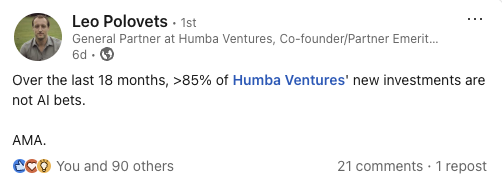
While the post itself was tongue-in-cheek, the message struck a chord with me. Leo is very well-respected VC who has both worked for and invested in multiple consequential companies. He’s making big bets, but not necessarily in AI.
This also maps to what I’ve been seeing in the market. While I’ve met with plenty of founders of AI-centric companies as of late, I’ve also met strong, ambitious founders working in manufacturing, space technology, transportation, infrastructure, and the mining of rare earth minerals.
There are a lot of founders working hard to solve big, consequential problems right now. Not only in AI.
3. The Frustrated Founder
In the midst of all of this, I met a founder who was extremely frustrated with the lack of progress they’d made raising capital from VCs. In relaying their experience to me, the founder proclaimed that they had a stellar founding team with an amazing track record, a working prototype and clear evidence of a market need. Yet they were getting zero traction with investors.
Later that day, I looked up the founder’s company and thought to myself, “what a nice, incremental business.”
“…incremental business.”
I don’t know why that particular phrase popped into my head, but that’s when everything clicked.
To be clear, there was nothing wrong with this founder’s business. It was — and is — a perfectly reasonable B2B SaaS company. The type that was built to solve a real problem and that very likely would have been able to raise VC funding 2 years ago (not because of ZIRP, but because it is a perfectly reasonable company solving a real problem).
Yet in comparison to AI companies, with their unprecedented growth trajectories, and deep tech companies, with their imagination-bending potential, it just felt…
…incremental.
Right now, we are entering a period of monumental technological change. Virtually every industry is going to be impacted by AI. At the same time, consequential technologies are on the verge of disrupting countless industries from energy to transportation to manufacturing to defense. Founders building in those spaces or who are able to convincingly argue why their company will benefit from the changing landscape are having more success fundraising than ever before.
But for founders of nice, incremental businesses. The type that solve a real problem and that very likely would have been able to raise VC funding 2 years ago, it’s a different story.
Not because they aren’t good businesses. But because they no longer capture the imagination. Which in the mind of an investor translates to a lower potential return (and always remember, the job of a VC is first and foremost to generate a return for their LPs). Moreover, in many cases, it’s not clear if the problem they’re solving will even be around in 5 years.
That e-commerce company you’re building? Is it relevant if AI changes how we shop?
That vertical B2B SaaS company you’re building? What happens if someone can vibe code a competitor next year?
These may sound like facetious questions, but I promise they’re not. We really don’t have any precedent for the adoption of AI. Which is why investors are piling into the relatively small number of companies whose founders can clearly articulate why they will be relevant in a post-AI world. And saying no to virtually everyone else.
It might not seem fair, but I think this is going to be the fundraising reality for the immediate future — at least until we have some more clarity around the rate at which AI and AI-driven technologies will permeate the broader market.
So if your company started out before the AI wave, you’re not building in deep tech, and/or you don’t have a convincing answer to the question, “why will this be relevant in 5 years?” then I’m afraid that VC (probably) isn’t right for you.
7 Things I Learned From VCs Who Passed On Me
Hundreds of VCs passed on me when I was a founder. And I learned important lessons from a lot of them.
When I was a founder, we ran a high-velocity fundraising process each time we raised capital. That meant a lot of investor meetings. And a lot of VCs who passed on us.
I learned a lot from those investors — though some of the lessons didn’t become apparent until I was on the other side of the proverbial table.
I’m going to present this week’s post in the style of a list of Friends episodes. (If you’re too young to know what that means, ask your friendly neighborhood AI to explain it 😉.) Here are 7 things I learned from VCs who passed on me:
1. The One with Josh Kopelman
Josh Kopelman was an early investor in Aster Data, the big data company where I was the first employee. After Aster Data was acquired and I left to found DataHero, he spent more hours than I can remember meeting with me and brainstorming about the potential for cloud BI. Each time we met, he asked poignant questions that had a material impact on the trajectory of our company.
On the one hand, Josh was definitely playing the long game and hoping for a potential investment. But it was more than that. I always felt like he was genuinely excited about what we were doing. Even after passing on our Pre-Seed round, Josh continued to make time for me. It always felt like he sincerely wanted us to win.
It was only later that I realized how much of an outlier Josh was in the way he interacted with founders. And it’s influenced how I approach the role of an investor to this day.
The Lesson: The best investors genuinely want to see you win, even if they don’t invest in you.
The Tip: “Pay-it-forward” culture is real. If you encounter an investor who’s willing to offer you their time, don’t be afraid to take advantage of it. Just make sure to pay it forward down the road.
2. The One About the New iPhone
Back when I was a founder, every new iPhone release came with lines around the block of fanboys eager to get their hands on the latest-and-greatest device.
One day, I entered the office of a VC who proudly showed me his brand new iPhone. And then proceeded to stare at it for the duration of our meeting.
I have no doubt that whatever messages he was getting during our meeting were of the utmost importance (were they from the President? or maybe they were from Steve Jobs himself?). Either way, the fact that a VC literally stared at his phone non-stop during a 20-minute pitch meeting made me feel like absolute shit.
It was a complete waste of my time. And I will never, ever forget it.
The Lesson: If an investor isn’t giving you their undivided attention, then they aren’t giving you any attention (and they’re not going to invest).*
The Tip: Don’t be afraid to politely but firmly excuse yourself from a situation when an investor isn’t focused on you (e.g. “It seems that this meeting isn’t a priority for you, so I’m going to give you back your 20 minutes and allow you to focus on what is.").
* Occasionally, a legitimate issue comes up during a pitch meeting. If an investor seems sincere and apologetic in their need to deal with it, try to be understanding.
3. The One With the New Partner
Back when we were raising DataHero’s Seed round, we were in deep diligence with a top tier, multi-billion dollar Silicon Valley firm. The lead partner had an extensive background in our space, understood what we were trying to do, and seemed eager to lead the deal.
What we didn’t realize at the time was that he was brand new to the firm and he had never led a single investment.
We spent weeks in diligence with the firm, including multiple presentations to larger and larger groups of partners. And then one day, the deal just died.
It wasn’t until years later that I found out what actually happened. After the final partner meeting, one of the firm’s senior-most partners asked our champion a straightforward question:
“Do you believe in this company enough to make it your first investment?”
He waffled. And the deal collapsed.
The Lesson: A VC’s tenure with their firm directly impacts their ability (and willingness) to get deals across the line.
The Tip: If a firm “redirects” you to a new partner — even if they’re an expert in your space — ask questions to understand their deal history with the firm and their ability to lead the deal.
(To read more about this situation, check out The Paradox of the Junior VC Partner).
4. The One With the Self-Proclaimed Expert
Ok, this wasn’t just one. It was many. In fact, I’m pretty sure every founder has had this experience multiple times.
You’re five minutes into a pitch with a VC when all of a sudden they turn around and start mansplaining to you exactly what you’re doing wrong and how to fix it.
To the self-proclaimed expert, every startup is a nail and they’re the only hammer to save-the-day. There’s the go-to-market expert, who will tell you how to fix your sales strategy despite having no experience in your industry. The product expert, who will tell you the one tweak that will magically fix your churn because it worked for him 20 year ago (also, he’s never actually tried your product). And don’t forget the marketing expert, to whom everything is just a matter of “positioning”.
(Note: the self-proclaimed expert is different from a run-of-the-mill opinionated VC — of which there are many — in that they always seem to circle back to one specific topic, regardless of what you’re actually talking about.)
The Lesson: As in every industry, there are some investors who just need to be the smartest person in the room.
The Tip: Learn to smile and nod? I dunno…I never really figured this one out.
5. The One About the CVCs
Prior to DataHero, my knowledge of corporate venture capital firms (“CVCs”) was limited. I knew that a lot of tech companies had venture capital arms, but I didn’t really understand how or why they differed from regular VCs.
In those days, Intel Capital, Google Ventures and Salesforce Ventures were three of the CVCs that were most widely respected amongst founders and I had the opportunity to pitch all of them. In each case, my interactions were strongly positive. The partners were extremely well-informed with an understanding of the market that exceeded that of many other VCs I met. But in each case, a topic of conversation arose that did not come up with traditional VCs: synergy.
Some CVCs had very direct requirements. For example, Igor Taber of Intel Capital had a single question: how would DataHero’s success help Intel sell more processors? (It wouldn’t)
In Salesforce’s case, Villi Iltchev wanted to understand how we envisioned DataHero fitting into their portfolio of offerings (given that we thought their reporting product was atrocious and wanted to replace it, I didn’t have a great answer).
Ultimately, our vision wasn’t closely enough aligned with the strategic objectives of any of the CVCs that we pitched, so none of those conversations went far.
The Lesson: CVCs are looking for strategic alignment on top of (and in some cases, instead of) financial benefit from their investments.
The Tip: Ask corporate VCs what strategic objectives they’re trying to satisfy and what needs to be true in order for them to invest.
6. The One With the Industry Luminary
One of the investors I met with while fundraising for DataHero’s Pre-Seed round was a genuine luminary in the database space. He had co-founded an incredibly successful company before becoming a prolific early-stage investor. His understanding of both technology and business were second-to-none. So why did he pass?
His company — like many others of the big data era — was built on the premise that all of the data in a company should be collocated in a single data warehouse. What we were proposing with DataHero went directly against that premise. We believed that data would be distributed across the cloud services companies were increasingly adopting. Not only that, we also believed that an increasing amount of data analysis would be performed without the traditional data warehouse team involved.
This conflict meant that the only way for DataHero to succeed would be if the premise upon which the investor had built a successful 20-year career no longer held.
Despite multiple engaging and intellectually stimulating conversations, the luminary remained rooted in his view of the world and passed on DataHero.
The Lesson: A VC is unlikely to invest if a fundamental premise of your startup goes against a belief that they hold strongly.
The Tip: Qualify potential investors by testing their openness to the future state that you envision (e.g. “We believe that the future will involve X. What do you think of that?”)
7. The One About Everyone Else Who Passed
Whenever a VC passed on DataHero with an explanation along the lines of, “it’s not a fit for us,” I struggled to accept their reasoning at face value. After all, shouldn’t a good VC want to invest in a stellar business no matter what?
Now that I’m on the other side of the table, I understand how wrong that line of thinking is.
In many cases, a company just isn’t a fit. It might not be a fit for the firm’s thesis, it might contradict the partner’s lived experiences or the partner might realize that, given the dynamics of their firm, it’s unlikely that the deal will get approved.
After nearly 10 years as an investor, I understand the degree to which, “it’s not you, it’s me,” really is a thing when it comes to VCs.
The Lesson: Sometimes (s)he’s just not that into you.
The Tip: Fundraising is a numbers game. By filling your fundraising funnel with a sufficient number of qualified target investors, you put yourself in the best position to succeed even when many investors pass for reasons that aren’t entirely clear to you.
Fundraising Sucks. Get Over It.
Each week, I get emails from founder expressing frustration about fundraising. My advice? Get over it.
At least once a week, I get an email from a founder expressing frustration about one or more aspects of fundraising. The process. The way they were treated by an investor. The lack of feedback. The simple fact that they have to do it in the first place.
“Founders are tired of having to validate themselves and their ideas to VCs, so the VCs can make money on the backs of those who are doing the work.”
Having been in Startupland™ for 20+ years, I can confidently say that almost no one enjoys the process of fundraising (shout out to Andrea Barrica and Kim Kaplan, two of the only humans I’ve ever met who genuinely love it). Fundraising is time-consuming. It’s inefficient. It’s filled with gatekeepers. It pulls the CEO away from running the business.
“We're the ones that need the runway, and the money is a tool to help us get there to make *everyone* money and create jobs, etc. etc. so what sense does it make for the key person to take so much time (and money!) away from the business to secure this?”
The thing is: none of this is a secret.

Every founder you know who has ever raised money (or tried to) will warn you about how difficult, time-consuming and frustrating it is. Mentors and advisors will caution you to temper your expectations. And the internet is awash in posts with tips and tricks to try to make it easier for you to fundraise (including plenty from yours truly). So this really shouldn’t come as a surprise.
Despite that, many founders start off with the naive presumption that their fundraising experience will be different/easier/better.

But once things get going, 99.9% of founders are splashed with a cold, hard dose of reality. And it sucks.
It really does. (I know because it happened to me.)
How founders react to this reality is a big indicator of what comes next.
I’ve spoken to thousands of founders over the years about their fundraising experiences and the best all had one thing in common: when the going got tough, they focused on finding solutions, not making excuses.
So if you’re finding that your fundraising process isn’t going as planned, I have one simple piece of advice: get over it.

Sounds harsh? Maybe. But it’s also the path to success.
I have deep respect and empathy for all founders, especially when it comes to how hard it can be to fundraise. That’s a big reason why I put so much time and effort into trying to make it just a little bit easier with this website. Unfortunately, a lot of founders get caught in a spiral of despair around how difficult fundraising is, which distracts them from figuring out why it’s not working and identifying the factors that are within their control.
Let’s start with the fact that VC (probably) isn’t right for you. The reality is that venture capital isn’t a fit for 99% of tech startups — something that has more to do with the VC asset class than it does the startups themselves. That simple fact accounts for the lion’s share of frustration around fundraising — many founders spend months trying to raise funding from VCs when their business was never going to be a fit.

If you’re running a high-velocity fundraising process (which I hope you are!), then you should be able to get enough datapoints to recognize if there is something fundamental getting in the way of investors leaning in within weeks. After 2-3 weeks of back-to-back meetings, you should have feedback from dozens of potential investors about your business. At that point, it’s up to you what to do with it.
(If you aren’t running a high-velocity fundraising process and find yourself limping from one investor to the next — with only a meeting or two each week — I can’t urge you enough to stop and regroup. There are so many reasons why a drawn-out fundraising process is bad — one of the most important being that it’s difficult to see patterns in the investor feedback.)
Assuming that you’ve lined up a sufficient number of investor meetings, make sure to dedicate time at the end of each week to really look at the feedback you received. What patterns do you see?
For example, if investors are repeatedly telling you that the market is too small or the opportunity isn’t big enough, what they might be saying is, “the market is too small for VCs,” not that it’s a bad idea. (See this post on why market matters most to VCs for more.) Now be honest with yourself. Are they accurate in their assessment of the market you’re going after? If the answer is yes, then you shouldn’t waste time seeking out more VCs, hoping that you’ll get a different answer.
Similarly, if the investors you’ve met with are overwhelmingly asking for more traction, then one of two factors is likely at play:
The investors you’re speaking to aren’t comfortable investing in companies at your stage
The investors you’re speaking to aren’t convinced that there’s a market for what you’re building
Plenty of founders (and ecosystem supporters) get caught in the trap of complaining about (1), particularly when their home base is an emerging ecosystem with relatively few real Pre-Seed investors. That might be frustrating, but complaining won’t change anything. It’s time to change tactics.
“There are not enough people doing sub-100k investing in Canada... the VC models don't support it. Only VCs seem to disagree with me.”
I could write an entire series of blog posts translating the feedback founders get from investors (and maybe I will down the road), but my point here is simple: after 30 or 40 investor meetings, you should start to see patterns emerge in the feedback you’re receiving. Taking the time to identify and reflect on those patterns is critical to making progress on your fundraising journey and avoiding the frustration trap.
The question is, will you pay attention to those patterns?
Chances are, they’re telling you that there is something fundamental in your current approach to fundraising that’s preventing you from succeeding. It could be something about your business. It could be something about the way you’re pitching the business. It could be something about the investors that you’re pitching the business to. Either way, the sooner you recognize the patterns, the sooner you can change tactics. But complaining about how unfair fundraising is won’t change anything. (Note: you certainly have every right to complain — and you should absolutely leverage your mentors, advisors, friends and friendly-neighborhood bloggers to let off steam — but know that complaining won’t change the outcome.)
So pay attention to the patterns. They’re pointing the way forward.
But at the end of the day, if you really don’t like fundraising. If you think it’s completely unfair and it’s all the investors’ fault that you can’t raise capital. If you find yourself getting angrier and angrier at what you’re having to go through in order to get the company off the ground,
…maybe, don’t do it?

Venture Capital’s Changing of the Guard
Venture capital is not broken. But it is evolving.
“VC is broken!”
It’s an increasingly common refrain in the post-ZIRP environment. Look on social media these days and you find plenty of calls for venture capital to be reformed, refactored or replaced outright.

Ignoring the fact that most of these posts come from folks who either have a bone to pick with VCs or stand to benefit from its demise, the reality is that venture capital overall isn’t broken. In fact, by many measures it’s as strong as it’s ever been.
Let’s start with the basics. Historically, the median VC manager has outperformed the public markets — with even bottom quartile managers coming close (the chart below is from JP Morgan’s 2021 biennial review of alternative investments):

Of course, a lot has happened since 2021. But the reality is that the amount of dry powder continues to grow. This chart depicts the amount of committed capital (“dry powder”) held by US VCs as of the end of Q1 2024:

That’s not to say that everything has been roses and rainbows. VCs across the board have struggled with liquidity in the past two years, as IPOs and acquisitions have been few and far between.

This lack of liquidity has made it harder for many VCs to raise new funds, as many LPs are waiting for distributions before committing to new investments.
But these issues have affected all of private equity — not just venture capital — and absolutely no one is claiming that private equity is dead.
So, no, venture capital is not broken. But it is evolving.

On the supply side (VCs), we’re seeing a consolidation of venture capital funds into a barbell, with megafunds on one end and small, focused funds on the other. This is leaving many mid-sized funds — particularly those without meaningful differentiation — struggling to figure out their path forward. I recently wrote about why VCs care about ownership, and this dynamic is a direct result of that. Undifferentiated mid-sized funds are too small to compete with megafunds for the top deals and too large to take off-the-beaten path risks. Many such funds are now struggling to adapt to a new reality where the historically linear path of startup funding (Pre-Seed to Seed, then Series A, Series B and so on) is no longer the only way.
And we’re seeing the impact in a dramatic drop in the number of such new funds raised:

Alex Kolicich of 8VC noted the uniqueness of these shifts in his recent Q3 2024 State of Venture Update,
It’s remarkable to reflect on the unique moment we’re experiencing in the venture world. The number of individual investors is shrinking, opportunities have dwindled, exits have stalled—yet we have more dry powder than ever, increasingly concentrated among the top firms. What a world.
On the demand side (startups), we’re seeing considerable changes as founders reconsider how they view venture capital. For starters, there’s a growing awareness amongst many founders that VC (probably) isn’t right for you — and that’s a good thing. But that’s not all.
When VC funding started tightening in 2022, those of us old enough to remember “the old days” responded to founder complaints about how difficult it had become to raise capital with some version of “this is how it’s supposed to be.” Investors and founders alike were tripping over themselves about a “return to normal” in startup funding. But a funny thing happened: many Gen Z founders who had never experienced “the old days” refused to go along with this narrative. Rather than begrudgingly accept that startup funding had become more difficult and move on, many founders rejected the self-serving notion that VCs could demand higher and higher levels of progress and traction in exchange for funding.
As a result, in contrast to prior cycles, the proverbial pendulum hasn’t fully swung back to investors. Rather, an increasing number of founders are taking “door number 3” and rejecting the notion that their path should be dictated by a treasure map drawn by VCs.

Some of these founders have tasted the sweet, sweet nectar of revenue and have decided to grow based on that. Many are simply managing their cash flow in a way that would impress even our depression-era grandparents. I know of many companies that continue to operate off of a single round they raised 2-3 years ago while making impressive gains. Bryce Roberts of Indie VC first highlighted the trend of “one-and-done” rounds back in 2017. Back then, it was something of a rarity, but these days a considerable number of founders are intentionally pursuing that path. At a broader level, the best founders today are raising fewer rounds with less dilution and/or skipping rounds altogether.
And many VCs are struggling to come to terms with this.
Firms with mediocre returns that don’t have much of a differentiator or positioning beyond “solid, inoffensive fund that’s a good fallback if you can’t raise from a top tier VC” are struggling to raise new funds or closing up shop entirely. Many individual investors who are later in their careers or who don’t have the inclination to reinvent themselves are opting out of venture capital as a career. Others who are refusing to adapt are being managed out by their firms.

At the same time, the best VCs are embracing the challenge by going back to the basics while focusing on new ways of investing in and supporting founders. From YC’s move to 4 batches to the return of Indie VC to new firms like Chemistry, we’re seeing an incredible amount of creativity when it comes to VC offerings. And with so many GPs having left established firms to create something new, there’s undoubtedly much more on the horizon.
There’s a changing of the guard underway in venture capital. And that’s great for founders and investors alike.
Why Do VCs Care About Ownership?
Why is ownership percentage such a big deal to VCs?
I recently received a cold email with the following subject line:
Subject: Pre-Seed — Proven Founder — Round Almost Full — AI, Robotics
I opened the email purely out of curiosity, knowing full well that I had no intention of responding.
“Why not?” you ask. “Why wouldn’t you be interested in a repeat founder in a hot space with solid traction in their round?”
Because I know that I won’t be able to secure the ownership necessary to fit Panache’s fund model.
The scenario above happens quite frequently. In fact, it happens all the time,
“The round is almost entirely filled, and the opportunity to invest at this stage will not be open much longer.”
“Our raise is filling up, but we’re speaking to a few more investors.”
“Our funding round is almost full (~80%). The window to invest is closing.”
More often than not, introductions like these are just trying to project fake FOMO and the round isn’t really “almost full”. But sometimes it is.
Many first-time founders genuinely believe that approaching a VC with a scarce offering will increase their chances of closing them as an investor. In reality, the opposite is true — and most founders don’t even realize it. To understand what’s going on, you need to understand the role that ownership plays in generating returns for VCs.

Time for some VC math!
The Basics of VC Returns
In general, VCs aim for a 3x return over the course of about 10 years. For a $10M fund, this means a target of $40M in exit value (the amount of money that the fund receives as a result of IPOs and acquisitions). For a $100M fund, the goal is $400M. And so on.
Each fund has a thesis that underpins their approach to investing — the strategy that they intend to use to generate those returns. Some of the variables at play in a VC’s thesis are subjective, such as:
What sectors does the fund invest in?
What geographies does the fund focus on?
To what degree does the VC provide value-added services to their portfolio companies (accelerators, platforms, etc.)?
Under what conditions would the VC consider selling their position early?
Other variables directly impact the mathematics at play, including:
How many companies does the fund invest in?
How much money does the fund invest in each company?
Does the fund make follow-on investments (invest multiple times into the same company)?

There are a lot of variables at play in an investment thesis
These variables form the basis for what’s referred to as a fund model: the financial model that represents how a VC intends to achieve its target return. This blog post walks through a simplified version of the process used to come up with the inputs to a fund model for a hypothetical $100M VC fund.
You can think of a fund model as the concrete, mathematical encapsulation of a VC’s thesis. It includes the inputs (how many companies the fund plans to invest in, how much money the fund plans to invest into each company, etc.), projections about each portfolio company’s lifespan (how many companies will make it to each subsequent stage, all the way through to IPO), assumptions about exit scenarios and many other factors. One of the key variables included in every fund model is the percentage of each company that the VC believes it needs to own at exit (and, thus, at each stage leading up to exit) in order to generate its target returns.
Why is Ownership Percentage So Important to VCs?
Ownership percentage matters to VCs because of the explicit target return we discussed earlier. This is the most fundamental difference between VCs and angel investors.
Most angel investors aren’t too worried about ownership percentage because, unlike VCs, most angel investors don’t have specific return objectives. Whenever I’ve made angel investments, I wasn’t overly concerned about whether my investment had the potential to return 4x, 40x or 400x. My motivation was quite simply to invest in amazing founders who I thought were doing amazing things. At the end of the day, any positive return would generally be good for me (as part of a healthy, balanced portfolio 😉).
But VC funds are financial products that aim for a very specific target return (3x over 10 years). When you combine this objective with the power law nature of tech startups (that is, the notion that the majority will fail and a small percentage will drive most of a fund’s returns), the need to be explicit about ownership percentage starts to make sense.
Let’s dig into a hypothetical example to see what I mean:
A Simple Example
Imagine that I have a $10M fund and intend to invest $1M into each of 10 companies. For simplicity’s sake, let’s assume that I don’t intend to make any follow-on (pro rata) investments. In this overly-simplified fund model, assume that exactly 1 of those companies will reach a $1B exit valuation and the other 9 will fail outright.
In order to generate a 3x return ($40M in exit value), I need to own at least $40M / $1B = 4% of the successful company when it exits.
Let’s assume that the successful company raised 5 rounds of funding prior to exiting (Pre-Seed, Seed, Series A, Series B and Series C). Let’s further assume that each round of funding diluted my ownership in the company by exactly 25%. With these assumptions, we can work backwards to understand how much my fund needs to own after each stage of investment in order to generate my target return:
| Stage | Minimum Ownership |
|---|---|
| Exit (Series C) | 4% |
| Series B | 5.33% |
| Series A | 7.11% |
| Seed | 9.48% |
| Pre-Seed | 12.64% |
Looking at the above table, if I’m investing at the Seed stage, I need to secure at least 9.48% ownership in each company if I hope to return my fund with a single exit. Similarly, if I’m investing at the Pre-Seed stage, my post-round ownership must be at least 12.64%.
But there’s more…
The astute reader will immediately recognize that by combining the investment amount ($1M) with the ownership targets above, we can determine the maximum post-money valuation that I can invest at in order to secure my target ownership:
| Stage | Minimum Ownership | Maximum Valuation |
|---|---|---|
| Exit (Series C) | 4% | - |
| Series B | 5.33% | $18.76M |
| Series A | 7.11% | $14.06M |
| Seed | 9.48% | $10.55M |
| Pre-Seed | 12.64% | $7.91M |
Your Fund Size is Your Strategy
One of the most common expressions in venture capital is “your fund size is your strategy.” I have no idea who said it first, but Charles Hudson of Precursor Ventures has a great post about the concept here (in which he credits Mike Maples, Jr. of Floodgate for teaching him). Charles notes,
“Your fund size, for the most part, dictates your check size, ownership targets, and portfolio construction. A fund of a given size only has a few levers to pull to get to top-tier returns.”
Looking at the above table, we can see this concept in action. With a $10M fund writing $1M checks, there are only a couple of investment strategies that make sense. It’s completely realistic for a Pre-Seed fund to invest in $1M into great startups at a ~$8M valuation. It’s possible to find strong Seed startups at a $10.5M valuation (but they’re more likely to be diamonds in the rough and/or located outside of the major tech ecosystems). A top-notch Series A company at a $14M valuation?

Thus, the strategy for my hypothetical fund directly flows from its size: I can either do Pre-Seed investing (mostly as the lead investor) or Seed investing (mostly as a follow-on investor in second tier markets). Regardless of which strategy I pursue, my ownership targets are not arbitrary.
(There are, of course, other theses one could use to invest $10M, but I’ll leave that as an exercise for the reader.)
How Flexible are VC Ownership Targets?
We’ve covered why ownership targets are so important to VCs, but sometimes it can be hard to for founders to figure out what those targets actually are.
While many VCs will transparently share their ownership targets with founders, others are cagey (particularly when they’re trying to use ownership target as a negotiating lever). Even more confusing is the fact that some VCs claim to not have ownership targets. What’s the deal?
There are a few mitigating factors at play, which can muddy the waters.
Multistage Funds
Multistage funds (funds that invest in multiple stages) typically only enforce their ownership targets at the stage that they consider their “primary” focus. For example, a fund that invests in Seed and Series A will likely only place a hard limit on ownership for Series A investments as they have the opportunity to increase their ownership in companies that they invest in at the Seed round. This opens up a variety of additional strategies, including:
Investing a small (possibly inconsequential) amount into a Seed round in order to have an “option” on the Series A (VC scouts and scout checks are a direct manifestation of this strategy)
Investing at the Seed stage with the intention of doubling down (exceeding the target ownership) in particularly strong companies
It’s worth noting that this dynamic is the source of “signalling” and why taking a small investment from a multistage fund is so problematic if they don’t subsequently invest — if a fund is known to focus on target ownership in a particular round and they opt not to pursue that level of ownership in a company that they previously invested in, it leads to the (very reasonable) presumption that there must be something wrong with the company.
When dealing with multistage funds, it’s important to go a level deeper when asking about ownership targets,
“Can you walk me through the specific ownership targets you have at each stage that you invest in?”
“What is your specific ownership target at Seed? What is the target at Series A?”
Exit Modeling
Another significant factor in how VCs treat ownership targets is how they model various exit scenarios. Does the firm believe that only 1 company will have a significant exit or more than 1? Do they believe that any of the companies that are not “breakout winners” will still generate enough of a return to statistically impact the overall fund return? And so on.
Exit modeling is one of the main drivers in how strict (or not) a VC is when it comes to their target ownership percentage.
And guess what? Fund size is a big driver of this,
“The size of your fund also dictates the scale of outcomes that can actually move the needle for your fund, and that shapes the lens through which you evaluate the terminal scale of startups that come across your desk. The larger your fund, the larger absolute scale of outcomes you need and the more of those outcomes you need to achieve to make your math work.”
Smaller funds, notes Charles Hudson, have a lot more flexibility in the types of investments they can make by virtue of the fact that smaller outcomes move the needle for them. But it still depends on how they model the likely future.
In our earlier example, we used a very simplistic model which stated that one company would succeed and all others would fail outright. In such a case, the VC must enforce hard limits on the minimum ownership in each and every company. Failing to achieve it’s ownership target in even a single company could cause the fund to not reach its target return (should that one company be the one that reaches a $1B exit).
But most fund models are more sophisticated and include a variety of scenarios, including some number of smaller exits, secondary opportunities (sales of a company’s shares prior to a final exit) and terminal exits that aren’t always the same size (e.g. one company’s “best case scenario” might be $1B, while another’s could be $5B). How these scenarios come together and which scenario(s) a potential investor feels most realistically map to your company ultimately determine how flexible (or inflexible) their minimum ownership requirement is.
Asking a potential investor a more weighty question about their ownership targets can not only illuminate their thinking, but it shows the investor that you have a strong understanding of how their decision process works:
“Can you walk me through how your fund model leads to this ownership target?”
“What assumptions about my company are baked into your fund model that lead to this ownership target?”
“What are you assuming has to occur after an investment in order for this ownership target to lead to your return objective?”
“What is your return objective for my company?”
Which brings us back to our initial cold email.
When a founder says “round almost full,” what many VCs hear is “we won’t be able to achieve our ownership target”. Some investors will still take the time to meet with the founder as a first step towards a potential investment in their next round, but more often than not, it’s simply not worth it. So what should you do?
If your round is legitimately almost full, try to focus on investors that you know write checks that are size-appropriate (most investors make it easy to figure out from their website what their range of investments is).
On the other hand, if you have soft-circled a significant amount of investment yet are still hoping to land a VC, consider adjusting your outreach in a way that allays ownership fears while still projecting strong interest:
Subject: Pre-Seed — Proven Founder — $800K in angel interest — AI, Robotics
What Happens After You Sign a Term Sheet?
Here are the steps that occur between signing a VC term sheet and the money being deposited into your startup’s bank account.
You’ve done it!
After weeks of back-to-back meetings and late-nights running your high-velocity fundraising process, you’ve finally signed a term sheet with your dream VC.
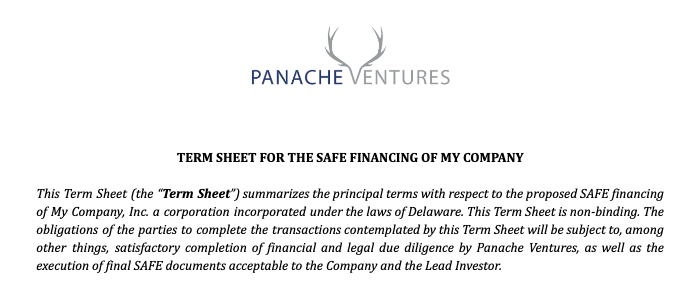
So…what comes next?
If you’ve ever been in sales, then you know that the deal isn’t done until the money’s in the bank. So let’s walk through the most common steps that occur between signing a term sheet and that sweet, sweet cash being deposited into your startup’s bank account:
1. Investment Agreements
The most substantial closing task is the negotiation of the final investment documents.
If you’re a Pre-Seed startup and the investment is being done on a SAFE or similar “standard” agreement, then this is usually straightforward. There may be a bit of work that needs to be done if your company isn’t incorporated in Delaware, but that’s about it. You should also expect that the VCs participating in the round will want you to sign a side letter.
If you’re doing an equity round, then this process is more involved (particularly if this is your first equity round). The parties will have to agree on an initial set of shareholder agreements that reflect the terms agreed to in the term sheet you signed. Shareholder agreements govern many aspects of the company going forward and form the basis for all future fundraising rounds. I won’t go into the details, but expect it to take about 2-3 weeks (add an additional 1-2 weeks if you’re an international company).
2. Legal Diligence
In parallel with negotiating your investment agreements, the investors and their lawyers will perform legal diligence. This involves reviewing your incorporation documents (to make sure that your startup has been properly incorporated and is in good standing), any sales or partnership contracts (to ensure that they say what you think they do), and any prior investment agreements.
When reviewing your prior investment agreements, the focus is on identifying non-standard clauses (clauses in the agreements that give prior investors unusual rights or benefits). Unfortunately, there are unscrupulous investors — particularly in smaller ecosystems — that include clauses that give them unreasonable liquidation preferences, clawback provisions, anti-dilution protections and other non-standard rights. Depending on the nature of these terms, the incoming investors may insist that your prior investors give up these rights as a condition of your new round (which can put you in a difficult position with your earlier investors). Rest assured, most Pre-Seed VCs are used to dealing with these types of situations. The good ones are empathetic towards your position and will often try to help negotiate an outcome that works for everyone as part of “cleaning up the cap table”.
3. Cleaning Up the Cap Table
The journey to build a startup isn’t the same for everyone — especially when it comes to funding it. Whether it’s a plethora of small angel investors, a stack of overlapping SAFEs and convertible notes, or “dead space” on the cap table due to cofounders leaving, it’s not unusual for a cap table to look like a hunk of Swiss cheese by the time founders raise their first VC-led round.

Where did that piece of equity I left here go...?
There’s no judgement here — doing whatever you have to in order to move the company forward is worthy of kudos — but at some point, you have to clean out the cobwebs. If things are particularly messy, “cleaning up the cap table” may be a condition of closing the new investment. That could mean signing agreements with departed cofounders to recover their equity, convincing early investors to give up non-standard rights, or even buying out tiny investors in order to simplify things. VCs will typically work with you on this process in order to make sure that your cap table is as clean and simple as it can be coming out of the funding round.
4. Financial Diligence
While the cap table is a big focus for VCs, they’ll also perform broader financial diligence as part of the closing process.
For early-stage rounds, this is typically fairly light (investors will request and review standard financial reports, confirm bank account balances, etc.). Some will request access to your accounting system in order to dig deeper (particularly if you’re a fintech company or are already generating significant revenue). Don’t be surprised if investors make a lot of small requests in order to confirm the company’s financial details (because, no, VCs don’t skip diligence).
5. Founder Background Checks
Many early-stage VCs, including Panache, perform background checks on founders as a condition of investment. In our case, we use a service called Certn, which provides “the world’s easiest background checks.” The simple, straightforward process (which we pay for) confirms that you are-who-you-say-you-are and there aren’t any skeletons in your closet that you haven’t shared with us.
6. Re-Incorporation
In some cases, you may re-incorporate your company in parallel with closing your funding round. This is most common when an international company performs a “Delaware flip” to become a US-based company. Make sure that you involve both legal and tax professionals when going through a re-incorporation, as there can be significant financial implications for founders if not done correctly.
7. Lots of Waiting
There are three certainties in life: death, taxes, and the closing process will take longer than you expect.
When closing a round of funding, it’s pretty normal for unexpected hiccups to arise. Sometimes, it’s because something unexpected is discovered during diligence. A lot of the time, it’s because of simple misunderstandings during the closing game-of-telephone.

The final days of closing can be nerve-wracking for founders. Stay in frequent contact with both your lawyers and your incoming investors. Don’t be afraid to ask why something is taking long or if a delay is unusual. More often than not, it’s simply that both sides are waiting to get enough time from their lawyers to get things across the line (that’s right, VCs have to wait for their lawyers too!).
A Note on European VCs
There’s an important difference to be aware of when it comes to the diligence process of European VCs compared to VCs in other countries:
In Europe, investors typically perform legal and financial diligence before they issue a term sheet. This can make it seem like the process leading up to a term sheet is far more onerous in Europe than in other countries (particularly the US).
If you’re raising in Europe, don’t be surprised if potential investors ask you for far more detailed financial and legal information than the investors you’re meeting with in other countries prior to issuing a term sheet.
Last But Not Least
I started off this post by stating, “if you’ve ever been in sales, then you know that the deal isn’t done until the money’s in the bank.” Whatever you do, don’t take your foot off the gas during closing.
Term sheets are generally non-binding, which means that investors in most countries can legally pull out up until the moment that the shareholder agreements are signed. Absent something materially negative being discovered during diligence, this is morally reprehensible, but it does happen.
The best thing you can do to preempt “buyers remorse” with your new investors is to continue making progress and closing sales, onboarding new users or releasing new features during the 3-5 week closing process. At a minimum, send weekly updates to show them the progress you’re making and keep them excited about their new investment.
And have a backup plan. It sucks to think about, but what will you do if the investment falls through?
Remember: you’re selling up until the moment investors wire the money. Never lose sight of that.

Why I Don’t Invest in “Outsourced” Startups
Startups that outsource the majority of their core work can be extremely profitable. But as a VC, I will never invest in one.
There is a particular type of startup that I regularly meet but which I will never invest in. I call it an “outsourced” startup. An outsourced startup is one for which the majority of the core work is — you guessed it — outsourced.
Here are a few examples of outsourcing “core work”:
Hiring a software development agency to build the MVP for a software startup
Hiring freelancers to implement core components of an MVP
Hiring a design / prototyping agency to design and build the MVP for a hardware startup
At first glance, it might seem odd to you that I have such a strong reaction to outsourcing development of some (or all) of an MVP. After all, it’s just an MVP. But as Hunter Walk once wrote, a startup’s culture starts with your first hire. That statement is true even if your first hire isn’t a conventional hire.
The Impact of Outsourcing on IP
When people think about the risks of outsourcing, the first thing that comes to mind is usually IP (intellectual property). In actuality, the impact of outsourcing on a company’s IP is generally low. A typical contract with an outsourcing agency or freelancer will make clear which aspects of the work product belong to the company and which (if any) belong to the contractor. So there should be no surprises.
However, there is an indirect impact that outsourcing has on IP that many founders underestimate: the institutional knowledge that a startup loses out on by not having solved the problem itself.
When you outsource development of something, the project is typically defined in terms of input and output. Rarely, if ever, does the project specification define how that should be done. The company will likely make some suggestions based on their experience and expertise, but the “how” is usually left up to the agency or freelancer. As a result, the startup doesn’t get the benefits of all of the lessons learned along the way while building the project.
And those lessons and their associated learnings can be significant.

To understand how much institutional knowledge comes along the way, just ask Rosie Revere, Engineer
The Impact of Outsourcing on Quality
While some development shops and freelancers operate on an hourly basis, the majority do project-based work (“We will charge you $X to complete Y project.”). As a result, they prioritize efficiency — they try to get each project done as fast and as cheaply as possible. While this might be great for the piggy bank in the short term, it can have long-term negative implications.
Most software engineers make decisions about quality (i.e. whether or not to put significant time and effort into a module or component) based on their knowledge of how important that component is likely to be to future plans. If we know that we’re going to continue to build on a particular module, we typically put more thought into how it is designed and implemented. Outsourced agencies rarely have that level of insight.
Patrick Collison, CEO and cofounder of Stripe, recently spoke about the notion of craftsmanship within the context of software engineering. He noted that,
“People very demonstrably care about aesthetics. And if they're a company, they care about the aesthetic characteristics of the products that they produce.”

We don’t often think about software “aesthetics” (unless we’re talking about user interfaces), but any good software engineer knows that there’s a big difference between “good” code and “bad” code. When reading code, you can immediately tell whether the author put thought and care into what they wrote. Over the long term, this matters.
The Impact of Outsourcing on Velocity
Velocity is the metric that matters most to startups. It’s the biggest advantage that up-and-coming startups have over incumbents and can make the difference between winning a new market and being an “also-ran”.
When used strategically, outsourcing can increase the velocity of a startup — specifically, when well-defined, non-core activities are outsourced. At DataHero, we leveraged outsourced development agencies to build many of the connectors we used to integrate with external APIs. This tedious but necessary work was self-contained, easily-defined and did not represent core company IP. Getting it off of the plates of our highly-paid Silicon Valley software engineers was a perfect use of outsourcing.
But when the use of outsourcing encroaches upon core work, it can have the opposite effect on a startup’s velocity.
With outsourcing, you rarely have complete control over the schedule. Your project can get bumped for higher-priority projects (read: clients with more money than you), team members can get swapped in and out without notice and you have little if any visibility into the agency’s culture. Are the people working on your project motivated and taken care of or is it a revolving door behind-the-scenes?
Over the years, I’ve met many startups who lost months of time (and significant amounts of money) due to missteps with outsourcing. In one recent example, a company that outsourced the development of a hardware MVP had to wait 9 months for the output that they were promised in 3. That’s a lifetime for a startup.
If you don’t have control over your timeline, you simply cannot compete.

The Impact of Outsourcing on Culture
In his interview about craftsmanship, Patrick Collision made the following observation,
“As much as the sociology and "cultural" explanations of defensibility are real, the best people consider themselves crafts people in their domain and they really, above almost all else, want to work with the best other people.”
Combining this comment with his earlier statement leads to two important observations:
The best technical people consider themselves crafts people and care deeply about what they’re building
The best technical people want to work with the best other people
Both of these statements contrast with the reality of outsourcing.
There are many good, competent people who work as freelancers and at outsourcing agencies, but not the best-of-the-best. And if you’re trying to win a global market, that’s what you’re competing against.
Moreover, the best technical people want to build “the thing”. While it might seem perfectly reasonable for a company that is lacking certain skills to outsource short-term development, at some point that work needs to be brought in-house (at least, if it represents core work). And the best people in the world don’t want to be handed someone else’s mediocre thing and be told to fix it.
This is the primary reason why so few companies that are founded by venture studios become anything more than quick acquisitions. That entire business model is based on the premise that the founding team of a product company can be replaced wholesale without any negative impact. I simply do not believe that to be true (which is precisely why I generally don’t invest in companies that are founded in venture studios).
Outsourced Companies Can Still Be Successful
Companies that choose to outsource significant portions of their core work can still be successful. They can develop IP that can subsequently be sold or licensed and they can create very profitable cash flow businesses. But they do not generally lead to large, defensible, globally-competitive outcomes.
As a VC, that’s what I’m looking for. A team that, over the long term, develops the knowledge and knowhow to do things that no other company in the world can do. A team that is deeply passionate about what they’re building. A team that can beat my friends.
And that doesn’t manifest when half the money I invest in you goes to the margin of an outsourced development agency.
YC's Move to 4 Batches is a Win for Founders
Last week, YC doubled the number of batches it's running each year. Here's why that's good news for founders.
Last week, the world’s top accelerator, Y Combinator, announced that it is doubling the number of cohorts it runs each year — from two to four:

As with any move YC makes, this one was immediately scrutinized across the tech industry. It’s bold! It’s absurd! It’s good! It’s bad! Not to mention this beauty:

Uh…sure…
So what’s behind the move and why is it good for founders?
How Accelerators Work
Let’s start with how accelerators work.
Back in its heyday, I was a Venture Partner/EIR at 500 Startups and helped run its flagship San Francisco accelerator. Over the years, I’ve spent a lot of time working with accelerators around the world. All accelerators operate with a very similar, batch-driven schedule:
Pre-Marketing (activities to promote the upcoming batch)
Review Applications (after applications open, review and filter them to determine who gets interviews)
Interviews and Company Selection
Legal and Administrative (diligence, funding, etc.)
The Batch!
Demo Day
Rinse-and-Repeat
For founders and the public at large, the batch and demo day are the two most visible aspects of an accelerator. But the activities that surround each batch actually take far more effort than running the batch itself. Believe it or not, the majority of accelerators have more behind-the-scenes staff handling administrative and other activities than they do personnel who directly interact with founders (and that’s without higher-level responsibilities like fundraising, investor relations, HR, etc.).
Why More Batches is Better for Founders
A key aspect of Y Combinator’s announcement is that it is not increasing the number of companies it invests in each year:
“…the total number of startups going through the program each year will hold steady at about 500…”
In other words, by doubling the number of batches, YC is effectively decreasing the cohort size by 50% (from ~250 companies per batch to ~125).
This is likely to be a significant improvement for founders for the same reason that we benefit from smaller class sizes at other types of schools:
A smaller class size means a higher “teacher-to-student” ratio (which leads to better results)
A smaller class size increases the connectivity between the students
(This latter point is particularly significant for startup accelerators, where peer pressure amongst founders has a significant impact on company performance during the batch and, ultimately, fund returns.)
The shift to smaller cohorts should enable YC to provide more hands-on guidance to each company (including more opportunities for founders to benefit from partners other than their lead), while giving founders the opportunity to get to know more of their batchmates.
Why More Batches is Better for YC
It shouldn’t surprise you that Y Combinator isn’t doing this purely out of the goodness of their hearts.
There are at least two significant reasons why more batches with fewer participants makes sense from YC’s perspective:
1. Fewer “Misses”
Investor-company fit is an important thing. Accelerator-company fit even more so.
If a company joins an accelerator too early, it might not be ready to fully reap the benefits of the program. It might even distract the founders to such an extent as to be detrimental to the company (which is definitely not good from an investor’s perspective). As a result, it is incredibly common for startups to be rejected by an accelerator not because the investors don’t like the company or founders, but because they know it’s too early for their program.
However, anytime you reject a company, there’s the risk that you’ll lose the opportunity to invest in them entirely.
Founders who are rejected by an accelerator don’t sit around waiting for the next application to open. They’re marching forward, making progress and, in many cases, securing investment elsewhere. Once you’ve got a couple million dollars in the bank, it’s hard to justify giving up 7% (+ MFN) to join an accelerator.
By running programs all year long, YC can ensure that the time between applications is only 2-3 months, increasing the likelihood that the founders that they like but who are too early will re-apply before they raise another round.
2. Reducing Demo Day Fatigue
To say that Y Combinator’s recent demo days have been a marathon would be an understatement.
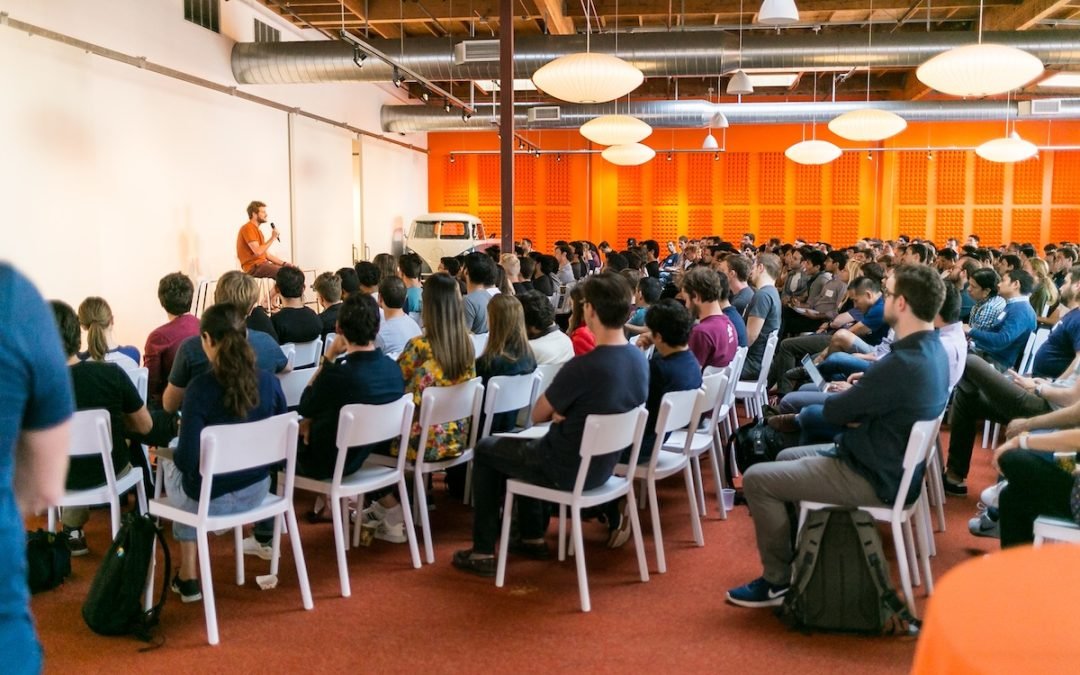
A packed room for YC’s demo day
When I was at 500, we got feedback from investors that it was challenging for them to stay focused with 30 - 40 pitches in one day. To genuinely pay attention to ~250 pitches over two days takes serious dedication. By the time you hear the 13th pitch of a company that started as X but pivoted mid-batch into an AI-powered Y (or whatever the current trend is), it’s sincerely hard to keep track.
An inability of demo day attendees to focus on all of the presenting companies has real implications for an accelerator, including:
A decrease in the average number of investor meetings per company (which has significant implications for the long tail of companies in each batch)
Fewer companies who get press coverage
Less compelling press coverage for those who do get it
Ensuring that the batch size remains “digestible” by both investors and the media is very much in YC’s best interests.
Why Doesn’t Every Accelerator Run Year-Round?
If running year-round batches is such an obvious win for both accelerators and founders, why doesn’t every accelerator do it?
It goes back to my earlier overview of how accelerators work. Each batch takes a lot of effort to run and requires significant administrative resources (both human and financial). Replacing one accelerator batch of X companies with two batches of X/2 startups is costly.
If you only run one or two batches a year, you have plenty of time to market, source companies, evaluate potential investments and deliver programming. After each batch, staff has time to decompress and debrief. Scheduling vacations is easy (seriously).
When you run three or four programs each year, suddenly you start to get overlap. Partners have to juggle working with companies in-batch and interviewing founders for the next batch. Vacations have to be scheduled more carefully. Administrative roles — like finance, legal and HR — need to be staffed up. When 500 Startups moved to 4 batches per year, it staffed up 2 full teams to support accelerator batches (alternating between locations in San Francisco and Mountain View).
So when Garry Tan says that, “…all the YC partners worked with me very closely to make this happen…,” he means it. This was likely not an easy decision.
The Bottom Line
Y Combinator doubling the number of batches while reducing the cohort size is a clear win for founders. It provides them with more frequent opportunities to apply to the world’s leading accelerator and a better experience when they are accepted.
It’s also sure to be a win for YC (though likely one that will include a few growing pains along the way).
The only ones who it’s not good news for? Early-stage investors competing for founder mindshare.
…wait. That’s me. 🤦♂️