Now Is Not the Time to Increase Your Burn Rate
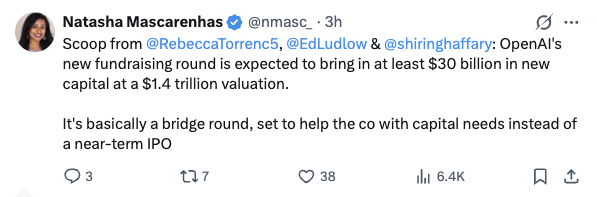
Lately, it seems like not a day goes by without an announcement of a gigantic round of funding or another unprecedented acquisition. In fact, these announcements have become so frequent that it can feel like capital is virtually unlimited.
But it’s a dangerous time for many founders.
When it seems like investor capital is virtually unlimited is exactly when we make decisions that we wouldn’t otherwise make (especially if we knew that there was no more capital available). And right now a lot of founders are making such decisions, only to find out that the well has run dry.
Last week, I wrote about the bifurcation in VC behavior happening at Series A. That shift followed similar bifurcations at the Seed stage earlier in the year and at Pre-Seed in 2025. In all three cases, the behavior that investors converged on was the same: a small number of hot, fast-growing companies now draw the vast majority of investor interest, while other startups (including many that would have been seen as compelling only a few years ago) struggle to raise.
What hasn’t been written about is the impact this behavior is having on extensions and bridge rounds. And it’s not good.
Historically, most VCs who lead early-stage rounds allocate an additional amount of capital as part of their fund thesis to “bridge” a subset of their portfolio companies. These are companies that, for whatever reason, weren’t able to hit the milestones necessary to raise their next round of funding but made enough progress that their existing VCs still have confidence in them (and believe that with additional capital, they will be able to hit those milestones).
Anecdotally, it seems like fewer of those rounds are happening right now. In an era when fast-growing companies are becoming the norm, many Pre-Seed and Seed VCs seem less willing to bridge companies that aren’t hitting their milestones. In fact, many seem far more likely to cut their losses early and redirect capital they had previously earmarked for bridge rounds to other companies in their portfolio or net new investments.

The rate at which VCs invest in bridge rounds naturally ebbs and flows, but I can’t think of a time in my career when capital has flowed this actively yet so little of it has seemingly gone towards extending runway. What makes it even more dangerous for founders is how easy it is to misread the reality of our current situation.
Over the past few months, I’ve been aware of an unusually large number of startups who “misread the situation” in a very particular way:
Each one sharply increased their burn rates in order to “go faster”
They indeed accelerated, but didn’t have enough runway to hit the milestones that their investors identified as necessary to raise the next round of capital
The founders were surprised to find that those same investors were unwilling to commit more capital to extend their runway
In fact, I know of three companies this week that were told by their lead VCs that no more funding was forthcoming after the founders dramatically increased their burn rate and ran out of runway.
While it might seem easy to dismiss these as the actions of naive or egotistical founders (or, conversely, blame the VCs for encouraging them to go faster), the reality is far more subtle. In each case, the founders looked at what has been going on in the market and — regardless of what their investors told them — reached the conclusion that there would be more capital available so long as their velocity increased sufficiently.
That’s not an irrational read of the market at a macro level. But it is definitely a misread of the founder-investor dynamics at a micro level.
When the market collapsed at the end of ZIRP in 2022, I wrote a post encouraging founders to check with their VCs if they still loved them (i.e. would their investors be willing to invest more capital into the company if they didn’t hit their milestones?). I started that post by writing:
“When times are good and term sheets are flowing, founders don’t think a lot about whether or not their investors will follow-on in the future. But in times like these, when the pace of deals is slowing, it’s essential that founders know where they stand with their investors. And most don’t have a clue.”
The current venture capital market is unprecedented in that it can seem like there is infinite capital available for startups, when the reality is far closer to a slow-moving bear market than a fast-moving bull market for the majority of them.
To be clear: it is unequivocally a CEO’s prerogative to increase, decrease or adjust their spend as they see fit (investors are, generally speaking, not your boss). However, if your VCs tell you that if you don’t hit a particular milestone, it’s going to be a challenge to raise additional funding, you should assume that perspective applies to bridge funding too.
So be warned. Now is not the time to unilaterally increase your burn rate. Check in with your investors to see how they feel about any unplanned spend or change in strategy. Most investors will be upfront about the conditions under which they will / will not invest additional capital. You just need to ask them.
And believe them when they tell you.