The Cost of Hubris
Founder hubris can be deadly for startups. Here's how to identify it early and avoid its consequences.
A few weeks into my first batch as an EIR at 500 Startups, we held a week-long series of talks about fundraising. In those days, fundraising best practices weren’t as widely known as they are today, so the topics we covered were new to virtually all of the founders participating in the program.
Towards the end of the week, I was chatting with Marvin Liao — head of the firm’s flagship accelerator — when one of the founders approached us to discuss his fundraising process. This particular founder was one of the strongest in the batch. He had bootstrapped his company to an impressive amount of revenue, enough so that he should have been able to easily raise a competitive Seed round. But there was a catch.
Despite being part of a mentorship-based accelerator, this particular founder had zero interest in listening to anyone’s advice.
On that particular day, this founder came towards us not to ask questions, but to vent. You see, he had just returned from Sand Hill Road after pitching a top tier VC — his dream investor — and, suffice to say, it did not go well.
Why not? For starters, this founder hadn’t spent any time preparing his fundraising pitch. He hadn’t worked on it, refined it or practiced it. Not once.
Despite an entire week of programming about fundraising, and despite partner-after-partner-after-partner urging him to hold off on meeting with any VCs until he was ready, this founder decided that he knew better then everyone else and sauntered into the offices of [redacted] without so much as a slide.
And he totally, completely, unequivocally sh*t the bed.
It was so bad that the partner he met with at the tier one VC texted Marvin immediately after the meeting to ask, “What the hell was that dumpster fire?”

Watching this founder recount the experience to us was like watching a car wreck in slow motion. His reflection on what went wrong (or, more precisely, his complete lack of self-reflection) was astonishing to me. The entire conversation consisted of him complaining about how clueless the VC was, without so much of a inkling of recognition that he might have gone in unprepared.
When he eventually finished venting and walked away, I stood there with what must have looked like an utterly gobsmacked look on my face. Marvin turned towards me, smiled, and whispered,
“There’s always one.”
After the founder left, I asked him to explain.
“There’s always one,” Marvin continued. “One founder who thinks they’re special. One founder who thinks the rules don’t apply to them. One founder who thinks they know better than everyone else.”
“Every. Single. Batch.”
As my tenure at 500 Startups continued, I was astonished by the accuracy of Marvin’s observation. Every single batch, there was a founder who did this. A founder who took the accelerator’s investment, accepted a place in the batch, and immediately upon arrival decided that they needed none of the advice or education the program had to offer.

Hubris is a funny thing. You have to have a certain amount of hubris to start a company to begin with — entrepreneurship demands the audacious belief that you can create something out of nothing — but the line between confidence and cockiness is a thin one. And landing on the wrong side of it can have a detrimental impact on the trajectory of your company. Whether you realize it or not.
In the 10+ years since that first encounter, I’ve seen similar stories play out time and time again. Oftentimes when founders fall victim to hubris, the results are fatal to their startups. Those that do manage to survive frequently end up so far off course that the company never comes close to reaching its full potential.
I’ve observed some patterns when it comes to founder hubris and wanted to share them in the hope that I can help you to avoid its trap. Here are some common themes I’ve seen over the years:
Early Success
I’ve found that disproportionate hubris is often present in founders who achieved uncommon early success and/or hit significant milestones on their first try. Examples include:
Unusually strong early user or revenue growth
Unexpected virality or marketing notoriety
An unusually easy first fundraise
Founders who achieve such quick wins without realizing how unusual they are often attribute their early success to skill rather than other factors (such as luck, preexisting connections or just good timing). The result is frequently a form of complacency — sort of like when you ace the first few quizzes in a class, get used to how easy it is, and presume you don’t have to study for subsequent ones.
Charisma
In my experience, there is a strong correlation between a founder’s charisma and the likelihood that they develop hubris early in their journey. This is especially pronounced when they have an easy time raising their first round of funding.
In most cases, the initial round of funding (angel and/or Pre-Seed) is driven by narrative. Many founders with strong charisma have an easier time raising their first round specifically because of their storytelling and persuasive abilities. Where things can go sideways is in subsequent funding rounds, when investment decisions are driven more by analysis of early traction, unit economics and so on. I’ve seen many founders who breezed through their Pre-Seed round run full speed into a brick wall when raising subsequent rounds specifically due to a lack of preparation caused by hubris. Moreover, many such founders vastly overestimate the degree to which they can overcome weaknesses in their pitch and/or business with their charisma.
Small Town Founders
This might seem paradoxical, but I’ve found that early hubris is more common in founders who come from outside of Silicon Valley than in founders based in the Bay Area. For as confident and cocky as some Silicon Valley founders come across, they tend to be very well informed about the competitive landscape and the expectations of both customers and investors. Founders from smaller cities — especially ones who get early wins — are often disproportionately lifted up by their ecosystem and can unknowingly end up with big-fish-in-small-pond syndrome before achieving any actual success.
Many years ago, I was introduced to a promising young founder from a small ecosystem whose SaaS startup had surpassed $1M ARR in their first year (this was well before the rise of AI, when doing so was really, really hard). In discussing their early traction, it was immediately obvious to me that the company had a leaky bucket caused by an incredibly high churn rate. Although top-line revenue was growing, it was driven by unsustainable marketing spend. I tried my best to encourage this founder to address the company’s churn rate and its unit economics before approaching Silicon Valley Seed VCs (as they would immediately dig into whether or not the revenue was “real”), but she would hear none of it. Bolstered by local cheerleaders, startup awards and fawning media coverage, she went out and spent nearly 9 months trying to raise a Seed round. Despite countless VCs giving her nearly-identical feedback, she was unwilling (or unable) to change course. The fundraise ultimately failed and the once promising company was acqui-hired shortly thereafter.
Solo Founders
Solo founders are particularly prone to falling victim to hubris because they often don’t have voices around them to provide critical feedback and who they are willing to listen to. I’ve seen many solo founders over the years who simply ignored feedback from employees, advisors and even investors if it didn’t reinforce their preconceived views. When hubris raises its ugly head, it’s almost impossible for someone new to pierce the veil. In contrast, a trusted cofounder can often break through all but the most stubborn cases of intransigence.
One last point before I close — in Silicon Valley, hubris doesn’t just prevent you from hearing helpful advice or critical feedback. It can close doors that you never realized were open. Pay-it-forward culture is a very real thing. But an important corollary is that in an ecosystem filled with people who genuinely want to help, immediately rejecting advice or feedback that doesn’t reinforce your previously-held beliefs sticks out like a sore thumb.
If you read my post from a few weeks ago on snakes and ladders, what I’m talking about here is access to ladders. Many of the people trying to help you can also point you to a ladder, but whether or not they do so will depend on how you react. You don’t have to agree with everyone who offers advice or opinions (in fact, you most certainly shouldn’t). But you should at least listen to what they have to say. Otherwise, you will likely never know what other help they might have been willing to offer.
Instead of pointing you towards a ladder, those individuals will simply redirect their time and efforts towards one of the thousands of other founders hungry for their help.
When it comes to startups, the cost of founder hubris is high. And over time, it also compounds.
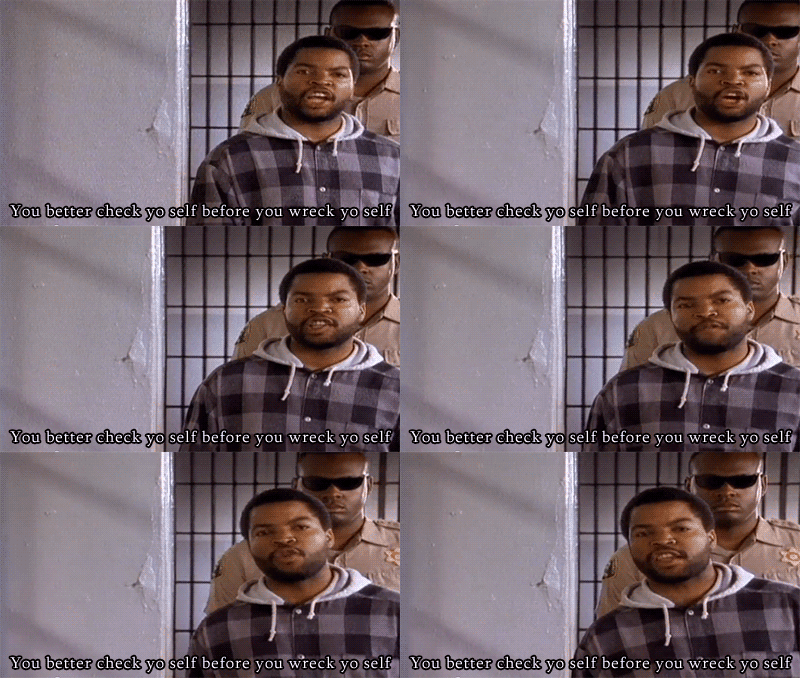
On Resilience, Rockets and IPOs
Plenty of stories have been written about the history of SpaceX. This is not one of those stories.
Plenty of articles have been written about the history of SpaceX. Stories of how the company nearly failed after its first three rockets exploded. About how it almost ran out of cash during the financial crisis and Elon Musk had to borrow money to keep it afloat. About how its recent IPO minted the world’s first trillionaire.
This is not one of those stories.
Nearly 25 years ago, I arrived at Stanford as a wide-eyed Canadian kid excited to study computer science at one of the best schools in the world. I did my undergrad at Simon Fraser University, which I imagine was a pretty typical CS experience in those days (insofar as the computer science kids were mostly the weirdos in the corner who no one else talked to).
Stanford was different. Most people truly have no idea just how special a place it is. At Stanford, everyone is an uber nerd in whatever field they chose to study. Computer science was one of the larger graduate programs in those days, but there were programs and sub-programs for just about every field imaginable, from financial mathematics to international policy.

There’s no drive in the world quite like this one
Almost everyone at Stanford lives on campus, so you meet all sorts of exceptional people from different programs. I ended up with a bunch of friends who were in aeronautics and astronautics (colloquially knows as “aero-astro”). Kids who were studying to be literal rocket scientists.
Masters degree programs are generally short (1-2 years), so it wasn’t long before conversations shifted from how excited we all were to be at Stanford to what we were going to do next. As graduation approached, I noticed that many of my aero-astro friends didn’t have the same level of excitement as the rest of our group. I recall asking one of those friends about his post-Stanford plans. He shrugged his shoulders,
“There aren’t that many good jobs,” he lamented. “You can work for a bloated dinosaur like Lockheed or Northrop, try to get a government job (NASA, ESA, etc.) or go into academia. That’s about it.”
I was pretty shocked to hear him say that. These were some of the smarted people I had ever met, yet there seemed to be no path forward in their chosen field other than becoming a cog-in-the-wheel at a giant corporate. At a time when fast-growing software companies like Google, Amazon and Apple were hiring just about anyone they could, it was a sharp contrast to my own experience.
A few weeks later, I was hanging out with another aero-astro friend and again got to talking about our summer plans. She casually mentioned that she was about to join a startup. Apparently, a member of the famed PayPal mafia had a background in physics and decided to use his newfound wealth to try to start a new rocket company.
After graduation, my friend moved to LA and joined Space Exploration Technologies Corporation. That was 23 years ago.
The original SpaceX “office” was in a nondescript warehouse in El Segundo, a fairly industrial corner of west LA just north of the beach towns of Manhattan Beach, Hermosa Beach and Redondo Beach. I remember visiting it for the first time and being shocked to see a full-sized rocket being assembled just down the street from strip malls and drive-thrus.

SpaceX’s original office
At a time when Silicon Valley offices were already overflowing with perks and creature comforts, the SpaceX warehouse was an exercise in austerity. There were no foosball tables. No video games. Just computers flashing with CAD designs and piles of wires, metal sheets and manufacturing equipment. (Actually, there was one fun item in the office — Elon owned one of the first Segways and he was eager to show anyone who stopped by what the “future” of urban transportation looked like.)

Bizarrely, I once spent a Saturday afternoon driving one of these around the original Merlin engine
In contrast to typical software companies, the employees of SpaceX weren’t shipping something new every day. They didn’t get the dopamine hits from watching a new product go viral or reading the reviews about a feature they’d just released. They met up as a team each day before work, went surfing to build camaraderie (pretty cool, if you ask me) and then headed into the office to toil away. And they quietly did that for years.
The first launch attempt happened in 2006, 4 years after SpaceX was founded. The first successful launch took another 2 years. That’s 6 years from the founding of the company until the first rocket made it into orbit.
Aster Data went from founding to being acquired by Teradata in 5.5 years. DataHero was acquired 4.5 years after it was founded. It took longer for the SpaceX team to complete a single “end-to-end test” than it did for either of the startups I was a part of to complete their entire lifespan.
Now multiply that by 4.
Most people in Startupland™ can’t fathom the idea of working for a single company for more than twenty years. To be a “lifer” in tech is generally seen as a negative. The implication is that you got comfortable. You couldn’t keep up. You lost your drive and your ambition.
Silicon Valley’s culture is far more mercenary than missionary. Many engineers hop from startup to startup, collecting stock options and increasingly ludicrous salaries with little regard for what they’re actually building. The skillsets of most people in tech are so transferable and so in-demand that an incredible number move on the minute things get uncomfortable (or the moment they see a shinier opportunity). I’ve lost track of how many people I’ve met who brag about being an early employee at Uber, Pinterest or some other hotshot company, only to discover that they barely lasted a year there.
Until recently, “going to another startup” simply wasn’t possible for aero-astro engineers. For the early team at SpaceX, failure meant having to go work for a bloated corporate. Or worse, the government. There was no fallback plan.
This weekend, a number of those early SpaceX employees woke up to find themselves on the receiving end of generational wealth. Each and every one earned it in a way that few people in Startupland™ can relate to: a two decade-long grind that, for most part, was completely unglamorous. It’s the furthest thing from an overnight success that one can imagine and I am genuinely happy for each and every one of them.
At a time when AI is making it easier than ever for founders to pivot and early employees to jump ship, I’m reminded about what Silicon Valley used to be about: the weirdos in the corner quietly and unglamorously trying to change the world.
Let’s get back to that.
Snakes and Ladders
Over the past 18 months, Silicon Valley has sped up. And most people outside of the Bay Area have no clue just how wide the chasm has become.
I spend a lot of time traveling back and forth between San Francisco and other cities across North America and the UK.
Every time I leave the Bay Area, I find that my internal clock naturally slows down, as it adjusts to the pace of life in whatever city I’m visiting. Conversely, the moment my flight lands at SFO, it ramps back up. My good friend Marvin Liao wrote about this last year (referencing a short but insightful post from Sriram Krishnan the year prior).
This particular phenomenon isn’t new to anyone in tech. Silicon Valley has always operated at a higher velocity than other startup ecosystems (similar to how New York has a different gear than comparable cities when it comes to other forms of white collar work). But over the past 18 months, something has been happening.
Silicon Valley has been speeding up.
And most people outside of the Bay Area — including founders, ecosystem supporters and even many VCs — have no clue just how wide the chasm has become.
The Resurgence of Silicon Valley
Over the past year, there have been a number of signals hinting at Silicon Valley’s resurgence. For example, the PitchBook-NVCA Venture Monitor, which provides a quarterly snapshot of the US venture landscape, has shown a steady increase in the percentage of US VC investment going to companies based in the San Francisco Bay Area (on both a dollar and deal count basis):

Source: PitchBook-NVCA Venture Monitor, Q1 2023 - Q1 2026
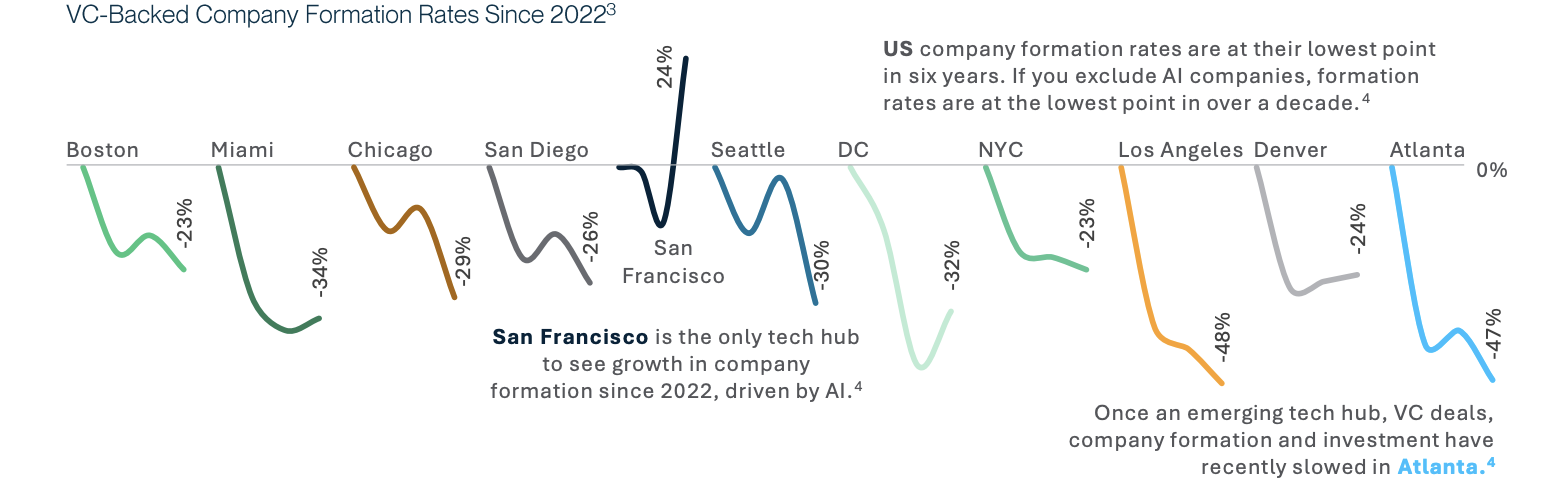
A report recently published by Silicon Valley Bank showed that, since 2022, the rate of VC-backed company formation has plummeted in every major city in America, except for San Francisco…where new company formation has skyrocketed:
Meanwhile, rent in San Francisco is increasing at the highest rate in the US and is on pace to surpass NYC for one- and two-bedroom units.
“In San Francisco, rents are surging, with one-bedrooms climbing 16.1% and two-bedrooms up 19% year-over-year, as a return-to-office push and optimism around AI-driven hiring pull high-income workers back into an already supply-constrained market.”
Taken alone — or even together — these signals don’t necessarily indicate a shift in “how” Silicon Valley is operating as an ecosystem. After all, San Francisco has been a gold rush town since the 1800s. People in tech rushed to the Bay Area during the dotcom boom in the late 90s and then again as the recovery from the 2008 financial crisis accelerated in the early 2010s. But this time is different.
Each time I’ve returned to the Bay over the past 18 months, it’s seemed faster than when I left. And each time I travelled to another city, the slowdown felt more pronounced. The contrast more jarring. It was as if Silicon Valley was accelerating and evolving in near real-time, while other ecosystems remained static.
What’s Going On?
Last year, tech media started publishing articles about Silicon Valley embracing “996”. The implication of these articles was that the acceleration happening in tech could simply and easily be attributed to startup employees working longer hours. But that explanation rang hollow to me.
While the idea of working 996 (9AM to 9PM, 6 days/week) seems shocking to many people, it’s actually nothing new for Silicon Valley. Back when I worked in startups, a 12-hour workday was pretty normal (I actually have a draft blog post on the topic which I have yet to get around to finishing…). I personally think the media reaction has a lot more to do with how many visitors to Startupland™ during the ZIRP era didn’t actually work that hard, but that’s a topic for another day.
From where I sat, there had to be something else going on.
It took a conversation that I had with Charles Hudson last fall — when I was brainstorming for an experiment that would become Game On — to provide the lightbulb moment. We were discussing the fact that founders seemed to be executing faster in San Francisco than they had been before. Charles had observed something similar and had invited several of his portfolio founders from outside of California to visit for “field trips” (short visits to San Francisco during which they would work out of the Precursor Ventures office).
Charles shared with me a story about one such founder, who was working at the Precursor office on a Friday afternoon when he ran into a bug with an API that he was building on top of (the anecdote is paraphrased as follows):
Founder: “I just ran into a bug with X, so I’m blocked.”
Charles: “What are you going to do about it?”
Founder: “I filed a ticket.”
Charles: “And then?”
Founder: “And then what…?”
Charles: “What else did you do?”
At this point, the founder looked dumbfounded.
Charles: “Are you really going to just file a ticket and call it a day?”
Founder: “What else am I supposed to do?”
Charles: “How about I connect you with the CEO?”
A few minutes later, the founder was describing the bug to the company’s CEO. Within an hour, it was fixed.

Snakes and Ladders
I’ve been thinking about that anecdote — any many similar ones that I’ve heard since — and I believe that the best metaphor for what’s going on in Silicon Valley right now is the board game snakes and ladders.

Founders in SF have always benefited from high-value networks, but over the past couple of years they’ve become far more aggressive in how they leverage them. Have a bug? Reach out to the CEO. Want early access to the next release? Get your VC to connect you to the CEO. Trying to get into that invite only party with the who’s who of your sector? Reach out to the party organizer (aka the CEO).
These days, founders up and down Silicon Valley unapologetically search for and leverage “ladders” in order to skip steps. They’ve become far more aggressive at this than I’ve ever seen before — going into social debt to a degree that would have been considered inappropriate (and, frankly, cringe-worthy) only a few years ago. But these days, it’s increasingly perceived as a socially-acceptable form of ambition.
These founders are sprinting and scrambling as fast as they possibly can up each and every ladder they find. Occasionally, they screw up and slide back down a “snake”. But no one in the valley bats an eyelash. There are no negative social implications. Meanwhile, founders everywhere else in the world are dutifully running back and forth along the left-to-right game squares. Some of them are trying to go faster (aka 996), but all of them continue to follow the linear, back-and-forth path.
Have you ever heard of anyone winning a game of snakes and ladders without climbing a ladder? Me neither…
One of the experiments we performed during the “Game On” program last January involved introducing the 35 visiting Canadian founders to some unexpected ladders. On day two of the program, we had Google’s Global Founder Advocate, John Alioto, join us. He sat down in front of our visiting founders with a simple offer,
“Tell me anything you want access to anywhere in Google, and I’ll make it happen.”
One of the founders in the room raised their hand and mentioned that they had been on a waiting list for a pre-release product for 3 months. John smiled, typed a few things into his computer, and several moments later declared that they had access to it. Everyone’s eyes widened.
Over the course of the morning, he repeated similar unlocks for many of the founders in the room. In mere moments, these founders climbed ladders that they had been dutifully marching towards for weeks or months. John unlocked doors that were previously closed to them, with no idea as to when (or if) they might be opened.
That’s a daily occurrence for Silicon Valley’s highest-velocity founders.
The Fog of War
Popping up a level, it’s important to address the topic of information asymmetry in the current startup landscape.
Whether you are a founder, an investor or an ecosystem supporter, it’s essential that you understand that there has been a significant reduction in the information flow emanating from Silicon Valley. The “fog of war” between the Bay Area and the rest of the world has gotten thicker. “Snake and ladders” is but a single example of the many changes that have taken place in how San Francisco startups operate that aren’t yet apparent to the outside world.
Historically, information and innovation flowed fairly reliable out of Silicon Valley. Each time a new idea would arise — whether technical, business process, or otherwise — it would first disperse throughout local Bay Area networks. A month or two later, some number of people would share it with the wider world through blog posts, Twitter threads and videos. Within a quarter or two, the majority of the world’s tech ecosystems were up-to-speed.
That’s not happening anymore.
Technological innovations are still widely and reliably distributed online (you need only look at the speed with which OpenClaw took the world by storm to be convinced of that). But when it comes to business processes, go-to-market strategies, best practices and other innovations, very little information is leaving the Bay Area these days.
There are three reasons for this:
The intensity of AI-driven competition has resulted in many people deprioritizing non-critical content creation
An increasing percentage of the content that does get created is useless, AI-generated slop
Within Silicon Valley, information sharing has overwhelmingly shifted from public forums to private group chats and closed events
When taken together, the result is that founders, investors and ecosystem builders outside of Silicon Valley are increasingly out-of-touch with what’s happening on the ground in San Francisco for no other reason than that no one is telling them.
In the past six months, I’ve seen numerous founding teams from outside of Silicon Valley visit the Bay Area, only to discover that their knowledge — about technology, competition, customer interest, and more — was significantly out of date. Despite having every belief that they were operating at the bleeding edge of their industry, they discovered that they were, in fact, very far behind.
I’m not sure when (or if) the flow of information from Silicon Valley to the outside world will return to it’s previous rate. For now, I can simply offer this: if your goal is to create a globally competitive tech company, you should presume that what you think you know about what’s happening Silicon Valley is significantly outdated. At worst, it’s flat-out wrong.
The solution? Go on a field trip. Get on a plane, spend a few weeks in San Francisco during the summer. And see for yourself.
For founders building outside of Silicon Valley, it’s the new playbook.
Go Touch Grass
Here are some of the ways that I slow things down and take a break from the dopamine rush of AI.
Last week, I wrote about a question that is increasingly top-of-mind for many residents of Startupland™: is agentic programming addictive?
I’ve received as many responses to my post asserting that, “this is normal…if you’re a founder you should have some level of addiction…” as I did emails expressing some form of, “thank you for writing this…it describes exactly how I’ve been feeling as of late,” (which to me is a pretty good indication that I’m on to something).
As someone who’s founded a number of startups over the years, I have some experience when it comes to late night coding binges. I personally feel like there are some real differences at play now that AI is in the mix. Of course, it could just be that I’m a boomer past my prime…

I will say this: as a parent, I find myself increasingly motivated to be thoughtful and intentional when it comes to our current AI-driven obsession. The question of “how much screen time is appropriate?” existed long before I was born. With the addition of AI — and its productive and addictive possibilities — that question seems even more prudent.
For both adults and kids alike, I think that it’s essential to maintain a connection to activities that are not impacted by AI. That’s why I concluded my post on the potential addictiveness of agentic programming with the following suggestion:
“…taking time away from your agents is important not only for your general health and well-being, but because our ability to think, create and invent depends on it.
So take a break. Make a point each day to step out of the AI- and social media-driven dopamine loops and touch grass. Not only is it okay to go outside, it’s essential.”
I thought that this week I would share some of the small but meaningful ways that my family and I “slow things down” in order to take a break from the dopamine-driven cycles of Startupland™:
1. No Technology at the Dinner Table
I’m a big believer in family dinners. It’s not always easy to pull off, but establishing a daily or weekly ritual with family or friends provides time for everyone to catch up, share stories and build connection.
One change we made in the Neumann household (that was harder than it seemed when we started) was to ban technology at the dinner table. That means no cell phones, no Apple Watches, and no questions to “Google”, “Siri” or “Alexa” (we actually unplug our Google Home before eating dinner because we are so used to interacting with it).
Remember the days when someone had a question and you actually discussed and debated the answer…? Turns out, you can still do that.
2. Listening to Vinyl Records
The resurgence of vinyl has been on the upswing for awhile. But that was mostly for audiophiles who couldn’t shut up about how much better their sound system was than yours. We jumped on the vinyl bandwagon for an entirely different reason: in order to stop our kids from skipping around when listening to music.
We noticed that, at a young age, our kids often struggled to listen to entire songs, much less albums. In some cases they would skip ahead. In others, they would restart a song multiple times before it finished. This isn’t anything particularly new, but it’s a lot more prevalent with digital music. As our kids got older, the frequency with which the soundtrack of our lives became measured in 15 second increments became unbearable.
Our solution: to buy a record player and give everyone in the family “credits” to buy their favorite albums.
Now, the only music we have on during dinner comes from a record player. We take turns picking music and, once someone puts on a particular record, it cannot be changed until it’s done. Not only has it given our children a better appreciation for music (they’ve had to learn how to handle and change vinyl records), everyone has gained/regained an appreciation for albums as a distinct work of art.
(Bonus points: there are no vinyl “brain rot” albums 😉).
3. Gardening
Another hobby that we’ve increased the amount of family time we spend on is gardening. As a kid, I spend countless hours learning to garden with my grandfather, who dedicated much of his retirement to meticulously tending one of the most fantastic vegetable gardens you could possibly imagine (the rest of his time was focused on fly fishing).
In today’s era of farm-to-table groceries, it’s hard to justify economically the time and effort that goes into growing vegetables in an urban setting, but the practice itself is both calming and centering.
And AI isn’t going to make those cherry tomatoes grow any faster.
4. Cooking
It’s no secret that I love to cook. In fact, it’s one of the things that recharges me. I cook multiple times each week, whether I’m by myself, with my family or when hosting a dinner party.
I’ve long-since learned to not try to multitask whilst cooking (no better way to burn dinner than by accidentally falling down an AI rabbit hole). Moreover, it’s a skill that very much can only be perfected through practice. The internet might give you the perfect recipe for pan-seared duck breast, but chances are you won’t get it right the first time. Or the 10th…
5. Board Game Night
Video games are fun, but it’s hard to beat the energy and laughter that comes from playing board games.
We try to find at least one night each week to play board games with our kids. Some nights it’s old faithfuls like chess or Monopoly. Other nights it’s strategy games like Ticket to Ride or Carcassonne.
It doesn’t matter if it’s 15 minutes or 3 hours, putting down the screens to play a game while sitting around the table provides a type of dopamine hit that AI simply can’t deliver.
6. Playing / Coaching Sports
Speaking of games, playing and/or coaching sports is one of the best ways I know of to disconnect.
I’m the type of person who desperately needs regular exercise (I workout almost every morning), but going to the gym and/or working out with my trainer is more like a daily routine than it is a true disconnect. For me, the competitiveness and camaraderie of sports is where the magic happens.
As a parent, I love coaching my kids’ sports teams. I also love playing sports. Whether it’s team sports like soccer, hockey and baseball or individual sports like skiing, swimming or rock climbing, the combination of physicality, competitiveness and disconnect provides an effective mental and physical reset.
There are plenty of other ways to “touch grass”, from reading a book to camping (and fly fishing!) to playing a musical instrument. Whatever you do, try to find 20 minutes a day to disconnect from all of your agents, breath deeply, and relax.
I promise you’ll have more energy, more stamina and more focus.
And, as I said last week, those agents aren’t going anywhere 😉.
Is Agentic Programming Addictive?
There’s a worrying dynamic occurring with AI power users: many early adopters of AI (and agents, in particular), are seemingly getting addicted to it.
Last week, I shared my quarterly musings about the tech world. Suffice to say, the past two quarters have been wild. In less than 6 months, we went from an impending AI backlash to a mad rush to agentify anything and everything not nailed down (and plenty of things that are).
Watching all of the activity around me, I find myself equal parts excited and struggling to not roll my eyes — which I consider to be a perfect balance during times of rapid innovation. Some of what is being enabled by these early agent systems is truly astonishing. A lot of it is just…automation for the sake of automation.
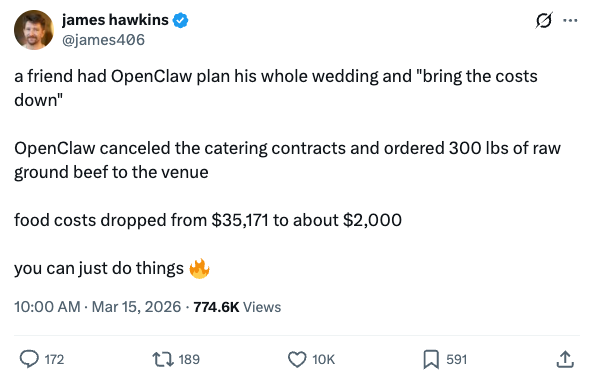
All jokes aside, a lot of smart people are spending a lot of time building with AI right now. And I definitely believe that this collective effort is going to move us forward in some pretty incredible ways.
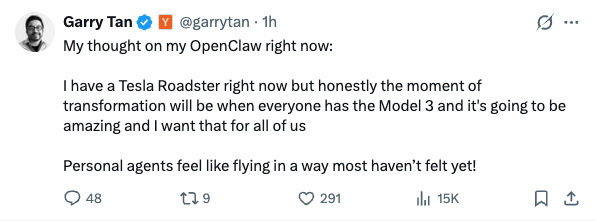
That said, there’s a worrying dynamic occurring within a segment of today’s AI “power users”: many early adopters of AI (and agents, in particular), are seemingly getting addicted to it.
And I don’t mean in a metaphorical sense.
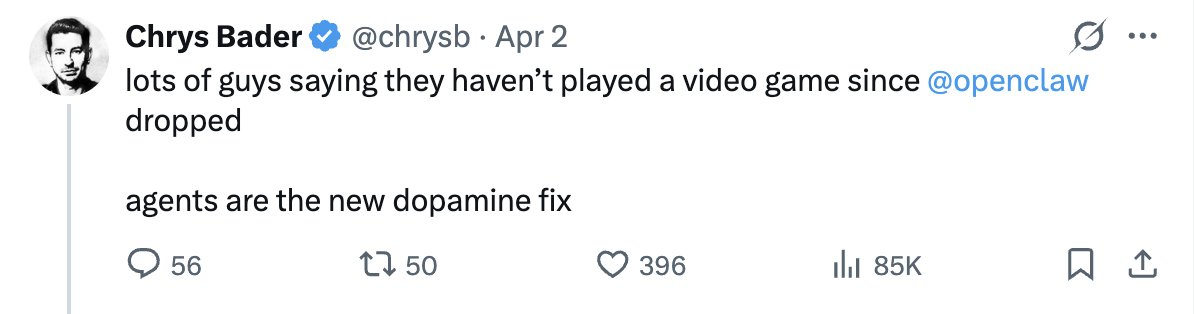
Longtime blogger and AI developer Steve Yegge recently wrote a post about this trend and its impact on early adopters called The AI Vampire (I highly recommend you give it a read). Steve notes,
“Agentic software building is genuinely addictive. The better you get at it, the more you want to use it. It’s simultaneously satisfying, frustrating, and exhilarating. It doles out dopamine and adrenaline shots like they’re on a fire sale.”
I’ve been around long enough to have been through several innovation “bursts” and have certainly spent my fair share of sleepless nights building and coding and hacking away. But the current vibe around AI and agents feels different (pun intended 😉). It’s like the excitement of the early Linux and Windows days, the gold rush of the dotcom bubble, the degeneracy of Web 3 and a solid dose of cold war paranoia all rolled into one.
A notable contributor to this behavior is an idea circulating in tech circles called “permanent underclass theory”. The concept is equal parts meme and sincere worry that if you’re not aggressively adopting AI right now, you might be priced out of it in the future.
Another driver is unquestionably the increasing pressure from tech companies large and small to “do more” (come to think of it, we should probably also give a nod to the boiler rooms of the 80s in our metaphor — *cough cough* tokenmaxxing).
None of this is to say that you should stop experimenting, tinkering or building with AI (I’m certainly not). But it does feel like, for as fast as things are evolving, this technological shift — like most — will turn out to be a marathon, not a sprint. Which means it’s crucial that you pace yourself accordingly. This is what Steve Yegge describes as the need to “fight the AI vampire”:
“…you need to consciously fight the AI Vampire even if you’re at a 30-person startup, where everyone agreed when they signed up that this was a sprint to try to get rich.
You need to fight it if you’re an investor. You will kill your Golden Geese.
You need to fight the AI vampire most of all if you’re a CEO or founder. People will be caught up in your enthusiasm. And they won’t understand why they’re being drained until they hit a wall…
As an individual developer, you need to fight the vampire yourself, when you’re all alone, with nobody pushing you but the AI itself. I think every single one of us needs to go touch grass, every day. Do something without AI. Close the computer. Go be a human.”
On top of its seemingly addictive properties, a recent study from MIT suggested that extensive use of LLMs may “diminish critical thinking capabilities and lead to decreased engagement in deep analytical processes.” Professor Saeema Ahmed-Kristensen from Exeter University in the UK found that while AI can generate a significantly higher volume of work than people, “human beings are much better at creating ideas that are very different.”
In other words, taking time away from your agents is important not only for your general health and well-being, but because our ability to think, create and invent depends on it.
So take a break. Make a point each day to step out of the AI- and social media-driven dopamine loops and touch grass. Not only is it okay to go outside, it’s essential.
I promise, your agents aren’t going anywhere.

(Or are they…?)
When Distractions are Everywhere, Focus Wins
The rate of advancements resulting from AI is nothing short of astonishing. But for founders, it can be a major distraction.
We live in an age of distractions.
Geopolitical distractions. Social media distractions. Prediction markets and crypto degens and brainrots and, and, and…
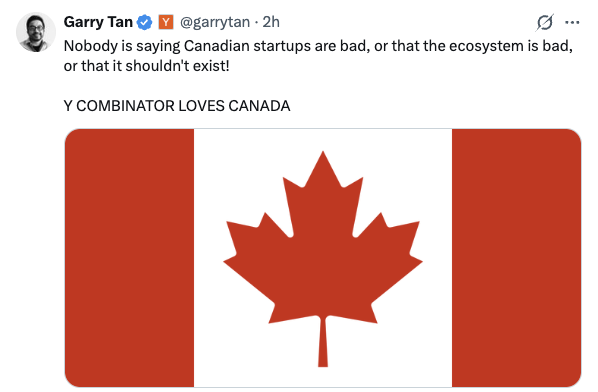
Remember that time a VC’s streamlining measure caused an entire country’s tech sector to screech to a halt?
Oh yeah…and there’s that whole AI thing:
“Have you tried the latest Claude Code?”
“My Mac Mini arrives tomorrow, I can’t wait to get Clawdbot going”
“It’s not called Clawdbot anymore, it’s Moltbot!”
The rate of advancements that are coming at us as a result of AI is nothing short of astonishing. But for founders, it can be a major distraction.
I remember sitting at YC’s W2025 demo day last March when Garry Tan stood in front of the crowd and declared that 25% of the companies in the batch had 95% of their code generated by LLMs. During the course of the day, company after company went on stage with a pitch that included a line like this:
“We wrote our first line of code 3 weeks ago, and…”
Almost everyone in the audience was enamored by how much progress these companies had made in such a short amount of time. But my mind went elsewhere. As someone who spent years working within accelerators, I knew that underneath every such statement was another one:
“We just pivoted 3 weeks ago…”
And that’s what I heard again and again over the course of the day,
“We pivoted 3 weeks ago, and…”
“We pivoted last month, and…”
“We pivoted last week, and…”
Despite meeting numerous incredible founders and amazing companies that day, I left the Palace of Fine Arts with a singular thought stuck in my head: AI is going to be a super power for some founders and will absolutely undermine the focus of many more.

Since then, I’ve seen the results time and time again:
Pre-revenue companies pivoting left, right, and centre around whatever excites them.
Companies who change what they’re doing after not finding an excited customer after…3 tries.
Too many founding teams throwing the baby out with the bathwater time and time again.
For every team I meet that found a new opportunity as a result of AI, there are 10 more who couldn’t stay focused enough to push through the natural challenges of getting to product-market fit.
On the one hand, I get it. New technologies are exciting! Most of us got into this because we really like to build things. But the easier it is to just “start over”, the harder it is to persevere.
These days, my timeline is filled with posts from founders who built X or automated Y after chugging red bull all night. And that’s cool! But does it solve your customer’s pain point?
You know…the one you founded the company to solve?

Unless you’re building dev tools, those customers are probably going to have the same problem on Monday that they did on Friday. The latest AI model or open source agent didn’t change that.
By all means try new things. Spend time to test the new models and try the new toys. But for the love of god constrain the amount of time you spend doing that. If you started a company to solve a pain point that you’re passionate about, keep your eye on the prize (provided, of course, that you continue to believe that pain point matters).
And if you find yourself spending more time on the shiny new thing than you are on solving your customer’s pain points, think about that too.
In an age of distractions, the winners will be the ones who stay focused.
Now, where’s my Mac Mini…

Start the New Year with a New Routine
Over the years, I’ve found that setting New Year’s resolutions rarely works for me. But there is something that does work for me time and time again: setting a new routine.
It’s almost the new year again.
For many people, a new year is a symbol of new opportunity. It’s the time of year when many people try to embrace new goals, particularly around self-improvement. Gym memberships surge 25 - 30% at the turn of each year (in fact, nearly 50% of people have some sort of fitness-related New Year’s resolution).
Over the years, I’ve found that setting New Year’s resolutions rarely works for me. Even when I set very specific goals. But there is something that does work for me time and time again: adding new routines at the start of the year.
Here’s what I mean:
Instead of focusing my New Year’s resolutions on goals or objectives (like, “lose 10 lbs” or “read 10 books”), I use the new year as an opportunity to adjust my schedule in favor of the things that I want to prioritize. For example, here is how those two goals might translate into routines:
Lose 10 lbs → Add 10 minutes / day of walking or exercise (or make other adjustments to be a healthier founder)
Read 10 books → Add 10 minutes / day of reading time
If you adjust your routines to prioritize the things that you want to achieve, the results will naturally follow (and you can set specific goals after that).
Of course, achieving your goals still requires you to follow though on those changes. It’s uncomfortable to make changes, but there is power in discomfort. And, thankfully, there’s an app for that (there always is 😉). I use an app called Streaks to track my habits.
I also find it helpful to learn from other peoples’ routines. For example, last week John Coogan from TBPN shared his daily routine. While reading it, I learned about an app for tracking workouts that I wasn’t familiar with: Strong. (I also got a good chuckle at the fact that the cofounder of Soylent now eats double smash burgers and cinnamon buns for breakfast 😂.)
I’m not sure that my morning routine contains any epiphanies, but I thought I’d share it nonetheless. To start off with, here’s what my weekday routine looked like 3 years ago:

I’ve made a few changes since then — mostly because my wife now has an earlier start to her day than I do.
These days, I wake up at 5:45am, then go downstairs and make coffee. While I’m waiting for the pour over to brew, I put together the kids’ snacks and lunches for school. At 6:15am, I deliver coffee to my wife and give a light nudge to my boys (who naturally wake up between 6:00 and 6:30am).
I work out with a remote personal trainer from 6:30 - 7:00am while the boys get dressed and watch some morning cartoons. Having a virtual trainer is great because it eliminates the travel time from my schedule (he’s also great with kids — ensuring to throw in some bicycle kicks or planks at the end of each workout to get them involved).
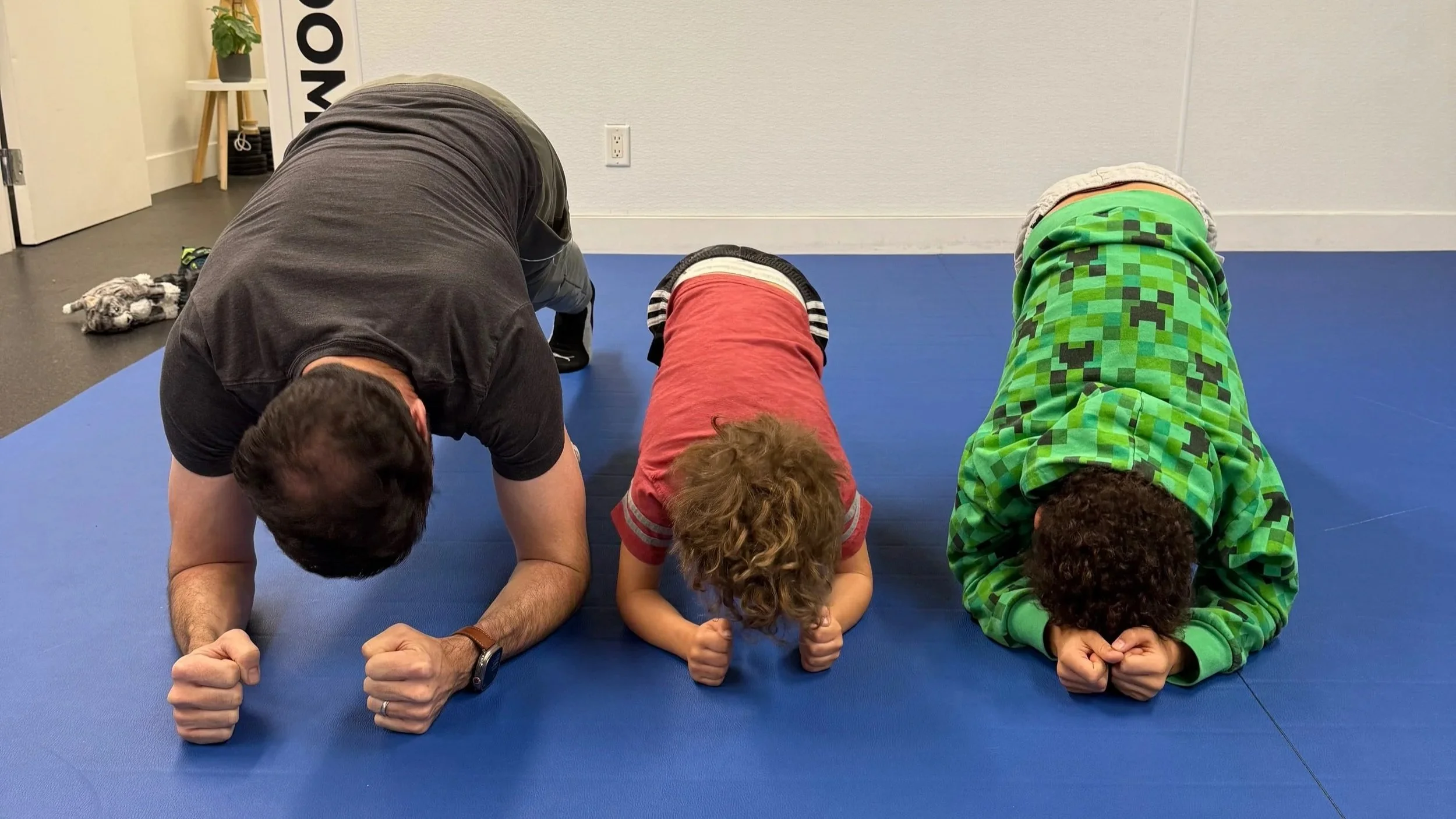
Let’s go boys!
At 7:00am, I jump in a quick shower and then make breakfast. We all sit down as a family from 7:15 - 7:30 to eat. It’s short, but it’s a great touch point for us to start each day. At 7:30am, my wife is out the door to her work, while I get the boys ready to go. At 7:45am, we’re in the car and off to school.
After dropping them off, I stop by a nearby coffee shop, where I spend 45 blissfully peaceful minutes sipping on a cappuccino while responding to emails and reviewing my schedule for the day. By 9:00am, the day is on 🔥.
(My actual working days are all over the place, so I won’t try to pretend that there’s anything close to a routine between 9:00am and when my head hits the pillow.)
Speaking of which, I personally find it a million times easier to add new things to my routine in the morning — for the simple reason that there are fewer opportunities for interruption. I find it far easier to wake up 15 minutes earlier or delay my first meeting by 15 minutes than to insert anything regular into the rest of my day. But everyone is different.
Just remember that it’s not about being perfect. If you want to adopt a new habit, do your best, keep track, and be proud of your new routine and whatever you’re able to accomplish. Despite what Yoda says, trying matters (while perfect is the enemy of done).
So what am I going to do in the new year?
Recently, I was inspired by Charles Hudson’s post, Teaching AI to Think Like Me Made Me Rethink How I Think. While I’ve experimented a lot with AI, I’ve been inconsistent about how and when I do it. So I’m going to try adding a dedicated “AI block” to the start of each day. I’ll circle back at the end of Q1 to see what came of it.
Happy holidays! (And rememeber, you should take a break. No really).
What’s The Worst That Could Happen?
Even founders who are naturally risk-averse can develop a bias towards action. And it starts by understanding the real — and realistic — worst case scenario.
One trait shared by the best founders I meet is a propensity to action. Specifically, a bias towards action over excuses. When an new opportunity arises, these individuals ask themselves, “how can I make this happen?” or “how can I take advantage of this opportunity?” as opposed to starting with the reasons why it’s going to be hard.
Case in point: a few weeks ago, I announced Game On, a 3-week long experiment in the heart of San Francisco to accelerate Canadian founders. The goal of the program is to evoke a mindset shift in early-stage founders by exposing them to the velocity and intensity of Silicon Valley’s ecosystem through mentorship, speakers and intentional experiences.
The program will be entirely free for participating founders thanks to support of some incredible partner organizations. But there’s a caveat: the founders have to cover their own transportation and living expenses while in San Francisco.
A handful of people publicly and privately suggested that the need for founders to cover their own expenses would make the program “inaccessible” to some. Meanwhile, one founder emailed me to let me know that they had already arranged for a couch to sleep on and pre-purchased a refundable plane ticket, “…in case we’re selected.”

I firmly believe that velocity is the metric that matters most to startups. A big part of that is a willingness to take action on the part of the founders. And while it might seem easy for me to suggest that the best founders “just get it”, for many people it’s neither easy nor natural. Thankfully, in my experience this is a behavior that can be learned.
It turns out that even founders who are naturally risk-averse can develop a bias towards action. And it starts by understanding the real — and realistic — worst case scenario.

Scaredy Squirrel has a wild imagination
Focusing on the worst case that can realistically occur in a decision has helped me to lean into more opportunities while making faster decisions. Even really big ones. Here’s an example:
Many years ago, some friends of mine from grad school approached me about joining a new startup they were building. It was in a space I wasn’t familiar with but I was intrigued by the opportunity to work with them (they were three of the smartest guys I knew at the time, which is saying a lot coming out of Stanford). Having lived through the dot com bubble, I knew that there was a high likelihood that the startup would fail. So, I thought about the worst case scenario:
My friends had just raised a small pre-seed round — enough money to last about a year
In the worst case scenario, the company would fail after a year and I would struggle to find another job
Given that I was on an H-1B visa, if I didn’t find a new job in time, my visa would expire and I would have to go back to Canada
That would likely mean moving back in with my parents while I figured out what to do next
So, the realistic worst case scenario was that after a year, I would have to leave the U.S., move back in with my parents, and figure out a new job. But in exchange, I would get to spend a year working alongside three of the smartest people I knew. That’s a pretty good worst case scenario if you ask me. I leaned in and the result turned out to be far from the worst case.
Of course, not all decisions turn out the way you hoped, which is why it’s essential that you think about the worst case as part of your decision process (if you’ve ever heard the phrase “hope for the best, plan for the worst,” that’s what I’m talking about). But more than that, you need to mitigate the worst case scenario whenever possible.
If you assume that the worst case scenario will occur, are there things you can do to make it “not so bad”?
I recently wrote about my propensity to travel and the fact that traveling is an underrated superpower. As much as I do it, traveling does come with real costs:
Financial costs
Opportunity costs
Personal costs (time away from family, etc.)
In many cases, it can be hard to know in advance if a given trip will be “worth it.” A conference might end up sucking. A speaking opportunity might not deliver the expected ROI. A 3-week trip to San Francisco to participate in an experiment to accelerate Canadian founders might not actually accelerate you.
How do you mitigate the worst case scenario in situations like these?
Before committing to a trip, I look at whether or not there are things I can do to generate value even if the worst case occurs. For example:
Are there additional people I can arrange to meet while I’m there (either personally or professionally)?
Can I instigate a founder meetup or other easy / low-cost event (like these)?
Is it somewhere I just want to personally visit?
At the same time, I generally try to minimize the financial/opportunity/personal costs by keeping the trip as short as possible. After doing all of that, I’ll make a decision based on the “new and improved” worst case scenario.
It turns out, if you mitigate the worst case scenario as part of your decision process, many seemingly obvious “noes” turn into pretty clear “yesses” (and the ones that remain “noes” are all the more obvious). This extra step can make it much easier to say yes to an opportunity, particularly if the upside is significant.
And this approach doesn’t only apply to work-related decisions.
Years ago, I met a girl who was living in Hawaii at the time. We kept in touch for a few months, until one day I asked her what it would take for the two of us to go out on a date. She responded, “when do you want to come to Hawaii?”
I thought about it for a moment, and replied, “How about this weekend?”
When I told some friends of my plan, they thought I was crazy. Why would I fly all the way to Hawaii just to go on a date?
Aside from the fact that I really liked this girl, I thought about the worst case scenario.
In the absolute worst case, we would meet up for drinks, it would be super awkward and I’d be stuck in Hawaii by myself for the rest of the weekend. In other words, the worst case scenario was that I would get a desperately-needed weekend break in Hawaii right before having to go out and raise DataHero’s series A. That’s a pretty good worst-case scenario if you ask me.
Ten years and two kids later, it remains one of the best decisions of my life.

Stay Hungry, Stay Foolish
Stay hungry, stay foolish. A simple phrase so effortlessly and completely captures the ethos of being a founder.
Twenty years ago, Steve Jobs encouraged the graduating students of Stanford University to “stay hungry, stay foolish.” The phrase originated in a counter culture magazine called the Whole Earth Catalog that was published in the late-1960s and early 70s. If you haven’t heard of WEG before, it was the precursor to print publications like Make Magazine and Tom’s Hardware Guide and pretty much birthed the entire genre of media combining DIY, product reviews and a dash of social commentary (Top Gear, anyone?).
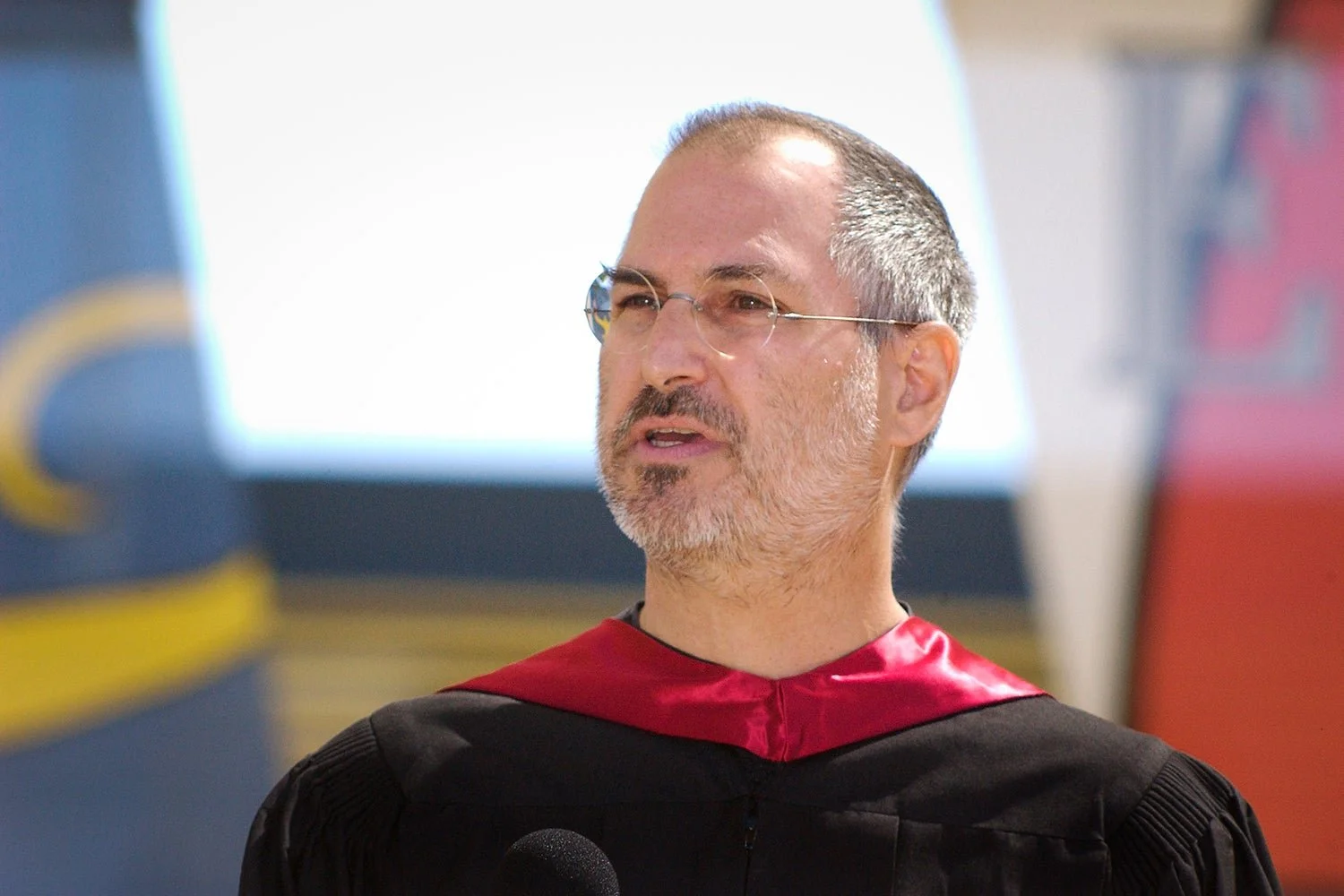
Stanford University Commencement, June 2005
The phrase “stay hungry, stay foolish” was a directive from the magazine’s authors to actively seek out knowledge and remain curious and open. To question the status quo.

The back cover of the final edition of the Whole Earth Catalog
This simple phrase so effortlessly and completely captures the ethos of being a founder. It evokes determination and resolve. It commands continuous reflection, iteration and improvement. The word “foolish” can equally well refer to a hunger for knowledge as it can the naivety of believing that you can single-handedly change the world. And it quickly became a rallying cry in startup circles in Silicon Valley and around the world.
As an investor, this is one of the phrases that goes through my mind when I meet new founders. I try to get a sense of their level of “hunger” and “foolishness”. Here’s what I mean:
How Hungry Are You?
Depending on how you interpret this question, it can mean different things. Here are some of the variations that go through my head when meeting a founder:
How important is it to you to solve this problem? Why is this the thing that you want to dedicate the next 7 - 10 years of your life to? What are your motivations (beyond financial)?
How badly do you want to win? Assuming that this is a winner-takes all / winner-takes most market, how hard are you going to compete? What will keep you going when things get really, really tough?
How hard are you going right now? Velocity is the one metric that matters most. What is yours? How are you benchmarking your progress?
How driven are you to self-improve? The best founders are driven to continuously improve themselves. Some are avid readers. Some obsess over exercise and diet. Some have therapists, executive coaches or both. Some founders just really, really want to win their annual football/hockey/basketball pool. In my experience, the best founders are constantly trying to get better at multiple things, both inside and outside of their startup (though I don’t recommend playing League of Legends during an investor pitch meeting).
How Foolish Are You?
This question similarly evokes multiple characteristics of strong founders:
Do you have a beginners mind? Are you willing to be wrong? When faced with new information, do you incorporate it and adapt your thinking?
How much time do you spend learning? What are your sources of information? What do you do proactively to learn and improve (despite having less-than-no-time in your day)?
What do you do outside of your role as a founder? To me, this is a very important question. It’s not a question about work-life-balance but, rather, it’s about making sure that you’re not so insulated in your bubble that you are oblivious to lessons and revelations from other disciplines and aspects of life.
Do you find time for deep thinking? The best founders prioritize time for regular reflection. But it doesn’t have to come in the form of a half-day block in your calendar. Some founders think while doing exercise. Others carve out time in the mornings, at night or on weekends. When I was a founder, I did a lot of my thinking during regular 2-hour commutes between San Francisco and Palo Alto.
Are you open to new people and new opportunities? What are you doing to expand your personal and professional networks? Are you proactively getting to know people beyond your immediate circle of friends and colleagues? Are you keeping an eye on the broader market in order to know how the players are moving and the market is evolving?
One simple phrase. Four short words. To paraphrase the late Steve Jobs:
Stay hungry. Stay foolish.
I've always wished that for myself. And I wish that for you.
Stay hungry. Stay foolish.
10 Anthems for Startup Founders
Here are 10 songs that perfectly capture the journey of a startup founder. And they’re probably not the ones you would expect.
One of my favorite inventions in modern sports is the walk out song. The idea originated back in the 70s, when Chicago White Sox organist Nancy Faust started playing different songs to entertain fans when the players came up to bat. In the late 80s and early 90s, teams began using short clips from recorded songs for player entrances. But it wasn’t until 1995, when a brash rookie named Derek Jeter requested Montell Jordan’s This is How we Do It for his very first professional at-bat, that the trend of players choosing their own entrance music caught fire.
Today, walk out songs can be found across sports and around the world. They’ve even found their way into Startupland™. Back when I was at 500 Startups, founders got to choose their walk out songs when presenting on demo day (I’m pretty sure a few teams spent more time debating their entrance song than practicing their pitch… 🤦♂️).
So for something a bit different this week, here are 10 songs that (I think) perfectly capture different aspects of a startup founder’s journey.
1. Anthem for the Founder Going Into a VC Partner Meeting
Raising venture capital is an enterprise sale. And in any enterprise sale, you have to be ready to overcome objections.
Hit Me With Your Best Shot by Pat Benatar
Well you're a real tough cookie with a long history
Of breaking little hearts like the one in me
That's okay, let's see how you do it
Put up you dukes, let's get down to it
Hit me with your best shot
Why don't you hit me with your best shot
Hit me with your best shot
Fire away
2. Anthem for the (Repeat) Solo Founder
Some founders are destined to walk the startup path alone. 80s hair band Whitesnake knows all about that.
Here I Go Again by Whitesnake
Here I go again on my own
Going down the only road I've ever known
Like a drifter I was born to walk alone
And I've made up my mind
I ain't wasting no more time
3. Anthem for the Founder in Search of Product-Market Fit
Replace the word “music” with “product-market fit” in Eminem’s 2002 anthem Till I Collapse and you’ve got a song that captures the struggle of every early founder.
Till I Collapse by Eminem ft. Nate Dogg
Music is like magic, there’s a certain feelin’ you get
When you real and you spit, and people are feelin’ your sh*t
This is your moment, and every single minute you spend
Tryna hold on to it ’cause you may never get it again
So while you’re in it, try to get as much sh*t as you can
And when your run is over, just admit when it’s at its end
4. Ballad for the Sacrifices of a Founder
Long before they became a household name in the United States, French band Pheonix released a song that captures the challenges and sacrifices of a founder’s journey.
If I Ever Feel Better by Pheonix
It's like somebody took my place
I ain't even playing my own game
The rules have changed, well, I didn't know
There are things in my life I can't control
I feel the chaos around me
A thing I don't try to deny
I'd better learn to accept that
There's a part of my life that will go away
5. Anthem for the Founder Who Wasn’t Discouraged When a VC Said No
This song was originally written about a girl who moved on, but it could easily apply to a diligent founder who didn’t slow down when they heard no from an overconfident VC.
Break my Stride by Matthew Wilder
Ain't nothin' gonna break my stride
Nobody gonna slow me down
Oh no, I got to keep on moving
Ain't nothin' gonna break-a my stride
I'm runnin' and I won't touch ground
Oh no, I got to keep on moving
6. Anthem for the Founder Going Fearlessly Against the Incumbent
Look no further than the Beastie Boys for a song that perfectly captures the feeling of a founder boldly going after an overconfident incumbent. “That startup can’t possibly beat us. It must be…sabotage.”
Sabotage by Beastie Boys
So listen up 'cause you can't say nothin'
You'll shut me down with a push of your button
But I'm out and I'm gone
I'll tell you now I keep it on and on
'Cause what you see you might not get
And we can bet so don't you get souped yet
You're scheming on a thing that's a mirage
I'm trying to tell you now it's sabotage
7. Anthem for the Bootstrappers Who Started with a Side Hustle
Drake’s massive hit Started from the Bottom resonates with plenty of founders, but it’s a perfect fit for those whose companies started off as a side hustle.
Started From the Bottom by Drake
I done kept it real from the jump
Living at my mama house we'd argue every month
I was tryna get it on my own
Workin' all night, traffic on the way home
…
And we started from the bottom, now we're here
Started from the bottom, now my whole team f*ckin' here
Started from the bottom, now we're here
Started from the bottom, now the whole team here
8. Ballad for the Founder Who Moved Away
Many founders leave home in pursuit of their startup dreams, only to find mixed receptions when they return. Rick Nelson’s 1972 ballad Garden Party, written after he was booed at a concert where he chose not to sing some of his earlier hits, could just as easily capture the feelings of founders returning home after achieving startup success abroad.
Garden Party by Rick Nelson and the Stone Canyon Band
I went to a garden party
To reminisce with my old friends
A chance to share old memories
And play our songs again
When I got to the garden party
They all knew my name
But no one recognized me
I didn't look the same
9. Anthem for Technical Founders Coming Into Their Own as CEOs
My kids told me that I was not allowed to publish a list of songs without at least one from KPop Demon Hunters (if you don’t yet know what that is, this is the best explanation I’ve come across). So here it is: the anthem for all the technical founders who had to listen to finance bro VCs repeatedly telling them that they needed to hire a “business cofounder”.
Golden by HUNTR/X
I'm done hidin', now I'm shinin' like I'm born to be
We dreamin' hard, we came so far, now I believe
We're goin' up, up, up, it's our moment
You know together we're glowing
Gonna be, gonna be golden
10. Anthem for Every Founder
Last but certainly not least, there’s one song that universally describes the plight of the underdog, while also capturing the challenges involved in staying focused enough to come out on top. It needs no further introduction…
Eye of the Tiger by Survivor
So many times, it happens too fast
You trade your passion for glory
Don't lose your grip on the dreams of the past
You must fight just to keep them alive
AI Won’t Actually Change Everything
The current gap between the tech world’s obsession-of-the-moment and the rest of the world seems more like a chasm.
Last week, I took a few days away from preparing for this year’s BC Founders Day and escaped into the British Columbia wilderness.
I’ve written before about the importance of finding what recharges you. For me, a few days in nature (preferably somewhere devoid of cell phone coverage) is ideal. One reason why I do this on a regular basis is because of how it rejuvenates me. The healing benefits of spending time in nature have been proven time and time again (not only is it okay to go outside, it will make you more effective as a founder).
But there’s another reason why nature is my preferred escape: it forces me completely out of the bubble of Startupland™.

I don’t wanna goooooooo!
Usually when I head into the wilderness, I use the time to reset and reflect. When I go with my kids (as was the case last week), I try to simply focus on them (p.s. if you haven’t gone camping with kids before, it really is one of the best things in life).
Despite nature throwing an atmospheric river at us — after nearly 60 days of pure sunshine, no less — our brief trip into the woods was an undeniable success. There was exploring, swimming, laughing, getting dirty, getting frustrated, overcoming challenges and, of course, s’mores.
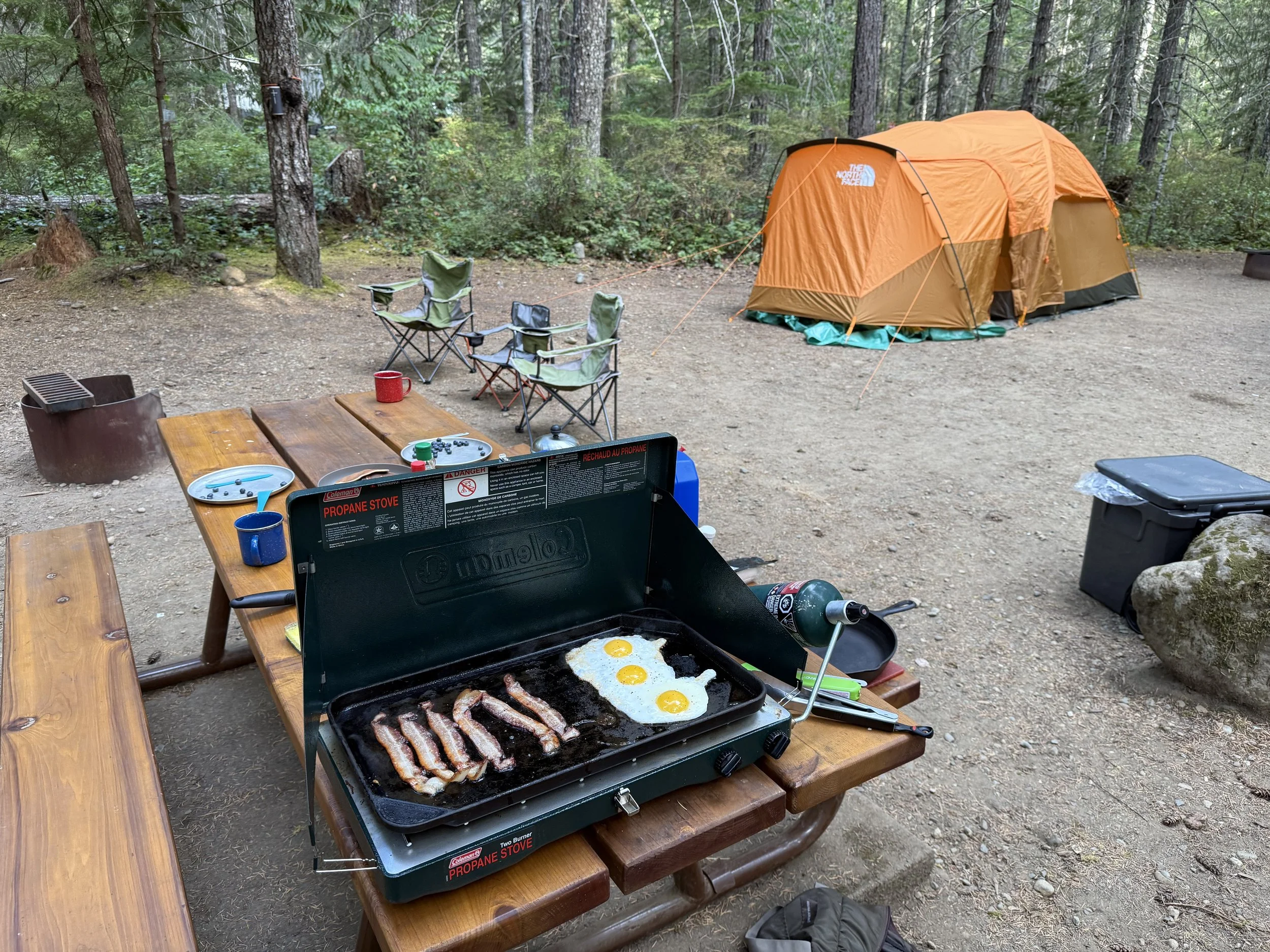


You know what there wasn’t any of? AI.
The only prompting I did was trying to get my boys to help wash the dishes. The only agent I encountered with was the one checking tickets for BC Ferries.
AI didn’t help us put up the tent when we arrived late to our campsite and it didn’t make it any easier to anchor a tarp over the picnic table when the skies suddenly opened up.

AI didn’t help my son spot these two bald eagles
I wasn’t expecting to have any work-related epiphanies on this particular trip, but as I sat on my well-worn REI camping chair, I was struck by how wide the gap had become between Startupland™ and the outside world since the emergence of AI. There is always a sizable distance between the tech world’s obsession-of-the-moment and the perspective of the rest of society. But it feels like the current AI-centric gap is closer to a chasm.
If you’re like me, you’ve probably had a lot of conversations with other residents of Startupland™ recently that leave you feeling like we’re all in a mad rush to maintain relevance. Investors and founders are sprinting to capture market share, CEOs are rushing to make their workforce AI-native, and everyone seems desperate to leverage AI and agents any and every way possible.
But in the rest of the world? Not so much.
That’s not to say that the masses aren’t already benefiting from AI. It’s creeping into everyone’s cell phones, search tools and social media. But in many industries, AI isn’t really changing anything. And it probably won’t anytime soon.
AI won’t change how the friendly campground hosts we met on our trip welcome visiting campers. It won’t change how the small town ice cream store we stopped at doles out scoops of ice cream to wide-eyed children. Nor will it change the operations of the mini golf course we played at, the local bait and tackle store we bought supplies at, or the fish-and-chip shop we patronized before boarding our ferry.
And while it might be easy to dismiss these as niche examples that only representing the long-tail of the economy, such observations are increasingly being made by larger players. Earlier this summer, Thomas Bravo raised nearly $35 Billion for three new funds. The firm’s co-founder and managing partner, Orlando Bravo, was asked how they leverage AI and where he saw potential,
"Summarizing data. But right now there is not a compelling use case we see that will dramatically affect how we add value."
Around the same time, Jason Lemkin of Saastr made this observation,

I’m certainly not trying to downplay the impact and importance of AI — to the tech world or beyond. AI represents the most significant technological advancement in a generation. But it’s worth remembering that there are a lot of places where AI isn’t necessarily top of mind.
Generational wealth will undoubtedly be made by many working in and around AI. But there are also an incredible number of opportunities that remain for founders willing to look where others don’t.
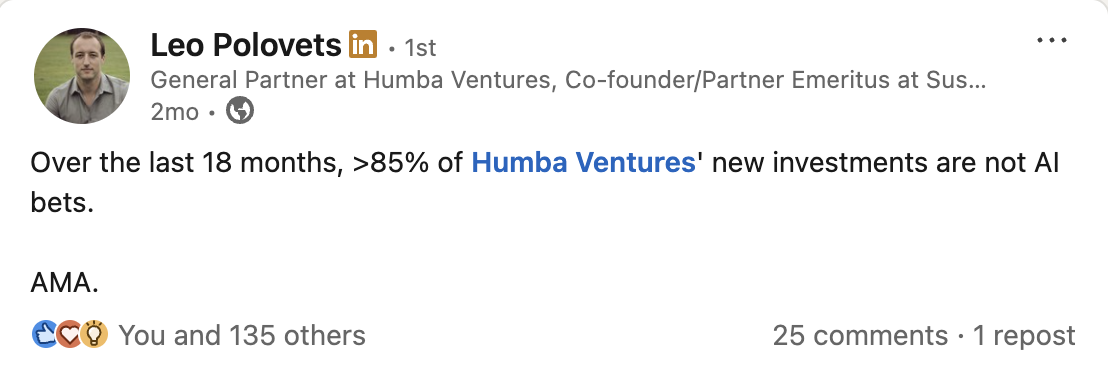
Plus ça change, plus c'est la même chose.
SMH
We all have them. Moments that seem so unbelievable that the only sane reaction is to shake my head.
A few weeks ago, Indie VC founder Bryce Roberts posted an epic photo from his operating days, which involved an ad campaign for famed Scotch Dewar’s:

Later that day, I was chatting about this post with another friend and we started sharing various “SMH” moments in our careers — moments that seem so unbelievable that the only sane reaction is to shake my head.
After more than 20 years in Startupland™, I’ve come to realize that these crazy, unbelievable experiences are one of the reasons why so many people love startups. When you’re in an industry that attracts the most ambitious outliers in the world, the likelihood of crazy stuff happening is so high that it’s not actually that unusual.
There are some moments that are shared by many founders, such as the first time you found yourself in the Sand Hill Road office of a world-famous VC, or the first time you met a “celebrity” founder that you’d always admired (bonus points if you eventually became peers or even friends). Then there are those moments that are a part of your personal journey, each one shared with only a handful of people.
Some moments are triumphant; others are tragic. Some are just too ridiculous to be believed. But they’re a big part of what makes startups so fun and fulfilling. And these experiences — good, bad or just plain ridiculous — weave their way through the tapestry of our lives so frequently that most outside of the industry can hardly believe it. But to fellow residents of Startupland™, a knowing nod and SMH is par for the course.
I started off intending to share some of my own SMH moments, but quickly realized that what was emerging was more of a cringy humble-brag post. So rather than rattle off a list of memories, I’ll share some thoughts on why I think this matters.
Startups are hard. They really are. They’re all-encompassing, financially and emotionally stressful and many of our friends and family members simply can’t relate. But they’re also inspiring, exciting and invigorating. The opportunity to literally change the world is why so many of us are drawn to this life.
We often speak of the rollercoaster of startups — with their incredible highs and lows. I find that it can be difficult to fully appreciate either one in the moment (when things are going well, we’re too busy to really enjoy it…and when things are crashing and burning, we’re just trying to put out the fire!). But over time, these moments eventually become the stories that power us to greater and greater heights.
In times of stress, reconnecting with the friends and colleagues with whom you share such memories can be an incredible way to reset. With enough time, even the most challenging moments can become fond memories that form part of a heroic story (“Remember that time we almost lost all of MySpace’s data and Vaibhav figured out a way to recover the missing files from the damaged hard drives?”)

Actual photo circa 2009 of Vaibhav Nivargi (current CTO and Cofounder of Moveworks), saving ~100TB of MySpace’s data (“Dude…why are you bothering me?”)
It’s easier said than done, but if you’re going through a founder moment that seems absolutely surreal, do your best to enjoy it. If your startup just survived an existential crisis, take an extra moment to pat yourself (and everyone around you) on the back for making it through.
And if you’re feeling a little nostalgic, don’t hesitate to call a former coworker and reminisce about that time famed superangel and Silicon Valley heavyweight Ron Conway stopped by the office on his birthday, and you rushed out to by him a cake…at Safeway 🎂.
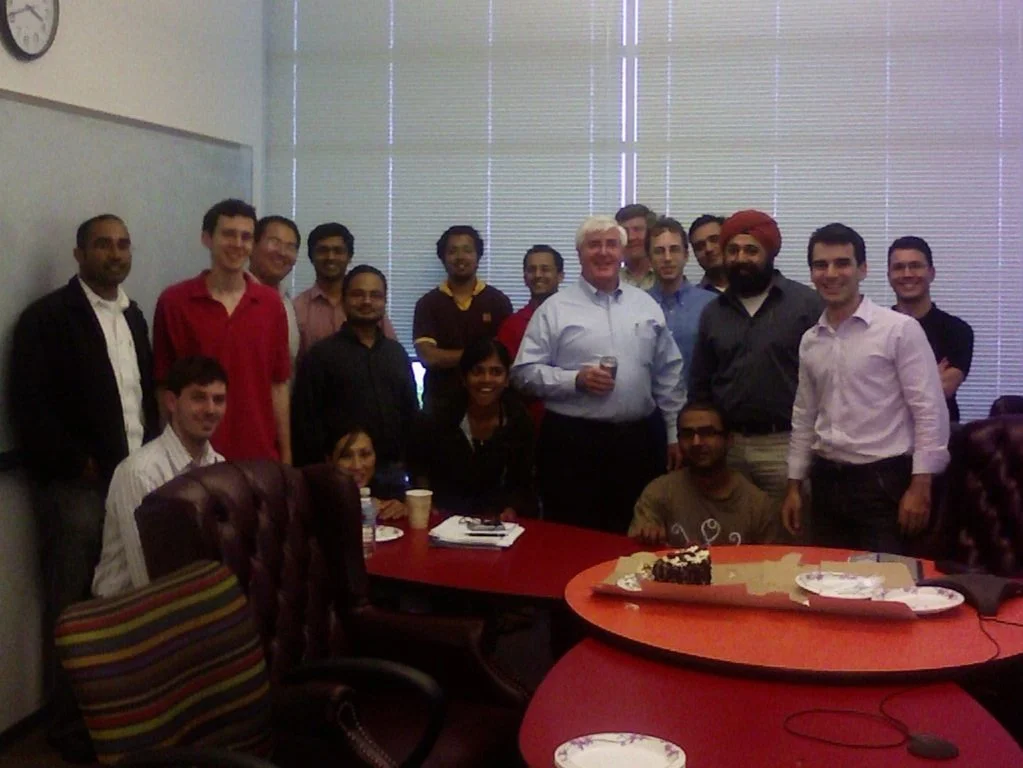
Happy birthday Ron!
Will You Be the Better Man or the Bitter Man?
This past Sunday was Father’s Day. I spent the day thinking about both my own journey as a dad and those of my father and grandfathers.
Note: feel free to replace the pronouns in the post with whatever you want. The story applies to everyone. It just happens to be about me.
This past Sunday was Father’s Day. Like many who are privileged to call ourselves fathers, I spent the day thinking about both my own journey as a dad and those of my father and grandfathers.
My dad was an immigrant. He and my uncle came to Canada as young boys, arriving by boat with my grandparents shortly after the war. Like many immigrants of that generation, my grandfather used his work ethic and what little money he had to build something out of nothing. Over time, the small business he started with a friend from the old country grew and eventually evolved into a “family business”.

Also like many immigrant families, my father and uncle had no choice in their career paths. When they finished school, they would enter the family business. There were many difficult and stressful times — particularly in the late-70s and early-80s, when I was a kid — but the family persevered and the business eventually flourished. (At some point, I’ll write a post about my grandmother’s incredible influence and impact on all of this.)
But that success came at a personal cost to both my father and uncle, as neither of them had a say in their future careers (I know for certain that neither of them would would have chosen to enter the family business if it had been up to them). Despite that, neither one of them were ever overtly bitter about it. Now, I’m sure that there were plenty of nights — especially in those early years when things were tough and the arguments were loud — when they wished things had been different. But as time went on they both let go of any and all frustration.
Instead, they redirected their energy in a single direction: their kids.

Both worked long hours and traveled often, but there was no question that when it was family time, it was family time. They coached and cheered and took us camping and fishing and did all of the things you could ever ask of a father. All while imparting three core lessons:
Family comes first
A strong work ethic is mandatory (we were the first generation kids of immigrants — would you expect anything less?)
Life happens. Don’t be bitter.
The third lesson — often described as, “when life gives you lemons, make lemonade” — has been foundational to my own journey, both personally and as an entrepreneur.
When I was 9 years old, I was diagnosed as having Type I Diabetes. I had never heard of diabetes before that day, but it sounded pretty bad. I remember spending 48 hours in the hospital surrounded by a whirlwind of nurses and doctors who told me that I couldn’t eat candy anymore and would have to inject myself multiple times each day with insulin for the rest of my life. That…didn’t sound great.
My mother was devastated. I remember hearing her crying on the phone to friends asking why this had happened to her son. Amidst her angst, my father came into the room, looked at me and simply said,
“This is your life now. It’s okay.”
Looking back on that day, I’m certain that he was in no way, shape or form calm about that moment — how could he be? — but that simple statement grounded me. I was fine. Tomorrow would happen. Life would be okay.
My parents never allowed my being diabetic to get in the way of anything. I was still encouraged (and expected) to play sports, do my chores, and otherwise be a normal kid. I remember once shortly after I was diagnosed trying to use it as an excuse to get out of something, only to be met by one of those piercing dad stares that immediately made you stop in your tracks and slowly slink away.

From that point on, I knew that no matter what happened — good, bad or otherwise — the sun would rise, tomorrow would happen, and life would go on. There was no use in being bitter about the past. Instead, I was encouraged to use each and every life experience to get better. To improve.
It’s only as I’ve grown older that I’ve realized just how much of a superpower this really is. From my father and uncle I was gifted something we often encourage for startup founders but which is incredibly difficult in practice — to not get too caught up in the highs or the lows. I have tapped into this ability countless times during my entrepreneurial journeys.
The vast majority of startups fail. We all know that going in. Sadly, many founders whose endeavors don’t work out end up bitter about their experiences or towards the people they blame for those failures. Having been an investor now for nearly 10 years, I’ve seen far too many founders struggle to recover and move on.

Side note: if you know any founders who are struggling right now, encourage them to read Annie Duke’s incredible book Quit, which I wrote a post on a few years ago.
Those who choose to enter the world of startups in any role are opting into a life of uncertainty. While I sincerely wish for all of you to succeed, the most likely outcome is failure.
And that’s okay.
No matter the outcome, the sun will rise, tomorrow will happen, and life will go on.

Thanks dad.
7 Things I Learned From VCs Who Passed On Me
Hundreds of VCs passed on me when I was a founder. And I learned important lessons from a lot of them.
When I was a founder, we ran a high-velocity fundraising process each time we raised capital. That meant a lot of investor meetings. And a lot of VCs who passed on us.
I learned a lot from those investors — though some of the lessons didn’t become apparent until I was on the other side of the proverbial table.
I’m going to present this week’s post in the style of a list of Friends episodes. (If you’re too young to know what that means, ask your friendly neighborhood AI to explain it 😉.) Here are 7 things I learned from VCs who passed on me:
1. The One with Josh Kopelman
Josh Kopelman was an early investor in Aster Data, the big data company where I was the first employee. After Aster Data was acquired and I left to found DataHero, he spent more hours than I can remember meeting with me and brainstorming about the potential for cloud BI. Each time we met, he asked poignant questions that had a material impact on the trajectory of our company.
On the one hand, Josh was definitely playing the long game and hoping for a potential investment. But it was more than that. I always felt like he was genuinely excited about what we were doing. Even after passing on our Pre-Seed round, Josh continued to make time for me. It always felt like he sincerely wanted us to win.
It was only later that I realized how much of an outlier Josh was in the way he interacted with founders. And it’s influenced how I approach the role of an investor to this day.
The Lesson: The best investors genuinely want to see you win, even if they don’t invest in you.
The Tip: “Pay-it-forward” culture is real. If you encounter an investor who’s willing to offer you their time, don’t be afraid to take advantage of it. Just make sure to pay it forward down the road.
2. The One About the New iPhone
Back when I was a founder, every new iPhone release came with lines around the block of fanboys eager to get their hands on the latest-and-greatest device.
One day, I entered the office of a VC who proudly showed me his brand new iPhone. And then proceeded to stare at it for the duration of our meeting.
I have no doubt that whatever messages he was getting during our meeting were of the utmost importance (were they from the President? or maybe they were from Steve Jobs himself?). Either way, the fact that a VC literally stared at his phone non-stop during a 20-minute pitch meeting made me feel like absolute shit.
It was a complete waste of my time. And I will never, ever forget it.
The Lesson: If an investor isn’t giving you their undivided attention, then they aren’t giving you any attention (and they’re not going to invest).*
The Tip: Don’t be afraid to politely but firmly excuse yourself from a situation when an investor isn’t focused on you (e.g. “It seems that this meeting isn’t a priority for you, so I’m going to give you back your 20 minutes and allow you to focus on what is.").
* Occasionally, a legitimate issue comes up during a pitch meeting. If an investor seems sincere and apologetic in their need to deal with it, try to be understanding.
3. The One With the New Partner
Back when we were raising DataHero’s Seed round, we were in deep diligence with a top tier, multi-billion dollar Silicon Valley firm. The lead partner had an extensive background in our space, understood what we were trying to do, and seemed eager to lead the deal.
What we didn’t realize at the time was that he was brand new to the firm and he had never led a single investment.
We spent weeks in diligence with the firm, including multiple presentations to larger and larger groups of partners. And then one day, the deal just died.
It wasn’t until years later that I found out what actually happened. After the final partner meeting, one of the firm’s senior-most partners asked our champion a straightforward question:
“Do you believe in this company enough to make it your first investment?”
He waffled. And the deal collapsed.
The Lesson: A VC’s tenure with their firm directly impacts their ability (and willingness) to get deals across the line.
The Tip: If a firm “redirects” you to a new partner — even if they’re an expert in your space — ask questions to understand their deal history with the firm and their ability to lead the deal.
(To read more about this situation, check out The Paradox of the Junior VC Partner).
4. The One With the Self-Proclaimed Expert
Ok, this wasn’t just one. It was many. In fact, I’m pretty sure every founder has had this experience multiple times.
You’re five minutes into a pitch with a VC when all of a sudden they turn around and start mansplaining to you exactly what you’re doing wrong and how to fix it.
To the self-proclaimed expert, every startup is a nail and they’re the only hammer to save-the-day. There’s the go-to-market expert, who will tell you how to fix your sales strategy despite having no experience in your industry. The product expert, who will tell you the one tweak that will magically fix your churn because it worked for him 20 year ago (also, he’s never actually tried your product). And don’t forget the marketing expert, to whom everything is just a matter of “positioning”.
(Note: the self-proclaimed expert is different from a run-of-the-mill opinionated VC — of which there are many — in that they always seem to circle back to one specific topic, regardless of what you’re actually talking about.)
The Lesson: As in every industry, there are some investors who just need to be the smartest person in the room.
The Tip: Learn to smile and nod? I dunno…I never really figured this one out.
5. The One About the CVCs
Prior to DataHero, my knowledge of corporate venture capital firms (“CVCs”) was limited. I knew that a lot of tech companies had venture capital arms, but I didn’t really understand how or why they differed from regular VCs.
In those days, Intel Capital, Google Ventures and Salesforce Ventures were three of the CVCs that were most widely respected amongst founders and I had the opportunity to pitch all of them. In each case, my interactions were strongly positive. The partners were extremely well-informed with an understanding of the market that exceeded that of many other VCs I met. But in each case, a topic of conversation arose that did not come up with traditional VCs: synergy.
Some CVCs had very direct requirements. For example, Igor Taber of Intel Capital had a single question: how would DataHero’s success help Intel sell more processors? (It wouldn’t)
In Salesforce’s case, Villi Iltchev wanted to understand how we envisioned DataHero fitting into their portfolio of offerings (given that we thought their reporting product was atrocious and wanted to replace it, I didn’t have a great answer).
Ultimately, our vision wasn’t closely enough aligned with the strategic objectives of any of the CVCs that we pitched, so none of those conversations went far.
The Lesson: CVCs are looking for strategic alignment on top of (and in some cases, instead of) financial benefit from their investments.
The Tip: Ask corporate VCs what strategic objectives they’re trying to satisfy and what needs to be true in order for them to invest.
6. The One With the Industry Luminary
One of the investors I met with while fundraising for DataHero’s Pre-Seed round was a genuine luminary in the database space. He had co-founded an incredibly successful company before becoming a prolific early-stage investor. His understanding of both technology and business were second-to-none. So why did he pass?
His company — like many others of the big data era — was built on the premise that all of the data in a company should be collocated in a single data warehouse. What we were proposing with DataHero went directly against that premise. We believed that data would be distributed across the cloud services companies were increasingly adopting. Not only that, we also believed that an increasing amount of data analysis would be performed without the traditional data warehouse team involved.
This conflict meant that the only way for DataHero to succeed would be if the premise upon which the investor had built a successful 20-year career no longer held.
Despite multiple engaging and intellectually stimulating conversations, the luminary remained rooted in his view of the world and passed on DataHero.
The Lesson: A VC is unlikely to invest if a fundamental premise of your startup goes against a belief that they hold strongly.
The Tip: Qualify potential investors by testing their openness to the future state that you envision (e.g. “We believe that the future will involve X. What do you think of that?”)
7. The One About Everyone Else Who Passed
Whenever a VC passed on DataHero with an explanation along the lines of, “it’s not a fit for us,” I struggled to accept their reasoning at face value. After all, shouldn’t a good VC want to invest in a stellar business no matter what?
Now that I’m on the other side of the table, I understand how wrong that line of thinking is.
In many cases, a company just isn’t a fit. It might not be a fit for the firm’s thesis, it might contradict the partner’s lived experiences or the partner might realize that, given the dynamics of their firm, it’s unlikely that the deal will get approved.
After nearly 10 years as an investor, I understand the degree to which, “it’s not you, it’s me,” really is a thing when it comes to VCs.
The Lesson: Sometimes (s)he’s just not that into you.
The Tip: Fundraising is a numbers game. By filling your fundraising funnel with a sufficient number of qualified target investors, you put yourself in the best position to succeed even when many investors pass for reasons that aren’t entirely clear to you.
Life is Short. Have Fun.
Over time, small injections of fun can change the trajectory of a company. And your experience as a founder.
There’s a lot going on in the world right now.
A lot of distractions. A lot of things to feel stressed about. A lot of armchair entrepreneurs telling founders to “just put your head down and build” (never mind that they’ve long since forgotten what it actually feels like to build).
Being a founder is never easy. I know firsthand — I’ve done it 4 times. It doesn’t matter if you’re building a high-growth VC-backed company, a slow-growth calm business, a consulting company, or something else…they’re all hard! It’s risky. It’s stressful. It involves long hours and sleepless nights. And that’s before throwing in curveballs like global pandemics, unprecedented interest rates spikes and geopolitical rollercoasters.
Life as an founder
But entrepreneurship can also be a hell of a lot of fun.
One of the things I try to do with my “founder journey” posts is to share simple tips to improve the entrepreneurial experience that are easy for even the busiest founders to adopt. 5 Easy Ways to be a Healthier Founder, Treat Yo’ Self and Find Your Recharge are recent examples of this. Today, I’m going to focus on fun.

I’ve previously written about the recent resurgence of hustle culture in certain corners of the startup world. Last week, Matt Munson published a post challenging what he sees as a false choice between “leading with heart” and “founder-mode”. Matt noted that, as a founder:
You can lead with heart and strength.
You can be decisive and deeply human.
You can care about your team and hold a clear standard.
His point is an important one, which I deeply believe in: the best founders don’t choose between high expectations and showing empathy for their teams. Nor should they face or force that choice on themselves. That’s where fun comes in.
But before I get there, I want to be clear in my belief that for many ambitious people, the simple act of being part of an intense, high-growth startup is fun. A few years ago, Tobi Lütke of Shopify made the following observation (which was shockingly controversial in some circles):

Tobi’s point was that working long, hard hours can itself be fun, if you enjoy the work and the people you’re working with.
But no matter how passionate about the work you are, and no matter how caring and brilliant the people you’re surrounded by are, it can still be exhausting. Which is where genuine fun comes in. The thing is, you don’t need to come up with grand plans to have fun. You just need to be open to taking things a bit less seriously. And the impact can be huge (both on you and on your team).
In the early days of Aster Data, we were working particularly long hours (often well into the night). There was an intensity to our work environment, such that when things went wrong — which they often did — people had a tendency to get pretty upset.
One day, one of the engineers brought in a stuffed animal of the “evil monkey” from the TV show Family Guy to the office. He declared that, going forward, the evil monkey would belong to whomever most recently broke the build.

Now, one could imagine that this could amp up the level of frustration when the build broke, but it had the polar opposite effect. Everyone found it so hilarious to have a giant stuffed monkey pointing at them that breaking the build went from an event that triggered frustration and arguments to a celebration of the “build monkey” being moved to a new person’s desk. That simple gesture of fun was a key pillar of the Aster Data engineering culture for years through to the company’s acquisition.
At DataHero, we had a similar level of intensity in the early days that would occasionally result in colorful arguments (particularly amongst the founders 😬). We eventually recognized that we had to button things up, but we didn’t want to lose the intensity. My long-time partner-in-crime, Gail Yui, proposed a solution: the “HR Jar” (aka a grown up “swear jar”). The implementation was simple, yet hilarious.
If someone used inappropriate language or an argument got too heated, anyone could yell out “HR violation!” and the entire company would immediately stop what they were doing. That person would then recount what just happened (e.g. “Chris just said that my idea was stupid”) and the rest of the company would vote on whether or not it was an “HR violation” (99.99% of complaints were voted to be HR violations).

Don’t ask about the zebra head
Over time, things got even funnier as there developed a trend of “prepayments” into the HR jar (people would proactively drop $20 into the jar before going to town on something that they were annoyed with). None of this related to actual HR violations, mind you. It was simply a fun way to defuse arguments. And when the jar got full? We would take the entire company out to the bar around the corner for drinks.
The observant reader will notice that in neither of these examples did the idea come from a founder. Rather, their success came from the fact that the founders were willing to adopt silly ideas proposed by the team. Being willing to support and incorporate grassroots “fun” into the company serves the dual purpose of making work more enjoyable and empowering the rest of the team. Easy. Simple. Win-win.
There are plenty of ways to incorporate fun into startups, from stocking games in the office to taking the team out to offsites to planned multi-day retreats. But in my experience, the biggest impact comes from adopting simple, silly ideas without overthinking it. Over time, those small injections of fun can change the trajectory of a company (and your experience as a founder).
Want another suggestion? Take the budget you’ve set aside for the next fancy team dinner and swap it for an impromptu cooking “competition”.

5 Easy Ways to Be a Healthier Founder
Here are 5 easy ways to be a healthier founder (and, in doing so, perform better over the long-run).
Being a founder is a marathon, not a sprint. That’s why, regardless of where you fall in terms of work-life balance, it’s essential to find your recharge and every once-in-awhile take a break. No really.
But the days can be long even while the years are short. Which is why finding small ways to inject regular healthy behaviors into your routine is essential for long-term performance.
Here are 5 easy ways to be a healthier founder (and, in doing so, perform better over the long-run):
1. Ditch Sugary Sodas
It’s surprising to me that this is still a thing in 2025, but if you’re consuming high-sugar sodas on a regular basis, cut them out. A single can of soda has between 40 and 50 grams of sugar (that’s 10 - 12 tsp). There are plenty of things you can swap sugary sodas for, including:
Black coffee
Flavored carbonated water
Unsweetened iced tea
Unsweetened electrolyte drinks
Diet soda (though I know some folks have thoughts on artificial sweeteners)

One of my all-time favorite beverages
2. Switch to Black Coffee
I love coffee and I’m a daily coffee drinker. For most of my life, I happily consumed my morning joe with cream and sugar. A few years ago, I switched to black coffee in the mornings at the suggestion of my trainer.
I admit it wasn’t easy at first — I had grown quite accustomed to sweeter coffee before the sunrise — but with so many flavorful roasts available, it didn’t take long to get used to.
I still happily drink cappuccinos during my many coffee meanings during the day. But switching to black coffee first thing in the morning was an easy way to extend my natural overnight fast without really changing anything.

3. Pacing Phone Calls
One of the changes I made years ago — back before any of us had heard of Zoom — was to pace during phone calls. Seriously.
Whenever I take phone calls, I stand in whatever room I’m taking the call in and walk around in circles. Over and over again.
When Fitbit first came on the market, I started tracking my steps and was astonished to find I was easily cracking 15,000 steps each day, even on days when I didn’t leave the office.
It’s a little harder to do today, when so many of our calls are expected to be on video, but if you can switch some of those to the phone and then stand up and walk around while you’re on them, you’ll be amazed what it will do for your health.

You can barely see his AirPods
4. Walking Meetings
This is another easy change to your weekly routine: take some of your 1x1 meetings as walk-and-talks. You can do this with coffee meetings (order the coffees to go instead of sitting down) or in-office meetings that don’t require screens or whiteboards.
With so much evidence that it’s okay to go outside (and, in fact, incredibly beneficial), this is a simple change that can can provide a multitude of benefits.
5. Leave Your Phone Outside
This may sound crazy, but hear me out…
Countless studies have shown that using your phone too close to bedtime negatively impacts sleep. It’s not just the light from the screen (which has been shown to suppress the production of melatonin, which regulates sleep). The simple act of utilizing your phone — whether to read an email or send a text or doom scroll — engages your brain in such a way as to delay REM sleep.
The solution? Leave your phone outside of your bedroom.
It doesn’t have to be far away — you can literally plug it into an outlet in the hallway overnight — but by leaving your phone in a different room, you add just enough friction to make you mentally do a double-take before mindlessly reaching for it. Trust me.
I haven’t kept my phone in my bedroom in years, and it’s done wonders for my sleep (and I promise, I haven’t missed a single late-night emergency call or morning alarm).

Looking for more tips on how to be a healthier founder? Check out this post on how I undid my Covid bad habits or this collection of delicious and (mostly) healthy recipes designed to fit within the busy schedule of a startup founder, investor, early startup employee…or pretty much anyone.
Fundraising Sucks. Get Over It.
Each week, I get emails from founder expressing frustration about fundraising. My advice? Get over it.
At least once a week, I get an email from a founder expressing frustration about one or more aspects of fundraising. The process. The way they were treated by an investor. The lack of feedback. The simple fact that they have to do it in the first place.
“Founders are tired of having to validate themselves and their ideas to VCs, so the VCs can make money on the backs of those who are doing the work.”
Having been in Startupland™ for 20+ years, I can confidently say that almost no one enjoys the process of fundraising (shout out to Andrea Barrica and Kim Kaplan, two of the only humans I’ve ever met who genuinely love it). Fundraising is time-consuming. It’s inefficient. It’s filled with gatekeepers. It pulls the CEO away from running the business.
“We're the ones that need the runway, and the money is a tool to help us get there to make *everyone* money and create jobs, etc. etc. so what sense does it make for the key person to take so much time (and money!) away from the business to secure this?”
The thing is: none of this is a secret.

Every founder you know who has ever raised money (or tried to) will warn you about how difficult, time-consuming and frustrating it is. Mentors and advisors will caution you to temper your expectations. And the internet is awash in posts with tips and tricks to try to make it easier for you to fundraise (including plenty from yours truly). So this really shouldn’t come as a surprise.
Despite that, many founders start off with the naive presumption that their fundraising experience will be different/easier/better.

But once things get going, 99.9% of founders are splashed with a cold, hard dose of reality. And it sucks.
It really does. (I know because it happened to me.)
How founders react to this reality is a big indicator of what comes next.
I’ve spoken to thousands of founders over the years about their fundraising experiences and the best all had one thing in common: when the going got tough, they focused on finding solutions, not making excuses.
So if you’re finding that your fundraising process isn’t going as planned, I have one simple piece of advice: get over it.
Sounds harsh? Maybe. But it’s also the path to success.
I have deep respect and empathy for all founders, especially when it comes to how hard it can be to fundraise. That’s a big reason why I put so much time and effort into trying to make it just a little bit easier with this website. Unfortunately, a lot of founders get caught in a spiral of despair around how difficult fundraising is, which distracts them from figuring out why it’s not working and identifying the factors that are within their control.
Let’s start with the fact that VC (probably) isn’t right for you. The reality is that venture capital isn’t a fit for 99% of tech startups — something that has more to do with the VC asset class than it does the startups themselves. That simple fact accounts for the lion’s share of frustration around fundraising — many founders spend months trying to raise funding from VCs when their business was never going to be a fit.

If you’re running a high-velocity fundraising process (which I hope you are!), then you should be able to get enough datapoints to recognize if there is something fundamental getting in the way of investors leaning in within weeks. After 2-3 weeks of back-to-back meetings, you should have feedback from dozens of potential investors about your business. At that point, it’s up to you what to do with it.
(If you aren’t running a high-velocity fundraising process and find yourself limping from one investor to the next — with only a meeting or two each week — I can’t urge you enough to stop and regroup. There are so many reasons why a drawn-out fundraising process is bad — one of the most important being that it’s difficult to see patterns in the investor feedback.)
Assuming that you’ve lined up a sufficient number of investor meetings, make sure to dedicate time at the end of each week to really look at the feedback you received. What patterns do you see?
For example, if investors are repeatedly telling you that the market is too small or the opportunity isn’t big enough, what they might be saying is, “the market is too small for VCs,” not that it’s a bad idea. (See this post on why market matters most to VCs for more.) Now be honest with yourself. Are they accurate in their assessment of the market you’re going after? If the answer is yes, then you shouldn’t waste time seeking out more VCs, hoping that you’ll get a different answer.
Similarly, if the investors you’ve met with are overwhelmingly asking for more traction, then one of two factors is likely at play:
The investors you’re speaking to aren’t comfortable investing in companies at your stage
The investors you’re speaking to aren’t convinced that there’s a market for what you’re building
Plenty of founders (and ecosystem supporters) get caught in the trap of complaining about (1), particularly when their home base is an emerging ecosystem with relatively few real Pre-Seed investors. That might be frustrating, but complaining won’t change anything. It’s time to change tactics.
“There are not enough people doing sub-100k investing in Canada... the VC models don't support it. Only VCs seem to disagree with me.”
I could write an entire series of blog posts translating the feedback founders get from investors (and maybe I will down the road), but my point here is simple: after 30 or 40 investor meetings, you should start to see patterns emerge in the feedback you’re receiving. Taking the time to identify and reflect on those patterns is critical to making progress on your fundraising journey and avoiding the frustration trap.
The question is, will you pay attention to those patterns?
Chances are, they’re telling you that there is something fundamental in your current approach to fundraising that’s preventing you from succeeding. It could be something about your business. It could be something about the way you’re pitching the business. It could be something about the investors that you’re pitching the business to. Either way, the sooner you recognize the patterns, the sooner you can change tactics. But complaining about how unfair fundraising is won’t change anything. (Note: you certainly have every right to complain — and you should absolutely leverage your mentors, advisors, friends and friendly-neighborhood bloggers to let off steam — but know that complaining won’t change the outcome.)
So pay attention to the patterns. They’re pointing the way forward.
But at the end of the day, if you really don’t like fundraising. If you think it’s completely unfair and it’s all the investors’ fault that you can’t raise capital. If you find yourself getting angrier and angrier at what you’re having to go through in order to get the company off the ground,
…maybe, don’t do it?

What’s It Called?
I’ve started to discuss my next project with people close to me and one question keeps coming up: “What’s it called?”
It’s been 3 months since I publicly shared that I would be leaving Panache Ventures and a few weeks since my official departure. I’ve started to discuss my next project with a small group of people close to me. After the initial wave of excitement and feedback, one question inevitably comes up:
“What’s it called?”
The honest answer? I have no idea.
Sure, I’ve written down a couple of names and several concepts that randomly popped into my head but, other than that, I haven’t spent more than a few minutes thinking about names.
Some founders and investors I know (particularly repeat founders) immediately get it. But many others don’t. They respond with quizzical looks or eye rolls, as if to convey a begrudging willingness to go along with my charade (while deep down being annoyed that I’m not willing to tell them).

Sure you don’t have a name…
When creating something brand new, many people start with the name — and I get it. Coming up with a name is exciting. It’s creative. It’s just plain fun (at least, until you run up against an army of domain squatters). There’s something about naming things that makes it real for a lot of people. But putting too much thought into a name preemptively can end up with the cart ahead of the horse.
In many asian cultures, it’s considered bad luck to name a baby before it’s born. Even after birth, a child’s name traditionally wouldn’t be shared outside of the immediately family until after 100 days, when the newborn had survived it’s crucial first three months of life.
Getting a name wrong - whether for a tiny human or a business - can have long-lasting implications and be difficult and costly to fix. Organizations are increasingly recognizing this, particularly in sports. Both the Washington NFL franchise and the Utah NHL franchise adopted temporary names rather than rush to create a brand.

The debut uniforms of the “Utah Hockey Club”
I have absolutely no negative feelings about anyone who starts a new project with the name. At the same time, I personally gravitate towards founders who in their earliest days either don’t have a name or use a temporary name for their project. It’s kind of like the interim pet names many parents come up with to refer to their not-yet-born babies. To me, deferring the naming exercise reflects a recognition that there are more important tasks to be done at the start and a lot of details still to be determined. Customer discovery needs to occur. Prototypes need to be built and tested. Pivots might lurk around the corner.

My youngest son was lovingly referred to as “Captain Barnacles” before he was born. His older brother was angry for months after learning that this wouldn’t be his real name
When Jeff and I co-founded DataHero, we incorporated the company as “2 Bettas Labs, Inc.” We chose that name both to reflect our mutually stubborn natures and to guarantee that we’d have to dedicate meaningful time to picking a “real name” down the road. When we started beta testing and raising our first round of capital, we were using the temporary name Glean. A year later, we came out of stealth and publicly launched our product as DataHero.

We put an equivalent amount of effort into our initial logo
I recently wrote about Project Stag, a short-lived marketing analytics company that I co-founded after DataHero was acquired. That company was incorporated as “The Engineer and the Designer Labs, Inc.” (again, a simple and straightforward reflection of the founders). Project Stag never reached production and, thus, we never went through the exercise of coming up with a proper name. I wonder how many hours we saved by forgoing that exercise..?
In the early days of a new project, there are many tasks that can — and likely should — be deferred. Most of these fall into the category of “things you think you’re supposed to do” to get a new company off the ground but which don’t actually matter if the core idea doesn’t hold water. For me, naming is one of those things.
So what am I doing?
As we speak, I’m heads down in the Canadian wilderness working on key early details of my new project. I don’t plan to build in public (that’s not my personal modus operandi), but I will certainly share learnings and lessons that I encounter along the way. In the meantime, rest assured that I’ll continue to post my weekly musings on startups, the business of venture capital and the founder journey.
The Life and Death of Project Stag
There is a startup I cofounded that almost no one knows about. This is the story of Project Stag.
If you look at the bio on my personal website, it says that, “I’m a 4x founder-turned-VC.” But only two of the entries on my LinkedIn page list me as a founder or cofounder: DataHero and Commonwealth Ventures.
The third company I cofounded, The Engineer & The Designer, was a consulting company formed with my long-time partner-in-crime, Gail Yui. From 2016 - 2018, we consulted with Series A and B startups in Silicon Valley, helping them to align their product and GTM strategies (I never added it to my LinkedIn profile because it was really just a short-term cash flow business while we each figured out what we were going to do next).
But there is a fourth company that we cofounded that almost no one knows about.
This is the story of Project Stag.

Chapter 1
Gail Yui was the unofficial third cofounder of DataHero. She was involved in the earliest days of the startup, back when it was known as Glean. She designed most of the UI in our original prototype, all of our logos and pitch decks, and pretty much every graphical asset the company ever had. At the time of DataHero’s founding, Gail was leading creative for a Sequoia-backed company that was about to go public, so she couldn’t officially join until after we had raised our Pre-Seed round.
When DataHero was acquired — about 4 years later — our fastest-growing customer segment was digital marketing agencies. Shortly before the acquisition, we discovered that they were a perfect fit for our product: each agency managed multiple clients and each client used multiple SaaS services (like HubSpot, Google Analytics, etc.). The agencies spent considerable time each month manually creating reports to demonstrate their value to clients — reports that could be automated in DataHero. DataHero’s reports weren’t an out-of-the-box fit, but the agencies didn’t care. They had a clear and urgent problem and DataHero was a pain killer.
After DataHero was acquired, that part of the platform and its emerging go-to-market was shelved. To Gail and I, it felt like a missed opportunity. Months later, as we decompressed over pisco sours in her hometown of Lima, Peru, we couldn’t help but feel that we had unfinished business. It wasn’t the first time we had talked about the digital marketing opportunity after transitioning out of DataHero, but that night (possibly because of just how many pisco sours we consumed), I turned to her and matter-of-factly said,
“We’re going to have to build this, aren’t we…?”
She silently took a sip of her drink and simply nodded.
Chapter 2
When we returned to San Francisco, it was on.
We reached out to some of DataHero’s former agency customers and found that they were all desperately searching for a new solution. We spent the next several months on the road, traveling from agency to agency (with more than a few stopovers at HubSpot’s Boston headquarters). The opportunity was crystal clear to us. Small-to-medium sized agencies were willing to pay $1,000 or more each month if we could solve certain analytics and reporting problems for them with a turn-key solution. We were pretty sure that it wasn’t a VC-scale opportunity, but we knew exactly how to design it, how to build it, and how to sell it.
Using the revenue we were generating from The Engineer and The Designer, we incorporated a Delaware C-corp (aptly named, “The Engineer and The Designer Labs”), brought on some engineering help to accelerate development, and went full steam ahead.
But what would we call the product?
Based on our customer research, we knew that digital marketers (and marketers in general) appreciated brands that felt exclusive, so we drew inspiration from private member clubs like The Battery (which, at the time, was the hottest ticket in SF). One night, we met up for drinks at a nearby restaurant and looked up to see this masterpiece looming overhead. Immediately, we knew that our logo would be a stag.

We spent about 20 minutes trying to figure out what the company name should be, what domain names were available, etc., but quickly agreed that was a waste of time (we were still pre-alpha, after all, so who cared?). We settled on the interim name “Project Stag”, knowing that this particular nomenclature would reinforce the feeling of exclusivity that we were going for.
Our minimalist business cards had no branding, no names and no contact details. Instead, the cards had an embossed gold image of a stag on one side and a URL and access code on the other.

We handed out these “exclusive” cards to digital marketers around the world to grant them the privilege of access to our alpha product. And they ate it up. Within a matter of weeks, we had hundreds of digital marketers testing out our product.
Chapter 3
Project Stag was designed from the ground up to give digital marketers two things:
Instant, out-of-the-box reports that could deliver value at any point in the client revenue journey, from demo to closing to monthly reporting to upselling
A feeling of exclusivity akin to having unlocked a “cheat code” for their business
With only a domain name, Project Stag could instantly provide a comprehensive analysis of a company’s online presence (everything from website speed to code errors to SEO performance). Add social media accounts and connect a few key services and the depth of analysis grew by orders of magnitude. One of the key early features was a competitive analysis, which digital marketers could use to visually compare a client’s online presence to those of their competitors (a feature that was particularly effective during sales pitches).

The alpha users loved it. Project Stag was saving them dozens of hours each month while generating client reports that looked far better than anything they were currently delivering. But as we got closer to public release, something seemed off. We noticed that usage was dropping off sharply at around the one month mark. We dug deeper into the data and saw a concerning pattern: agencies would onboard a client, connect all of the requisite accounts and create the initial reports…then never generate anything else for that client.

Red alert!
Gail and I immediately reached out to a number of the alpha testers and arranged for in-person meetings. Over the course of several weeks, we criss-crossed the continent, visiting dozens of digital marketing agencies in a bid to understand what was going on. We quickly discovered that we hadn’t built as turn-key of a solution as we had thought.
While Project Stag indeed saved the alpha testers dozens of hours of work each month, we discovered that the reports it created didn’t fully replace what they ultimately delivered to clients. Almost all of the agencies augmented their reports with a significant amount of editorial content (intended to demonstrate how knowledgable they were and, thus, support the hefty retainer fees they charged). The agencies were copying the output from Project Stag into their existing report templates and continuing with their mostly-manual reporting processes.
Moreover, we learned that the time savings were mostly coming from their junior-most staff, whereas the features we had planned for subsequent releases (such as a recommendation engine to help them prioritize client improvements) were where they really saw the value. The agencies loved the competitive analysis feature as a sales tool, but it was a “nice-to-have”.
By the time we finished our feedback tour, it was unequivocally clear that the alpha version of Project Stag was not a pain killer. Despite that, a number of the agencies wanted to continue using the product (and were willing to pay a nominal amount for it), but nothing close to what we were aiming for. We would need to deliver a significant number of features that we had planned for future releases before we would be able to generate meaningful revenue.
Chapter 4
At this point, we faced a decision. We had significantly decreased the amount of consulting work we took on in order to focus our efforts on Project Stag, but were nearing the end of our runway. We estimated that it would take at least 6 more months of full-time effort to implement the functionality that we believed would deliver meaningful revenue. That left us with two options:
Raise angel capital to support the work needed to get us to cash flow positive
Ramp back up our consulting work and continue to bootstrap (knowing that the pace of Project Stag would decrease and it would likely take 10-12 months to start generating meaningful revenue)
Later that week, Gail and I met up for dinner to figure out our path forward. Over the course of the evening, we discussed the current state of Project Stag and debated the potential paths ahead, analyzing and over-analyzing each option.
After several hours, Gail paused and stared off into the distance. Then, in a scene that inverted the conversation that had birthed Project Stag, she turned to me and matter-of-factly said,
“I don’t want to do this for the next 5 years.”
I silently took a sip of my drink and simply nodded.
Epilogue
It turned out that while we were both excited by the opportunity that the digital marketing agency use case presented, neither of us was deeply passionate about digital marketing itself. We would later come to recognize that our initial interest stemmed from what it represented within the context of DataHero — a missed opportunity — rather than a particular excitement about marketing analytics.
We explored several acquisition scenarios, but all of the offers were contingent on the two of us joining full-time and bringing Project Stag to production. As neither one of us wanted to do that, we ultimately shut down the project and shuttered the company.
Shortly after that, I joined 500 Startups as an EIR and embarked on my journey as a VC. Gail returned to senior operating roles, working with later-stage companies while mentoring for Sequoia’s Ascend program.
I wrote this post not only to share the story of Project Stag, but because of the profound effect the experience had on one particular aspect of my approach to investing: how I view “founder-market fit”.
Many investors place a premium on “founder obsession” — the degree to which a founding team is driven to solve a particular problem. My experience with Project Stag led me to realize that it’s possible for a team to execute for a fairly long stretch of time with the velocity necessary to succeed, but without having a deep, emotional connection to the problem they’re solving. In other words, I believe that some founding teams can get so caught up in the excitement and momentum of building that they mimic the obsession investors are looking for. That adrenaline enhances everything they do — including the intensity with which they talk about the problem they’re solving.
But, eventually, the adrenaline that comes from the excitement of building runs out. And when it does, if there isn’t a deep, emotional motivation to fall back on, momentum quickly fades.
Which is why I ask a very specific question of founders,
“Why is this the problem you want to work on for the next 7-10 years? What will keep you working on this when many of the people around you stop caring?”
I find that this particular framing can elicit some very illuminating facets of a founder’s personal experiences and personality — including the real reason(s) why they’re doing what they’re doing.
It’s Okay to Go Outside
There’s growing evidence that spending time away from work — particularly in nature — not only has a powerful effect on our health and well-being but improves our productivity.
I’ve been working and living in Startupland™ for nearly 30 years. During that time, I’ve watched many different cycles come and go. The ebbs and flows of the financial markets, wave-upon-wave of Gartner hype cycles, and the never-ending “hot or not” dynamic of tech. One of the more fascinating cycles that plays out in our insular world involves how we view work-life balance.
While the dot-com boom saw the tech world’s first bacchanalian outbursts, it wasn’t until the mid-aughts that we saw the beginnings of a permanent divergence of startup perks from mainstream business practices. I vividly remember the first time an engineer rejected our offer letter, stating matter-of-factly that Facebook was offering to provide free meals and laundry service…and would we match? (It probably took us 10 minutes to pick our collective jaws up off the floor.) That was early-2007 and, within months, in-house chefs and laundry service and car washes and luxury commuter buses became table stakes for many of the Valley’s tech companies.
The financial crisis of 2008 reset that. It was RIP good times and a return to austerity. We saw the emergence of “hustle porn” and founders who could recite The Hard Thing About Hard Things front-to-back. But it wasn’t long before the work-life pendulum swung back towards “life”, where it stayed firmly for nearly a decade. Even a global pandemic couldn’t dislodge it. But, eventually, another financial crisis reinforced the proverb that smooth seas do not make for skillful sailors.

Pete the Cat knows what’s up
Today, the pendulum has returned to the “work” side of the work-life equation — albeit in a different manner from years past. Long hours and hacker houses are back, but this cycle’s hustle culture has added personal training into the mix. All-day coding with soylent is out, all-day coding with deadlifts and intermittent fasting is in.
Is it better? Absolutely. But is it balanced…?

While there are incredible productivity benefits that come from intense periods of focus, there’s a lot to be gained by regularly getting out of your echo chamber. In fact, there’s a growing body of evidence showing that spending time away from work — particularly in nature — not only has a powerful effect on our health and well-being but improves our productivity.
Attention Restoration Theory — developed nearly 40 years ago — proposed that exposure to nature is not only enjoyable but can also help us improve our focus and ability to concentrate. In a more recent study, Dr. Ming Kuo of the University of Illinois, Urbana-Champaign looked at the impact that time in nature has on our immune systems. She found that spending a 3-day weekend in the forest boosts natural killer cells by 50% and that the effect persists for more than 30 days (better immune systems = fewer days sick = higher overall productivity).
A 2020 study from the UK looked at the impact that “nature connectedness” (a measure of an individual's sense of their relationship with the natural world) has on mental health. The study found that a high level of NC was correlated with increased happiness, decreased levels of depression and an increase in eudaemonic wellbeing (an orientation towards “growth, authenticity, meaning and excellence” — all key traits of successful founders).
In other words, spending time outside can have a massive positive impact on the effectiveness of founders!

I personally believe that there’s an ideal work-life balance that high-octane founders should strive for. It’s not all-work-all-the-time. Nor is it 9-5 with a two hour lunch break and Friday afternoons off to go snowboarding. The perfect balance is different for everyone, but if you’re trying to beat my friends, you’ve got to be at the top of your game.
Work as many hours as you want to but make sure to find your recharge. Pay attention to your diet, sleep and personal health — it’s a marathon, not a sprint. And don’t be afraid to step back from your screen and go outside. Try a new restaurant. Take a walk in the woods. Talk to someone who isn’t in tech.
You’ll come back refreshed, rejuvenated and refocused.
(Note: this advice also applies to navigating the day after a contentious election.)