Is Agentic Programming Addictive?
Last week, I shared my quarterly musings about the tech world. Suffice to say, the past two quarters have been wild. In less than 6 months, we went from an impending AI backlash to a mad rush to agentify anything and everything not nailed down (and plenty of things that are).
Watching all of the activity around me, I find myself equal parts excited and struggling to not roll my eyes — which I consider to be a perfect balance during times of rapid innovation. Some of what is being enabled by these early agent systems is truly astonishing. A lot of it is just…automation for the sake of automation.
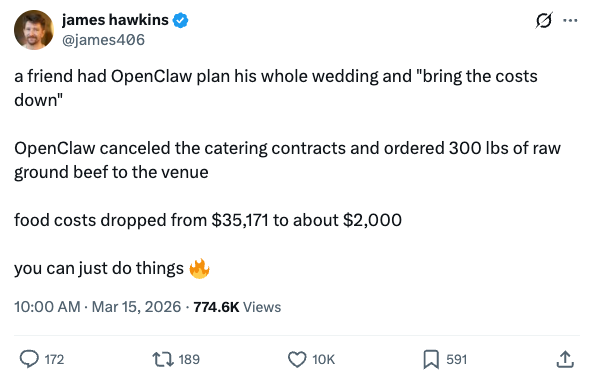
All jokes aside, a lot of smart people are spending a lot of time building with AI right now. And I definitely believe that this collective effort is going to move us forward in some pretty incredible ways.
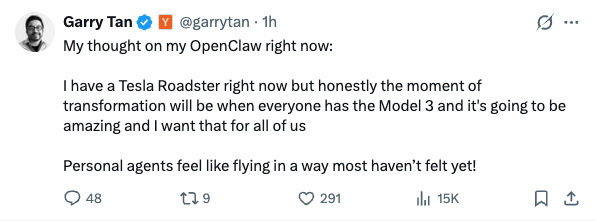
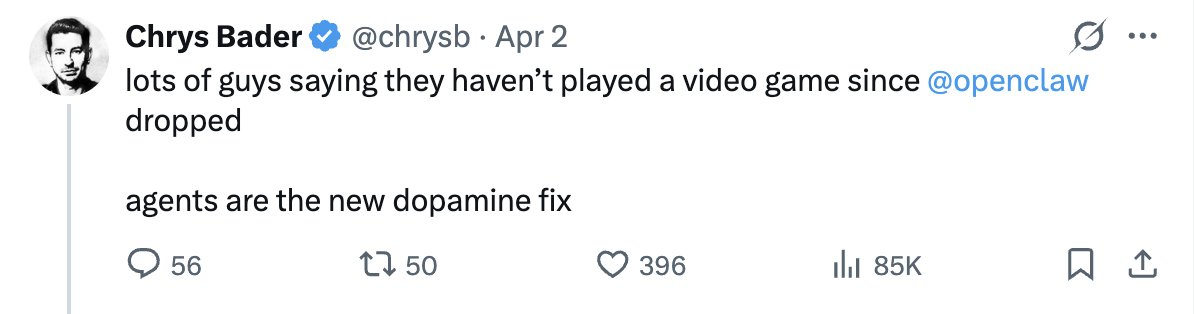
That said, there’s a worrying dynamic occurring within a segment of today’s AI “power users”: many early adopters of AI (and agents, in particular), are seemingly getting addicted to it.
And I don’t mean in a metaphorical sense.
Longtime blogger and AI developer Steve Yegge recently wrote a post about this trend and its impact on early adopters called The AI Vampire (I highly recommend you give it a read). Steve notes,
“Agentic software building is genuinely addictive. The better you get at it, the more you want to use it. It’s simultaneously satisfying, frustrating, and exhilarating. It doles out dopamine and adrenaline shots like they’re on a fire sale.”
I’ve been around long enough to have been through several innovation “bursts” and have certainly spent my fair share of sleepless nights building and coding and hacking away. But the current vibe around AI and agents feels different (pun intended 😉). It’s like the excitement of the early Linux and Windows days, the gold rush of the dotcom bubble, the degeneracy of Web 3 and a solid dose of cold war paranoia all rolled into one.
A notable contributor to this behavior is an idea circulating in tech circles called “permanent underclass theory”. The concept is equal parts meme and sincere worry that if you’re not aggressively adopting AI right now, you might be priced out of it in the future.
Another driver is unquestionably the increasing pressure from tech companies large and small to “do more” (come to think of it, we should probably also give a nod to the boiler rooms of the 80s in our metaphor — *cough cough* tokenmaxxing).
None of this is to say that you should stop experimenting, tinkering or building with AI (I’m certainly not). But it does feel like, for as fast as things are evolving, this technological shift — like most — will turn out to be a marathon, not a sprint. Which means it’s crucial that you pace yourself accordingly. This is what Steve Yegge describes as the need to “fight the AI vampire”:
“…you need to consciously fight the AI Vampire even if you’re at a 30-person startup, where everyone agreed when they signed up that this was a sprint to try to get rich.
You need to fight it if you’re an investor. You will kill your Golden Geese.
You need to fight the AI vampire most of all if you’re a CEO or founder. People will be caught up in your enthusiasm. And they won’t understand why they’re being drained until they hit a wall…
As an individual developer, you need to fight the vampire yourself, when you’re all alone, with nobody pushing you but the AI itself. I think every single one of us needs to go touch grass, every day. Do something without AI. Close the computer. Go be a human.”
On top of its seemingly addictive properties, a recent study from MIT suggested that extensive use of LLMs may “diminish critical thinking capabilities and lead to decreased engagement in deep analytical processes.” Professor Saeema Ahmed-Kristensen from Exeter University in the UK found that while AI can generate a significantly higher volume of work than people, “human beings are much better at creating ideas that are very different.”
In other words, taking time away from your agents is important not only for your general health and well-being, but because our ability to think, create and invent depends on it.
So take a break. Make a point each day to step out of the AI- and social media-driven dopamine loops and touch grass. Not only is it okay to go outside, it’s essential.
I promise, your agents aren’t going anywhere.

(Or are they…?)