What’s Going On With Pro Rata Rights?
Last week, Startupland™ was abuzz after nuclear startup Valar Atomics sued one of its early investors, Day One Ventures, for trying to enforce their pro rata rights over the company's objections. It’s not often that a dispute like this breaks out into the public sphere, so I thought it worthwhile to share some thoughts on what causes pro rata disputes and why they’re likely to become even more frequent in the age of AI.
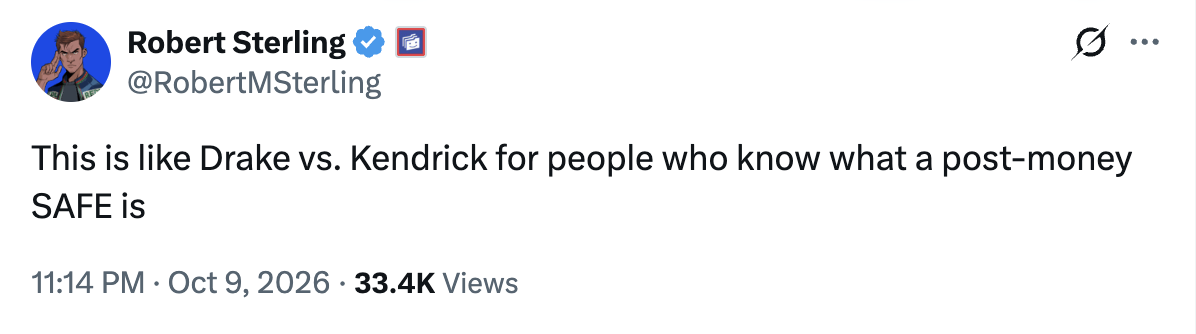
Before I go any further, I’ll note that I have zero firsthand knowledge about the situation currently unfolding between Valar Atomics and Day One Ventures. All references in this post are based on public information / claims.
What Are Pro Rata Rights?
Pro rata rights are contractual provisions that give an existing investor the right (but not the obligation) to invest in future rounds in order to maintain their original ownership percentage. They are typically granted to a small number of investors — usually the VCs or angels who make substantial investments in a given round.
How Are Pro Rata Rights Exercised in Practice?
As Dan Primack noted in his Axios article on the Valor Atomics conflict,
“…pro rata rights currently appear in the vast majority of early-stage venture deals. They also are included in the NVCA's model legal documents.”
At DataHero, both our Pre-Seed lead investor (Foundry Group) and our second-largest Pre-Seed investor (Bullet Time Ventures) held pro rata rights through our Series A.
In practice, the majority of situations involving the exercising of pro rata rights are fairly innocuous. Lead VCs typically ask existing investors if they want to exercise their pro rata rights and respect their decisions either way. In fact, many VCs look at the willingness of prior investors to exercise pro rata rights as a signal of their confidence in the company. But there are two situations where things can get dicey:
1. Oversubscribed Rounds
In oversubscribed rounds (rounds where there is more demand from investors than there is equity that the founders are willing to sell), there can be tension between founders and existing investors when it comes to pro rata rights. Consider the following fictitious example:
Unicorn Ventures led ABC Co’s Seed round and was granted pro rata rights as a condition of their investment.
ABC is now raising a $20M Series A from Tier One Ventures. Unicorn Ventures wants to exercise their pro rata rights, which require them to invest an additional $1M into ABC. Tier One is happy to respect those rights, which would result in Tier One Ventures investing $19M in ABC while Unicorn Ventures contributes $1M.
However, the founders also have an offer from How Can We Help Capital to invest $1M in the round. They would prefer to not dilute themselves further (i.e. they do not want to increase the round size to $21M) — in their ideal world, Unicorn Ventures would forgo their pro rata rights and the round would consist of $19M from Tier One Ventures and $1M from How Can We Help Capital.
In cases like this, existing investors might be willing to forgo their pro rata rights in the round if they were “on the fence” about participating in the round and/or the perceived value of having How Can We Help Capital on the cap table outweighs their need to invest additional capital. However, if investing in subsequent rounds is a significant part of their fund thesis (which is the case for many funds when it comes to the round immediately after their initial investment), then they are likely to insist on participating. In that case, the founders will have to decide between diluting themselves enough to have all three funds participate, or declining the investment from How Can We Help Capital.
2. Preemptive Rounds
2026 has seen a dramatic increase in preemptive rounds, as megafunds aggressively pursue the hottest AI companies. Preemptive rounds occur when a VC approaches a startup with an offer to invest, long before the founders were planning to start a process. This strategy aims to force founders into a quick decision with minimal competition. As founders weigh the benefits of a “bird in the hand” vs. the risks associated with declining the offer or the costs associated with running a full-blown fundraising process, preemptive VCs will often get assertive with their terms — including sometimes boxing out prior investors.
Consider the following alternative example:
Unicorn Ventures led ABC Co’s Seed round and was granted pro rata rights as a condition of their investment.
9 months after completing the round, Tier Two Ventures approached the founders of ABC with an unsolicited offer to invest $20M in a preemptive Series A round. The terms were aggressive but fair, with one caveat: Tier Two Ventures insisted that the cap table could not be further diluted beyond their investment. In other words, for the deal to happen, ABC would need to convince Unicorn Ventures to waive their pro rata rights.
In his Axios article, Dan Primack asserted that this dynamic is relatively new:
“One new wrinkle, however, is that some founders are getting pressured on pro rata by growth-stage firms that need to put their billions to work”
In fact, it’s a tale as old as time. Certain firms have long been known for offering “take it or leave it” term sheets that require founders to pressure existing investors to forgo pro rata rights in order to get the deal done (though its also true that some founders will falsely point to the incoming investor as the reason why an existing investor can’t participate, when in reality it’s the founder’s preference…).
When it comes to pressure from incoming investors, many offers are more bark than bite. Over the years I’ve seen many cases where founders went back to the new VC and demanded that certain existing investors be able to participate. In almost every case, the preemptive investor backed down (as the incoming investor didn’t want to risk losing the deal). Ultimately, these situations depend heavily on the confidence of the founders and the relationship with their existing investors (both historically and going forward).
Why Pro Rata Conflicts Are Rarely Made Public
If you’ve ever heard people compare Founder-VC relationships to marriages, it’s easy to understand why most pro rata disputes happen in secret — they’re like juicy conflicts between spouses that neither party wants to get out in the open.
Early-stage VCs don’t want to be seen as difficult / problematic / going against the founder’s wishes, as it could impact their future deal flow
Founders don’t want to be seen as breaching contracts, as it could impact interest from future investors and even the ability to close sales (as competitors could deploy scare tactics suggesting that the company won’t honor its contracts)
In the vast majority of cases, the parties involved hold their noses and get to a resolution. It might not make everyone happy, but it keeps the ship sailing.
Why We’re Likely to See More Pro Rata Conflicts
Unless you’ve been living under a rock, you’re well aware of the bifurcation that’s been upending the venture capital market. (If not, I wrote about the bifurcation in VC behavior happening at Series A a few weeks ago. That shift followed similar bifurcations at the Seed stage earlier in the year and at Pre-Seed in 2025.)
In all three cases, the behavior that investors converged on was the same: a small number of hot, fast-growing companies now draw the vast majority of investor interest, while other startups (including many that would have been seen as compelling only a few years ago) struggle to raise. A major strategy funds are deploying to win such deals is preemption, which as I alluded to above, can lead to pro rata conflicts.
But it’s not just preemption that’s causing conflict.
The hottest companies are raising so much capital so quickly that founders often don’t have time to develop meaningful relationships with their investors once they’re on the cap table. Without time to get to know each other, the degree of loyalty founders feel to their VCs plummets and it ends up something of an every-man-for-themself situation. Founders are trying to raise as much as they can with as little dilution as possible. Investors are trying to get into hot details and push as much money as they can into every round. Meanwhile, secondary investors are lurking around every corner searching for an opening.
The result looks far more like a bench-clearing brawl in a hockey game than a respectable investment process. So grab your popcorn, it’s going to be a wild ride 🍿
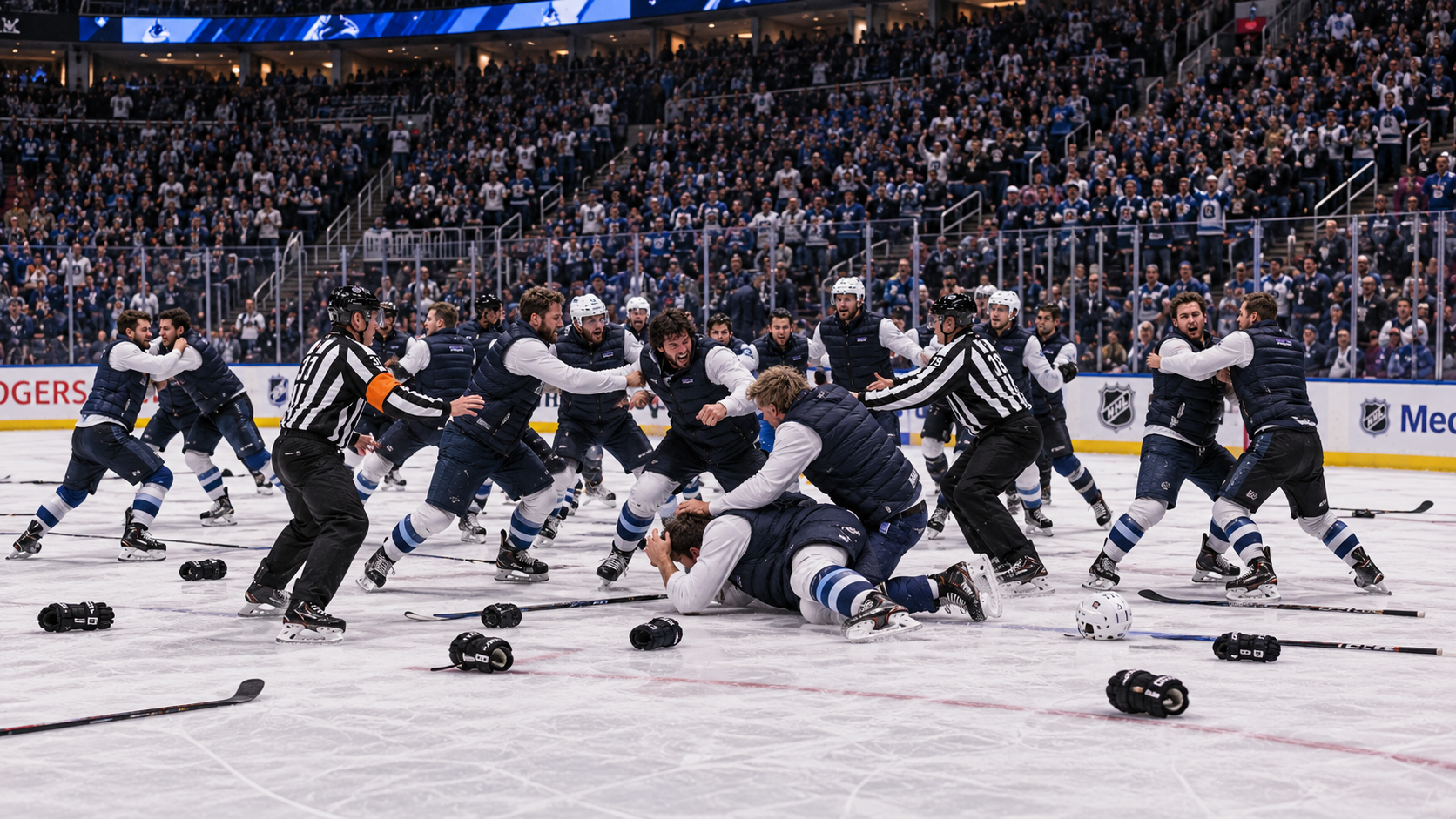
Actual footage of VCs trying to get into the latest round of TypeSafe AI