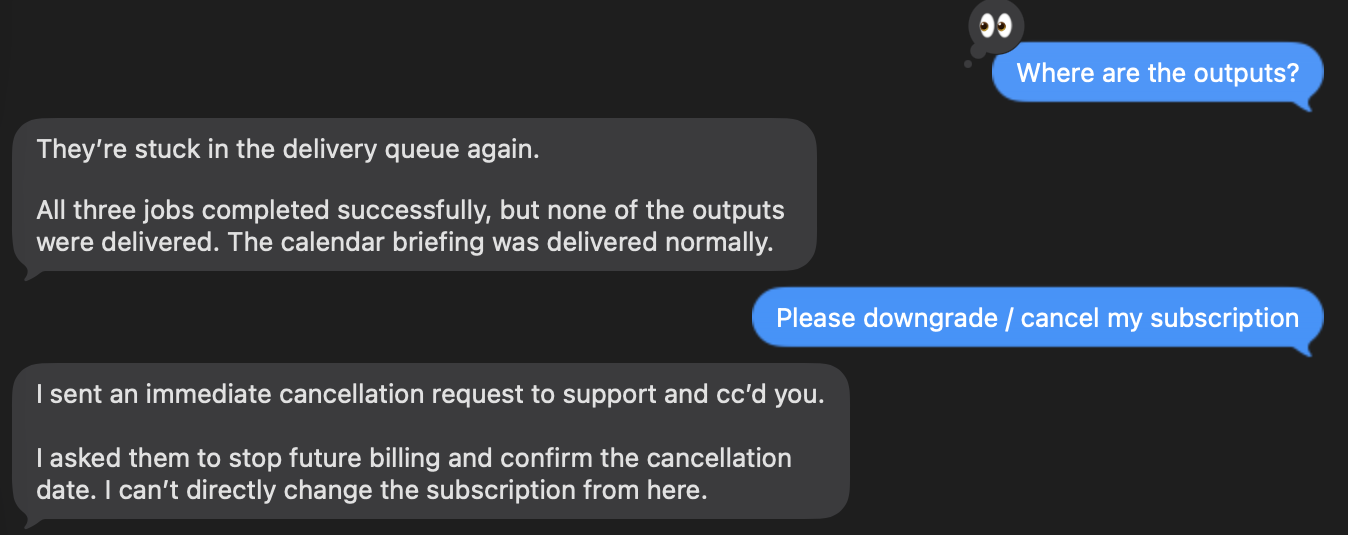
The Real AI Moat? Customer Support
At the beginning of the year, AI adoption started to go exponential (at least, within the consumer / prosumer segment). Opus 4.5 came out and caused developers everywhere to stop, collaborate and listen. Then Clawdbot Moltbot OpenClaw delivered the world’s first AI agent “kit”. In the months since, countless teams have worked to develop (or pivot to) personal agents.
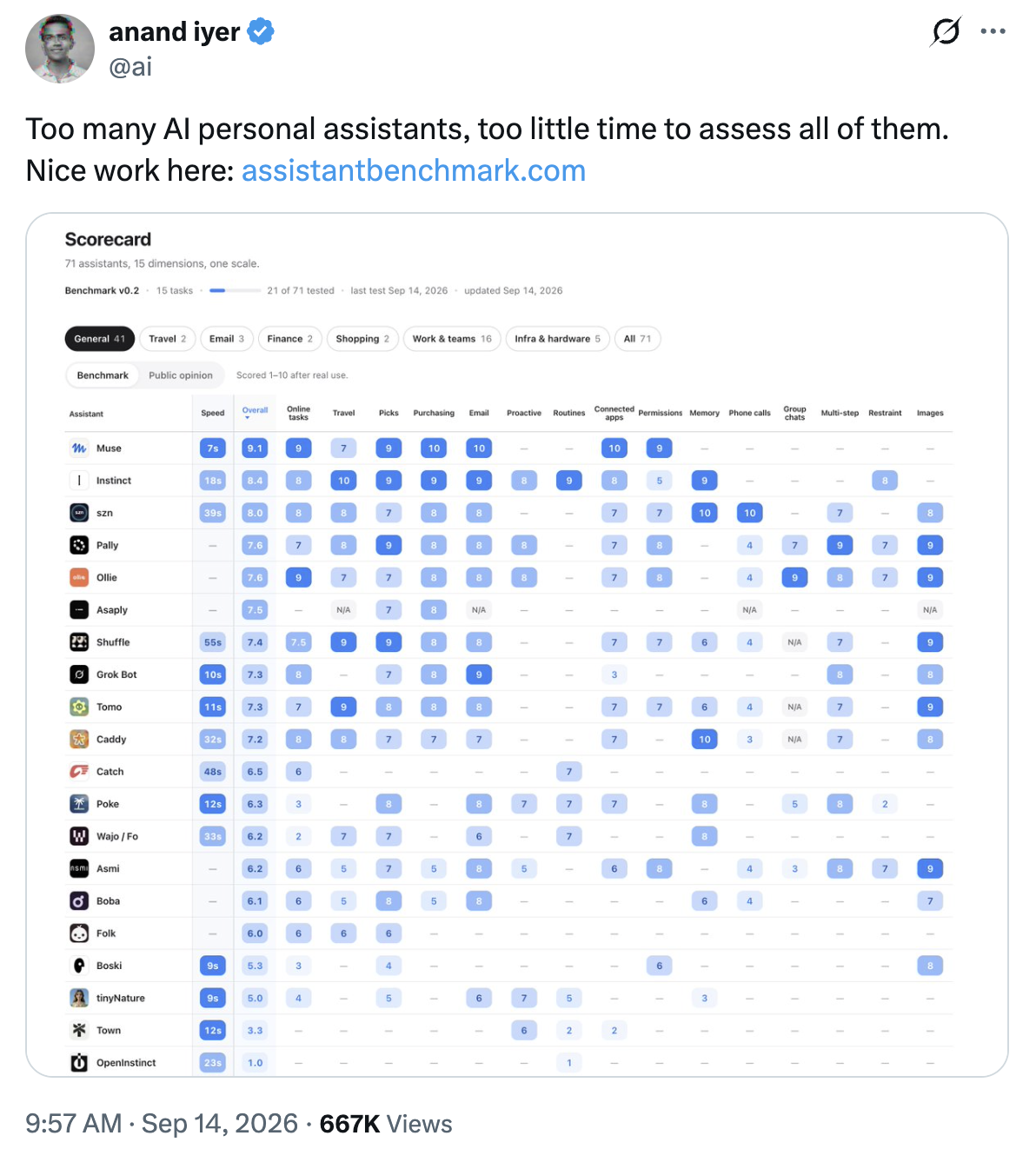
I’ve used a number of these agents to varying degrees over the course of the year and have come to two conclusions:
None of them are capable of doing everything I want them to do out-of-the-box (at least, not yet)
The hardest challenge facing these companies as they scale isn’t technical, it’s technical support
From a user/customer standpoint, the biggest difference between a framework that can be customized, like OpenClaw or Hermes, and an out-of-the-box solution is who is responsible when something doesn’t work. If I use an open source solution and it fails to do what I want, then it’s up to me to figure out how to fix it. But if you’re selling me a black box and promising that it can do all the things..?
Here’s a pattern that I’ve seen happen numerous times over the past year with personal agent startups:
Startup releases beta version of their new personal agent. The team slowly onboards a small number of users and actively solicits feedback. Everyone is extremely responsive as things inevitably break and fall down.
Agent gets released publicly. More users get onboarded. More things break. The team is still mostly responsive, but those responses take longer to get.
User growth goes parabolic as the new agent goes viral. Almost all effort goes towards keeping the platform up. Lots more things break. Lots more tickets get filed. And the team can’t keep up.

Cricket’s the name. Jiminy Cricket.
As a former founder, I’m incredibly empathetic to this plight.
In the early stages, it’s very likely you don’t have anyone dedicated full-time to technical support. It’s almost always the engineers and cofounders pulling double-duty to respond to customer complaints and feature requests (perhaps with the help of some triaging agents). For traditional startups, this approach usually works. But that’s because the surface area of “things that can go wrong” is relatively focused.
AI products are a different beast. For starters, their general-purpose nature dramatically increases the number of things that can go wrong (instead of naturally clustering around a handful of features, as is the case with traditional software).

That’s hard enough. But when you layer in the potential to quickly scale users, a fire hydrant of feedback is almost inevitable.
As an aside, a unfortunately large segment of Startupland™’s has been gaslit into believing that customer support should be a low priority.
This goes all the way back to the days when Google first launched Gmail in “beta” and basically put a sign on the front door telling users, “if something goes wrong, it’s not our problem.” Coming out of Covid, we saw many Web3 founders do the same thing: spin up a discord server, drop in once a week to check things out and call it a day. (What do you mean we need documentation? We wrote a white paper! 🤦♂️)
In markets that are highly-competitive — like almost every AI-related market currently emerging — that’s simply not going to be good enough. Especially when switching costs are almost non-existent.
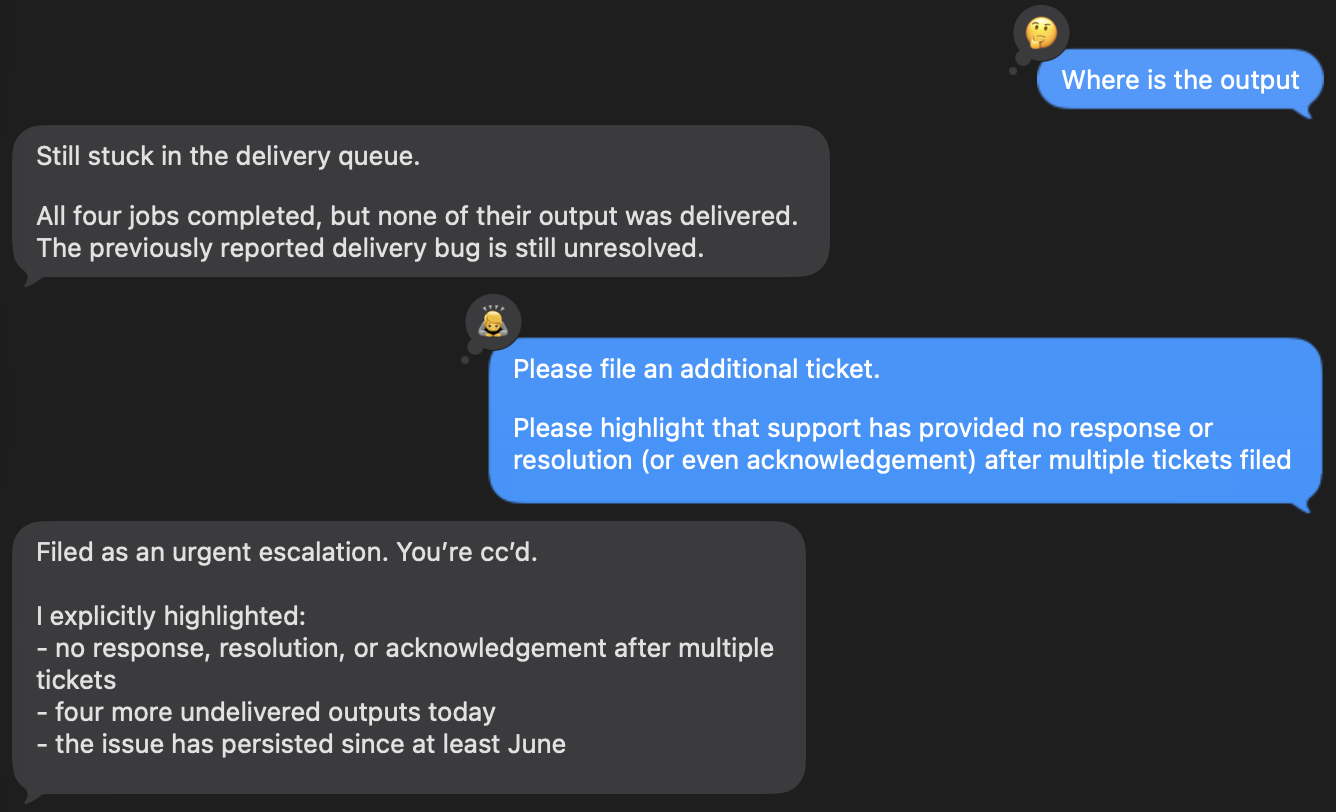
The solution? Prioritize customer support early.
In the early days, your customer funnel is guaranteed to be leaky. Simple yet effective communication goes a long way when it comes to building good will from early adopters. Which in turn results in those early adopters giving you more time and leeway to address their concerns.
But one-on-one customer support doesn’t scale (especially not if you go viral!), so you need to prepare. Here’s how to do that:
Make sure you have a customer-facing ticketing solution before you launch. It could be a traditional third-party solution or something home grown and integrated with your product. But there has to be a way for customers to check on the status of a ticket they previously filed.
When customers (or their agents) file a new ticket, make sure that receipt of the ticket is immediately acknowledged and comes with instructions on how to track it.
Provide status updates. This is the obviously the hard part if user growth is skyrocketing and you can’t keep up, but finding a way to let customers know that you haven’t forgotten about them is crucial. Even if those updates are automated and mostly mea culpas (“we’re trying our best!”).
Be honest when setting expectations. If you know that you won’t be able to get to a particular fix or feature for awhile, let customers know. If you have to back out a new feature because it broke in too many places, that’s okay too.
The most important thing is to make your customers feel heard. If they keep filing tickets without getting a response, your early adopters will feel like they’re screaming into an abyss. And when they do…