Should I Fundraise in the Summer?
It’s that time of year again.
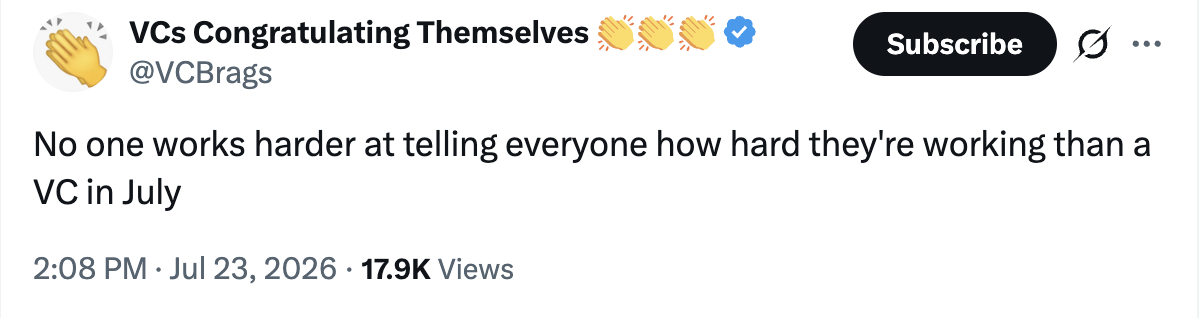
We just hit the mid-point of Silicon Valley’s summer break and, right on cue, a plethora of VCs started proclaiming that they’re not actually on summer vacation.
I’ve previously written about why summer is a bad time for founders to fundraise. If you haven’t read that post before, I suggest you start by giving it a quick skim. Here’s the tl;dr:
The vast majority of VCs do, in fact, work through the summer. But like everyone else, they do so at a reduced pace. They take summer vacations, spend more time with their kids, run around in the desert dressed up like fuzzy cyberpunk muppets. You know…normal summer stuff.
So it’s not that you can’t raise a round of funding in the summer. But it is logistically harder:
It takes longer to schedule initial meetings with a VC
The time between meetings increases
The amount of time needed for a VC to complete their diligence takes longer (as analysts and others at the firm also take vacations)
The result is that running a fundraising process in the summer takes longer than at other times of the year. Not only that, if you are able to successfully raise a round, you will very likely end up with a lower valuation due to the lack of competition.
But rather than revisit why summer is a bad time to fundraising from a founder’s perspective (seriously, read this post if you haven’t already), I thought I would share a bit of insight into why, each and every year, so many VCs try to push back against that narrative.
Let’s start with the basics: the goal of running a high-velocity fundraising process is to move as many investors as you possibly can through your funnel at roughly the same pace. The approach is designed to maximize the number of VCs that make it to the end of your funnel and finish their diligence process at in parallel. That point is critical because Econ 101 teaches us that competition for a scarce resource leads to increased prices. One VC willing to lead your round is great. But having multiple VCs reach the same conclusion at roughly the same time is what drives up price.
In other words, a strong company gets you a term sheet, but a strong process gets you a valuation.
A few years ago, I wrote about how VCs adjust their approach to investing during periods of reduced deal flow. This particular post was focused on the slowdown that happened post-ZIRP, but it pretty accurately describes how the psychology of investors changes during the summer:
“[During periods] of slow deal flow, VCs by-and-large disassociate themselves from any external pressure to do new deals…The result? A creeping inertia to not make investments…As inertia sets in, investors slow their deal pace. This can mean more meetings with each investor and — crucially — more time between meetings (as VCs no longer feel the time pressure to rush into a deal). The reduction in pace, combined with some VCs stopping making new investments altogether, makes it harder for founders to generate competitive dynamics when running a high-velocity fundraising process.”
Despite the inertia that creeps in during the summer, each year many VCs loudly proclaim that “they’re open” as a means to drive deal flow in a time of reduced competition. They’re hoping that you fundraise in the summer specifically because they know everyone else has that same inertia:
If they meet you in the summer and get really excited, they can likely ramp up their diligence efforts and reach a conclusion before you’ve booked a first meeting with many of their competitors
If they can get to a term sheet quick enough, they may be able to win the deal without having to compete on price or terms
If they’re interested but not enough to go fast, they still get an early look at your company and can slow play the process into the fall (giving them more data points to use in their decision while knowing that they likely won’t lose the deal)
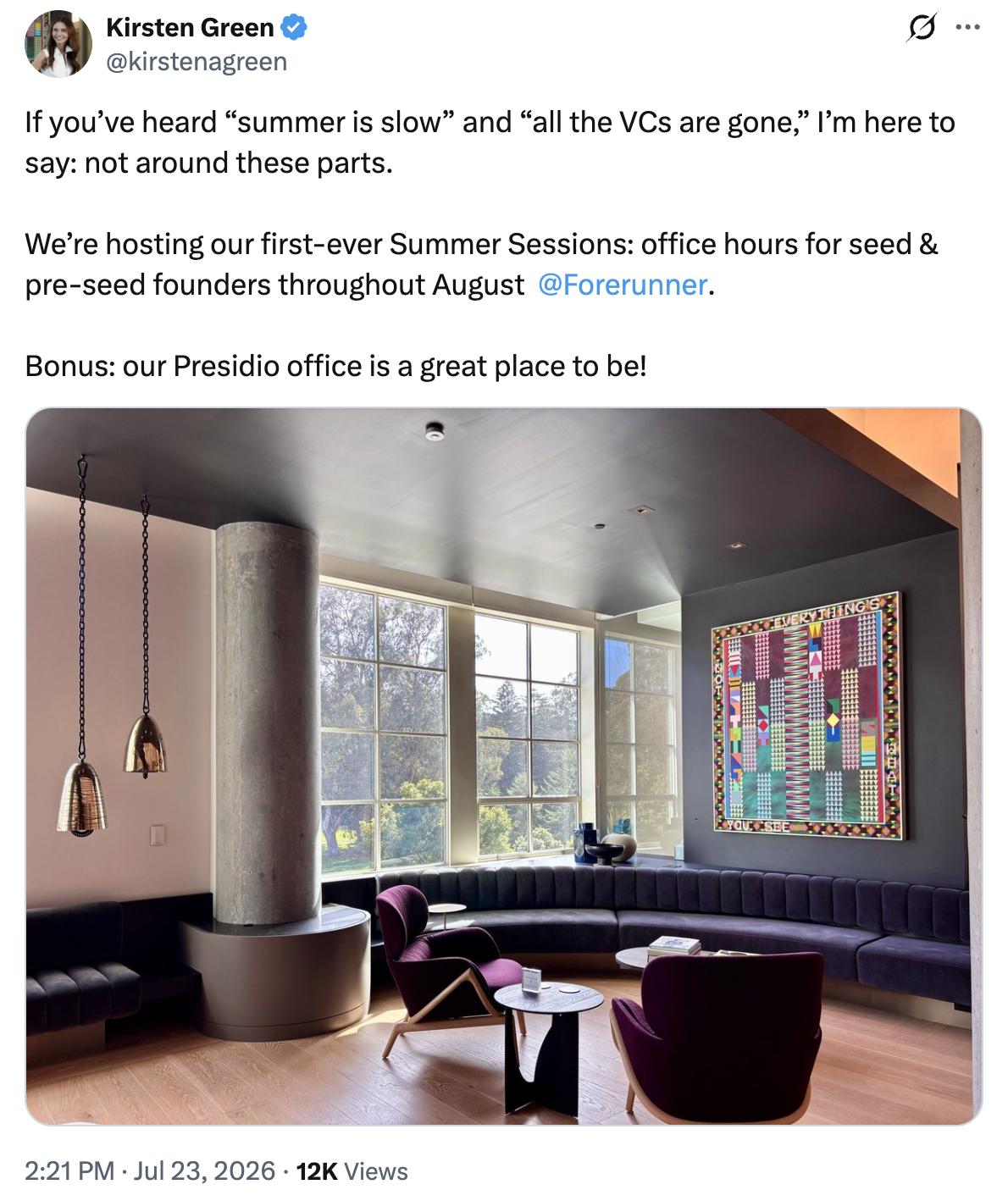
Speaking of getting an early look, summer events is another well-worn approach that VCs use to get a sneak peak into companies that might be fundraising in the near future. Casual meetups and office hours (like those referenced by Forerunner at the start of this post) are one common tactic. Mini-conferences, founder bootcamps and other educational events is another.
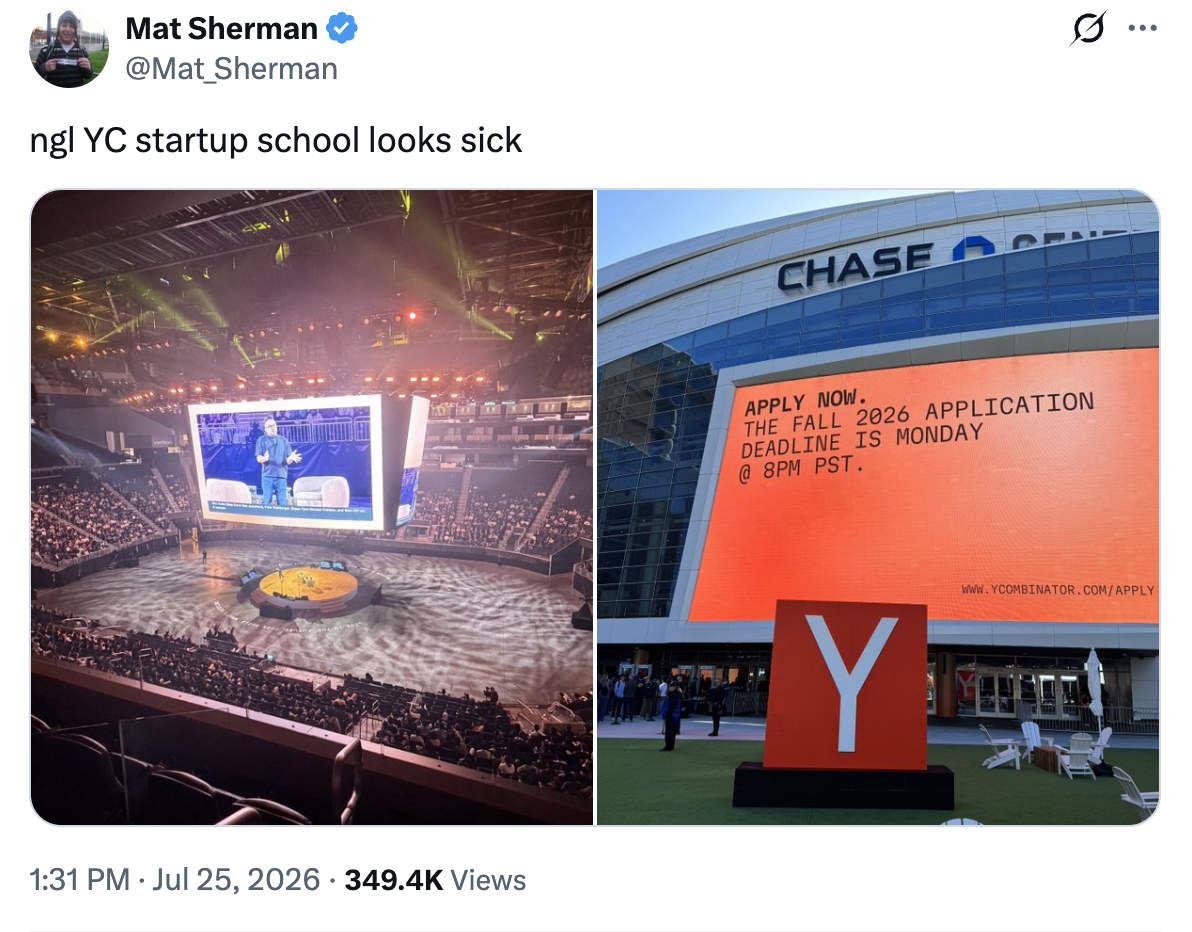
Why do you think YC makes such a big deal about Startup School each summer…? 😉