Chris Neumann
Investor | Founder | Advocate
What’s It Called?
I’ve started to discuss my next project with people close to me and one question keeps coming up: “What’s it called?”
It’s been 3 months since I publicly shared that I would be leaving Panache Ventures and a few weeks since my official departure. I’ve started to discuss my next project with a small group of people close to me. After the initial wave of excitement and feedback, one question inevitably comes up:
“What’s it called?”
The honest answer? I have no idea.
Sure, I’ve written down a couple of names and several concepts that randomly popped into my head but, other than that, I haven’t spent more than a few minutes thinking about names.
Some founders and investors I know (particularly repeat founders) immediately get it. But many others don’t. They respond with quizzical looks or eye rolls, as if to convey a begrudging willingness to go along with my charade (while deep down being annoyed that I’m not willing to tell them).

Sure you don’t have a name…
When creating something brand new, many people start with the name — and I get it. Coming up with a name is exciting. It’s creative. It’s just plain fun (at least, until you run up against an army of domain squatters). There’s something about naming things that makes it real for a lot of people. But putting too much thought into a name preemptively can end up with the cart ahead of the horse.
In many asian cultures, it’s considered bad luck to name a baby before it’s born. Even after birth, a child’s name traditionally wouldn’t be shared outside of the immediately family until after 100 days, when the newborn had survived it’s crucial first three months of life.
Getting a name wrong - whether for a tiny human or a business - can have long-lasting implications and be difficult and costly to fix. Organizations are increasingly recognizing this, particularly in sports. Both the Washington NFL franchise and the Utah NHL franchise adopted temporary names rather than rush to create a brand.

The debut uniforms of the “Utah Hockey Club”
I have absolutely no negative feelings about anyone who starts a new project with the name. At the same time, I personally gravitate towards founders who in their earliest days either don’t have a name or use a temporary name for their project. It’s kind of like the interim pet names many parents come up with to refer to their not-yet-born babies. To me, deferring the naming exercise reflects a recognition that there are more important tasks to be done at the start and a lot of details still to be determined. Customer discovery needs to occur. Prototypes need to be built and tested. Pivots might lurk around the corner.

My youngest son was lovingly referred to as “Captain Barnacles” before he was born. His older brother was angry for months after learning that this wouldn’t be his real name
When Jeff and I co-founded DataHero, we incorporated the company as “2 Bettas Labs, Inc.” We chose that name both to reflect our mutually stubborn natures and to guarantee that we’d have to dedicate meaningful time to picking a “real name” down the road. When we started beta testing and raising our first round of capital, we were using the temporary name Glean. A year later, we came out of stealth and publicly launched our product as DataHero.

We put an equivalent amount of effort into our initial logo
I recently wrote about Project Stag, a short-lived marketing analytics company that I co-founded after DataHero was acquired. That company was incorporated as “The Engineer and the Designer Labs, Inc.” (again, a simple and straightforward reflection of the founders). Project Stag never reached production and, thus, we never went through the exercise of coming up with a proper name. I wonder how many hours we saved by forgoing that exercise..?
In the early days of a new project, there are many tasks that can — and likely should — be deferred. Most of these fall into the category of “things you think you’re supposed to do” to get a new company off the ground but which don’t actually matter if the core idea doesn’t hold water. For me, naming is one of those things.
So what am I doing?
As we speak, I’m heads down in the Canadian wilderness working on key early details of my new project. I don’t plan to build in public (that’s not my personal modus operandi), but I will certainly share learnings and lessons that I encounter along the way. In the meantime, rest assured that I’ll continue to post my weekly musings on startups, the business of venture capital and the founder journey.
Things I Think I Think - Q4 2024
Out with the old, in with the new. Here are 5 Things I Think I Think: Q4 2024.
Out with the old, in with the new. That goes for the year, the administration and whatever it is I’ll be working on next 👀.
Let’s ring in 2025 with another homage to legendary sports columnist Peter King. Here are 5 Things I Think I Think - Q4 2024 Edition:
1. The Return of Trump
I’ll start with the biggest news of Q4 2024: the return of Donald J. Trump to the Oval Office.
From a strictly business standpoint, this is shaping up to be a very different administration than the first Trump presidency. In particular, all signs suggest that it will be particularly favorable towards the tech industry. This is due in no small part to the degree to which VCs have embraced (and been embraced by) the incoming president.

I’m not sure that folks outside of Silicon Valley truly understand the degree to which VCs and former VCs are slotting into roles within the new administration. Here are some of the official positions that are set to be filled by venture capitalists:
JD Vance, Mithril Capital - Vice-President Elect
David Sacks, Craft Ventures - AI and Cryptocurrency “Czar”, Chair of Presidential Council of Advisors on Science and Technology (PCAST)
Jim O’Neil, Mithril Capital and Clarium Capital - Deputy Secretary of the Department of Health and Human Services
Michael Kratsios, Clarium Capital - Director of the White House Office of Science and Technology Policy (OSTP)
Scott Kupor, a16z - Director of the Office of Personnel Management
Sriram Krishnan, a16z - Senior Policy Advisor for Artificial Intelligence
Ken Howery, Founders Fund - U.S. Ambassador to the Kingdom of Denmark
That’s in addition to the numerous VCs who are unofficially connected with the administration and/or in remain in consideration for roles (a list that includes Marc Andreesen, Peter Thiel, Joe Lonsdale, Keith Rabois and Trae Stephens). This is an astonishing degree of representation for what is objectively a cottage industry. Fred Wilson shared his thoughts on how this came about a few days ago.
I won’t pretend to have any background whatsoever in government or public policy, but I do know a lot about tech and venture capital. Here are a few things I think:
This has the potential to be the most technologically competent administration in history — both from a technical standpoint and a “business of technology” perspective. Virtually all of the VC appointees are widely respected and many of their appointments were praised by tech leaders across the political spectrum (despite the fact that some of them hold polarizing political beliefs). The incoming administration has also tapped a number of experienced tech executives with ties to Silicon Valley.
Many of the VCs working with the new administration hold a political viewpoint referred to as techno-libertarianism. That perspective directly conflicts with a number of core beliefs held by traditional MAGA adherents, notably on immigration, education and a tolerance of diverse lifestyles. I expect that we will likely see one or more of these conflicts arise in the first half of 2025. The new administration hasn’t even been sworn in and we’re already seeing these come into conflict. This past weekend, clashes over support for H1-B visas (the type of visa that I personally worked under for nearly 6 years) came front-and-center following the appointment of Sriram Krishnan as Trump’s Senior Policy Advisor for AI. In the past few days, Trump has signaled his support for H1-Bs, suggesting that the VC wing within the incoming administration will hold considerable sway on policy. I expect that we will see more of these conflicts come to the forefront as the policy differences between Trump 2.0 and 1.0 come into view — which could ultimately lead to backlash directed towards both VCs and the broader tech industry from the MAGA wing of the Republican party.
Speaking of backlash, I expect that we will see a meaningful amount of vitriol directed at VCs in the U.S. from across the political spectrum as the incoming administration makes moves that are seen to have been influenced by the newly-powerful “VC arm” of the Republican party. “Venture capitalists” are an easy punching bag for both left- and right-wing media looking for inflammatory, clickbait headlines and I’m sure they’ll take full advantage of that. Case in point: David Ingram of NBC’s recent post that referred to VCs working with the administration as “right-wing tech barons”.
It will be fascinating to see whether or not startup-style “efficiency improvements” can actually be enacted within government. An impressive number of experienced people from Silicon Valley are signing up for 6-month tours of duty within Elon Musk’s “Department of Government Efficiency” (which doesn’t require the same level of divestiture as the formal positions some VCs have accepted within the administration). But that experience comes almost entirely from operating private businesses. What happens when these enthusiastic change agents come head-to-head with decades of policies and procedures, entrenched career bureaucrats and the very-different ways in which government operates? Few people would argue that there aren’t gains to be had from cutting red tape and improving government efficiency, but it’s never that easy. Will eager VCs and tech leaders succeed in enacting meaningful change within the notoriously bureaucratic U.S. government, or will they give up and return to the comforts of Silicon Valley when the going gets tough?
2. The First Half of 2025 is Going to be 🔥
Startup fundraising activity increased rapidly during the back half of 2024. Q3 was the busiest quarter at Panache Ventures in 3 years while Q4 saw a frenetic pace of deals long after U.S. Thanksgiving, which is historically the unofficial end of the fundraising season.
Combining the economic optimism surrounding the new administration with an already-strong resurgence in Startupland™ and a reopening of the IPO window, and Q1 2025 is lining up to be the hottest quarter in years. Expect to see a massive increase in the number and size of deals, with funds that have been sitting on dry powder returning to market in a serious way. I suspect that we’ll also see a sharp increase in LP activity, particularly in support of new funds led by experienced GPs who are venturing out as part of venture capital’s changing of the guard (see this recent Bloomberg article for more on that).
With a doubt, H1 2025 will be “risk on” in the investing world.
So why am I only predicting a strong first half of 2025? Because there are still so many unknowns about the incoming U.S. administration.
President Trump’s first term was mired in unpredictability and conflict — so it’s reasonable to expect that Trump 2.0 will have it’s fair share of drama. Will the incoming administration’s alliance with Silicon Valley remain strong or will the President sour on some of his advisors and allies as was the case in his previous term? What impact will conflicts between the pro-business / libertarian arm of the Republican party and the hard right / MAGA arm have? And I haven’t even touched on geopolitics, tariffs, inflation or social issues.
By the summer, we should have a sense of what this administration is going to look like over the longer term and we’ll be better poised to predict how long this tech “bull run” will last.
3. The Rest of the G7 is Stuck in the Past
Canada has become something of an international punching bag as of late, with its productivity plummeting relative to its southern neighbor and its government on the brink of collapse, but the reality is that the entire G7 is economically stuck in the past. And with the world’s leading economy and tech sector set to go into overdrive, absent significant policy changes the gap is only going to widen.

Fun fact: one G7 country still requires that incorporation documents be read out loud and in person by a notary… 🤦♂️
It isn’t so much that the U.S. is playing chess to other countries’ checkers. It’s that the rest of these countries continue to be led by politicians with little-to-no real-world experience and limited understanding of the disruptive and distributed nature of tech. From Canada’s stuck-in-the-nineties obsession with IP and domestic ownership of startups to Germany’s obstinate stance on nuclear energy, I could easily fill several blog posts with examples of archaic (but often domestically popular) policies that hold these nations back. But could that change?
With Canada, the UK, Germany and Japan all headed towards 2025 elections, it will be interesting to see if the tech communities in any of these countries become as involved and influential in their elections as was the case in the U.S. There are plenty of calls for other countries to implement DOGE-style efforts and for experienced tech leaders to get more involved in government, but will anything manifest?
In the meantime, I expect that we will continue to see a significant increase in the flow of ambitious founders and tech workers from the rest of the world to the U.S. as they look to capitalize on the resurgent U.S. economy.
4. San Francisco’s “Maker Faire” Phase is Over
Back in 2006, a small gathering called “Maker Faire” was hosted in San Mateo. It was the first of many events inspired by Make: Magazine, a publication dedicated to do-it-yourself projects (mostly involving robotics and simple electronics). The fledging event attracted all manner of engineers, tinkerers and builders — and was a ton of fun (I’m pretty sure it was the first time I saw battling robots in person). Each year, Maker Faire attracted groups of people who wanted to build stuff, learn about building stuff or simply meet other people who liked to build stuff.

That’s what San Francisco has been like for the past 18 months.
With the rise of AI and the resurgence of the City by the Bay, “builders” from around the world have been flocking to San Francisco — and the Bay Area more broadly — to be a part of it. I first wrote about this phenomenon a year ago, noting that,
“…what’s happening in the Bay Area right now is different. It’s special.
What’s happening right now represents a convergence of excitement and creativity around a new technological wave (AI) and a long-awaited resurgence of a struggling yet world-leading city. I’ve been to SF four times in the past two months and the momentum is vicerally building week-over-week.
I believe that this is a unique moment in time for both San Francisco and tech in general. And it’s one that likely won’t last long.”
A few weeks ago, I traveled to San Francisco for YC Demo Day (my 9th visit of the year) and it was clear that the energy had shifted.
Gone was the collective enthusiasm of new builders all trying to figure out AI and startups and the Bay Area at the same time. There were still plenty of meetups and hackathons taking place, but it was no longer the best-and-brightest attending them (those folks are all now heads down building the companies that they ultimately founded). And while there are still waves of new arrivals coming, not all of them are builders.
It’s clear that we’ve moved from the “innovators” phase of this edition of the San Francisco technology lifecycle to the “early adopters” phase. And that’s a good thing.

This isn’t to say that you shouldn’t go to San Francisco in 2025 if you’re a builder — you absolutely should — just don’t expect it to have the same level of serendipity as last year. On the other hand, if you’re a founder a bit further along on your journey who’s looking to meet other high-quality founders focused on building their companies, there’s no better time to come. Just know that you need to be more intentional about your visit and manufacture the outcomes you want.
The “Maker Faire” phase of this startup cycle is now over. And if history’s any indication, it will be another 20 years before it’s back.
5. A New Type of Zombie Company
The term “zombie company” typically refers to a company that earns just enough money to stay alive. Most zombie tech startups failed to achieve product-market fit yet are able to make ends meet with a skeleton crew, minimal revenue and, in certain countries, well-meaning but woefully misallocated government subsidies (cough cough SR&ED). In late-2024, we saw the emergence of a new type of zombie company that arose from the ashes of the ZIRP bubble.

These startups raised over-inflated Pre-Seed rounds — typically $3 - 5M or more — in buzzy areas that are now out-of-vogue. To the founders’ credit, many of them drastically cut burn when interest rates shifted, allowing them to ensure 36 months of runway or more. Sounds ideal, right? But what we’re seeing with many of these companies is something quite different.
As time passed, the early enthusiasm of many of these companies was replaced with listlessness. Their early employees moved on, their investors disengaged and, without any pressing existential threat, motivation or external oversight, they simply continue to exist (many with effectively infinite runway). Almost every VC that was active in 2021-22 has multiple such companies in their portfolio.
The outliers will continue to make progress and a few may ultimately see success. Some of the founders will eventually decide to shutter their company and potentially return some amount of capital to investors in order to move on. But the rest of these companies — with no real product, limited forward progress and no staff to be “aqui-hired” — will be a new species of startup walking dead.
Chris Neumann's Top 10 Posts of 2024
Here are my 10 most popular posts for 2024.
When I launched chrisneumann.com, I committed to publishing a new post and accompanying newsletter every week. No repeats. No missed weeks. No excuses. And for the most part, I’ve managed to do that.

Current streak is heating up ️🔥
I also promised my family that I wouldn’t do any work between Christmas and New Years (except in the case of founder emergencies).
So here is my annual unapologetic cop-out: Chris Neumann’s Top 10 Posts of 2024 (in reverse order…so there’s a bit of drama):
#10

#9

#8
#7

#6

#5

#4

#3

#2

#1

If you want to read more, check out my Top 10 Posts of 2023 and Top 10 Posts of 2022.
(And if you really want to read more, sign up for my weekly newsletter.)
See you in 2025! 🥳 🎉 🥂
The Changing Startup Landscape According to Video Games
Believe it or not, the contemporary evolution of startups in many ways mirrors the evolution of video games. Here are 3 lessons founders should take from the history of video games.
As we near the end of 2024, there’s an incredible amount of change happening in and around Startupland™. From recent elections to the ascendance of AI to venture capital’s changing of the guard, the landscape for startups tomorrow is likely to look very different from today.
The contemporary evolution of startups — in particular, the acceleration of certain parts of the founder journey — in many ways mirrors the evolution of video games.
Seriously.
So at the risk of publishing another one of those annoying “here are 5 things you can learn about X from Y” posts, here are 3 changes to the typical founder journey that mirror the evolution of video games.
1. Ramp Up Time
Real-time strategy (RTS) games have been in the mainstream for more than 30 years. They all follow a similar blueprint: gather resources, use those resources to build infrastructure and units, battle.
Early entries in the genre, such as Warcraft and Command & Conquer, provided players with a relatively lengthy ramp up period for each new game. Players would start each battle with minimal resources and have similar early capabilities. Regardless of which faction you chose, it would take time to amass enough resources to do much of anything — so you would have time to ramp up before the real battle began. While there was some strategy in terms of prioritizing what to build early-on, the first 3-5 minutes of almost every game was relatively benign (unless you played against that one jerk who would build 3 infantry units right away and rush to end it quick).

“Yes, milord”
Things changed in 1995 with the release of Starcraft. Up until that point, competing factions in RTS games all had basically equal capabilities. Units and buildings might have slightly different characteristics, but at the end of the day they were all about the same. Starcraft was the first RTS game to introduce velocity as a differentiating capability with the Zerg.
In Starcraft, the Zerg’s basic melee attacker (called zerglings) can be created at a 2:1 rate to those of other factions. As a result, the effective velocity at which zerglings can be spawned is double that of competing races. “Zerg rushes”, in which an army of zerglings are sent to attack an enemy relatively early in the game, was an infamous tactic in Starcraft.

The “zerg rush”
As more capabilities are unlocked over the course of a game, the races in Starcraft become more balanced (and, in fact, the Zerg are generally thought of as the weakest faction overall), but if you weren’t prepared to defend against a zerg rush at the start, you wouldn’t last long enough to find out.
What does this have to do with startups?
When I was a founder, we generally weren’t too concerned with how our velocity compared to that of other startups. We certainly kept tabs on them, but mostly we were heads down focused on our product and early customers. We would release our products when we felt they were ready and fundraise when the time made sense for us, without much regard for what others were doing. Our velocity came from internal pressures rather than external.
That’s no longer a luxury for most startup founders.
In an age of AI, cloud infrastructure and global competition, the competitive landscape has never been tougher — or faster. The difference between leader and too-late is now measured in months, not years. Whether it’s capturing public mindshare, securing early pilots or raising funding, founders can no longer afford to go at their own pace. More than ever, velocity is the metric that matters most.
2. Skills Development
The original Super Mario Bros., which will turn 40 next year (🤯), was the gateway drug for an entire generation of gamers. Its opening level (1 - 1) remains a master class in onboarding. It provided a safe space for players new to the game — many new to video games entirely — to figure out the mechanics of Super Mario’s gameplay.

Where it all started
For decades after the original Nintendo’s unveiling, most games used similar onboarding techniques to gradually introduce new players to game mechanics (often including increasingly powerful moves and weapons). From Metroid’s roll to Castlevania’s holy water to Contra’s increasingly absurd weapons, the approach to slowly-but-surely adding capabilities and complexities remains a fixture of video games to this day.
But in the late-80s, the discovery of a short sequence of button presses rocked our simple world…

The Konami Code
First introduced in the NES port of Gradius, the “Konami Code” provided instant power-ups to players. It became a worldwide phenomenon when it was later discovered in the hit-1988 game Contra and birthed the notion of the “cheat code”. (It wasn’t long after that the Game Genie was released, permanently shattering a generation’s innocence.)
Notably, it introduced the unheard of idea that players could start off a game with everything.
Fast forward to today and there are many games where it’s possible for players to leverage all of the capabilities from the start.
The same can be said of founders today.
The best first-time founders are more informed than ever before. As a result of a wide availability of blogs, newsletters and online courses, many young founders are fully-versed in startup best practices before ever leaving school. Competition amongst service providers has similarly enabled startups to unlock high-value resources and services long before they have a dollar in revenue (e.g. free cloud credits + implementation experts). The best founders have learned to leverage all of these capabilities and offerings to accelerate and compete right out of the gate.
In today’s world, founders hoping to move slow and steady, while learning one thing at a time, will be left in the dust.

Who wouldn’t want to play Fortnite as a gingerbread man?
3. Geographic Expansion
If you grew up in the 80s or 90s, you’re almost certain to have played the board game Risk. Each player starts off in a different country with a fixed number of pieces (each piece representing a different army unit). Over the course of the game, you increase the size of your army and slowly try to take over the world by expanding into adjacent countries.

This basic format of geographic expansion served as the inspiration for countless video games, including enduring franchises like Civilization and Romance of the Three Kingdoms.
Civilization II, released back in 1996, introduced a new twist on the genre: the concept that a player’s choice of faction (nationality) would fundamentally impact their starting capabilities. Most strategy games released before then allowed players to select what country or region they would start in, but other than their placement on a map and some cosmetic differences, the choice had little impact on the game itself. Civilization II forced players to think carefully about the default strengths of each faction before the game even started.

The same is becoming true when it comes to founding startups.
In the past, there were geographic advantages that startups could leverage as they grew, but it really didn’t matter too much where you founded your company (at least, not until you needed to access capital). But with the world shifting away from globalization and returning to nationalistic tendencies, founders would be wise to give careful thought to where they incorporate their startup.
2025 America is likely to be the best place in the world to start companies in defensetech, aerospace and manufacturing. Climatetech and clean energy companies, on the other hand, may find better prospects in Canada and Europe (at least, when it comes to the availability of grants and supportive commercial prospects). Similarly, companies focused on privacy, DEI and improving the worker’ experience are likely to face headwinds in America but welcoming prospects in other countries.
Silicon Valley — and the United States more broadly — will undoubtedly continue to lead the world’s innovation economy, but with industry and politics becoming ever more intertwined when it comes to tech, not all starting points will be equal.

Sid Meier’s view of America in 2016. What will 2025 look like?
So there you have it. Three ways in which the evolution of startups mirrors that of video games.
Not too much of a stretch.
…or have I been hitting the eggnog too hard…?

10 Tips for UK Founders Going to San Francisco
If you’ve never been to San Francisco before, where do you start?
Here are 10 resources for UK founders landing in San Francisco for the first time.
I’m very vocal about the fact that international founders should prioritize spending time in San Francisco and Silicon Valley. There are many reasons to do so, from competitive benchmarking to fundraising to simple inspiration. But what if you’ve never been to San Francisco before? Where do you start?
Here are 10 resources for UK founders landing in San Francisco for the first time:
1. GBx
Many countries have Silicon Valley-based networking organizations focused on helping new arrivals connect with their expat communities. For UK founders, it’s GBx. The organization was founded nearly 10 years ago with the support of the UK government as a private network for successful British entrepreneurs, investors and senior tech executives in the Bay Area. It quickly expanded to offer programming and events focused on helping UK-based founders land and expand in Silicon Valley. In addition to regular social events, GBx hosts one of the few formal events in the San Francisco tech community, the annual GBx Gala.
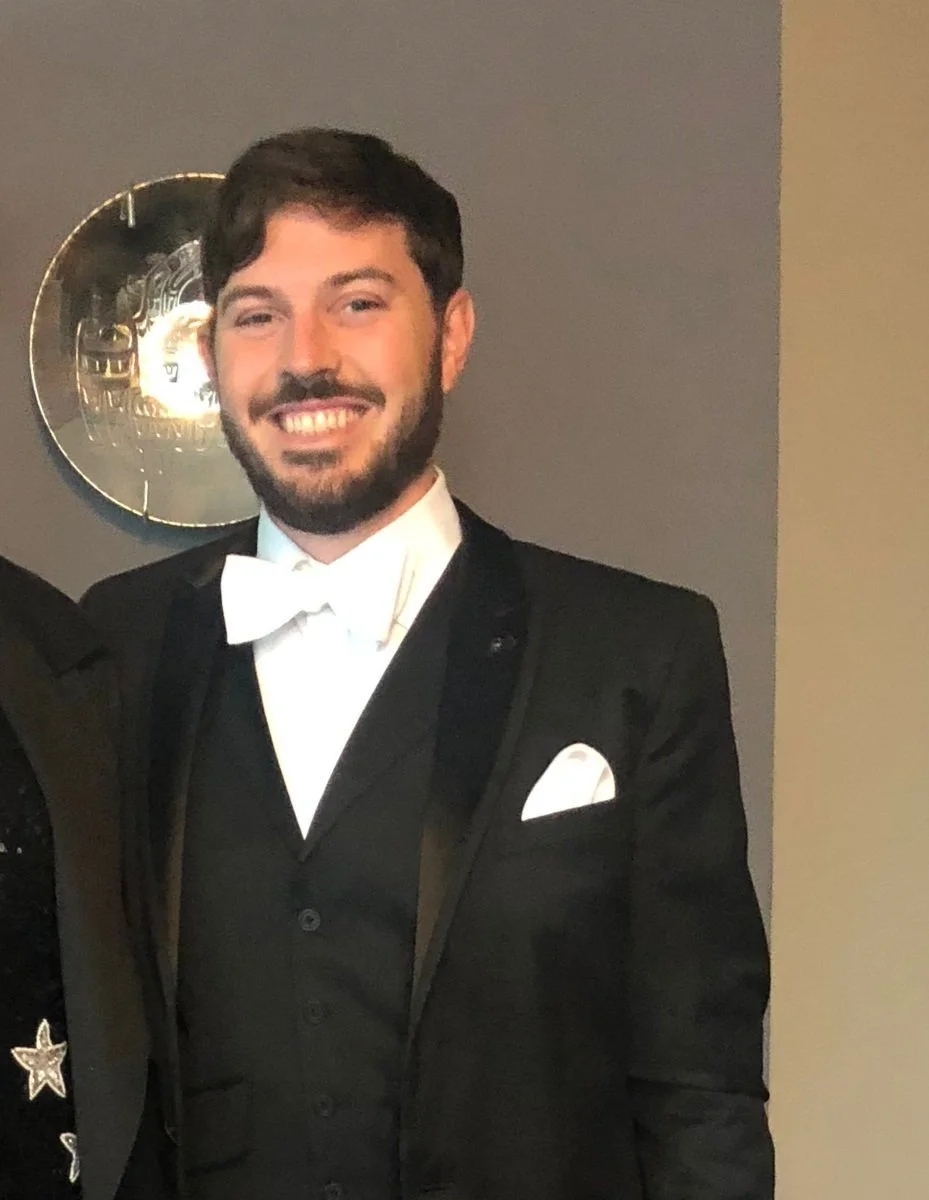
Is this thing on right…?
2. The Department for Business and Trade
When founders think of high-value resources, “the government” usually doesn’t make the list. But for UK founders landing in San Francisco, the Department for Business and Trade (formerly known as the Department for International Trade) can be an incredibly valuable resource. UK DBT has a San Francisco-based team specifically dedicated to supporting UK founders and tech investors that operates out of the British Consul General’s office. UK DBT regularly operates trade missions to bring UK-based founders to the Bay Area to meet with investors and business leaders in their industry (I’ve personally spoken at many of them over the years).
3. London and Partners
Another government-affiliated organization that supports UK founders coming to San Francisco and Silicon Valley is London and Partners, the economic development agency for London. Like UK DBT, London and Partners operates a number of programs designed to help London-based founders visit and expand to the Bay Area. Grow London: Global is the organization’s overarching initiative to support London-based companies with international expansion, while Grow London: Early-Stage focuses specifically on early-stage companies.
Subscribe to their newsletter to stay up-to-date with London and Partners’ offerings.
4. LinkedIn
LinkedIn can be an incredibly valuable resource for meeting people in San Francisco, provided you use it intentionally. Before you head to the Bay Area, use LinkedIn to find and reach out to people who could help bootstrap your visit. If there are specific people that you know you want to meet, see if you have any mutual connections and ask for introductions. Beyond those, look for individuals that you have a common connection with, such as:
People that you’re already connected to you and who (perhaps unbeknownst to you) are currently located in San Francisco or Silicon Valley
People who attended the same school as you
People who have worked at the same company as you
People who are simply from the same city or town as you
Then, write an intentional, personalized outreach to each of them asking to meet.
5. Portfolio “Cousins” and Founder Groups
Continuing on the theme of common connections, reaching out to founders who have the same investors you do can be a great hack for bootstrapping your Bay Area network.
Before traveling to San Francisco, reach out to each of your investors and ask them if they can introduce you to any founders they’ve invested in who are currently in the Bay Area. If you’re in any portfolio groups (email lists, WhatsApp, etc.) share the dates you plan to be in California and ask if anyone else will be there.
Speaking of founder groups, don’t forget to reach out to the local founder groups that you’re a part of to see if anyone plans to be in the Bay Area at the same time as you, or knows of any founders that you can meet.
6. SF IRL
SF IRL is a newsletter that shares events and meetups happening in and around San Francisco. Sign up for the mailing list before traveling to the Bay Area and look for events that will take place during your visit (events typically get posted 2-3 weeks in advance). As with any collection of meetups, the ones listed in SF IRL are hit-or-miss, but adding some number of events to your schedule can be a great way to hit the ground running.
7. Cold Emails
If there are specific people you want to try to meet while you’re in San Francisco, don’t be afraid to send a thoughtful cold email several weeks in advance. Most people in places of power, influence and experience in the Bay Area genuinely want to help up-and-coming founders, but their work and other obligations leave little to no time for them to do so — so be aware of the paradox of time and how it dictates their availability.
Here are some tips on how to write for success.
8. Shack15
San Francisco has plenty of private clubs and social venues, but nowhere in the city is the tech community popping off more these days than at Shack15. Located above the iconic San Francisco Ferry Building, Shack15 is a membership-based coworking space that regularly hosts public events (many of which you’ll find listed in SF IRL).
Shack15 offers one-time day passes based on availability, so reach out to them a few weeks before your visit and see if you can secure one.

Shack15’s coworking space
9. Conferences…Maybe
Many founders visiting San Francisco time their visits to coincide with major tech conferences. This can be a great strategy for meeting lots of people in a short period of time, but you have to be intentional. If you’re not careful, you’ll end up making a bunch of connections with other founders who are also visiting from abroad (which might be great, but doesn’t necessarily fulfil your goal of building a network in the Bay Area).
TechCrunch Distrupt is a prime example of this — virtually nobody local to San Francisco attends this conference (unless they’re a speaker, in which case they typically show up for their session and leave immediately after).
Industry-specific conferences are generally higher-value. The JP Morgan health conference in January, the Game Developers Conference in March and the SaaStr Annual conference in September are all great events for founders in those sectors. But even with these conferences, the best opportunities to meet people tend to be at the parties and side-events, rather than the main show. Try to hustle your way into as many of those as you can.
10. Speaking of Hustle…
If you’re visiting the Bay Area for the first time, nothing’s going to supercharge your experience more than good old fashioned hustle.
On a recent visit to San Francisco, one of our Associates joined me armed only with a copy of that week’s SF IRL, a spreadsheet of events shared with her by a friend, and a lot of ambition. In only two days, she attended 7 events and made dozens of meaningful connections with founders and investors alike. (Not unrelated, she was recently promoted to Principal.)

Be like Sarah Willson
10 Tips for Canadian Founders Going to San Francisco
If you’ve never been to San Francisco before, where do you start?
Here are 10 resources for Canadian founders landing in San Francisco for the first time.
I’m very vocal about the fact that Canadian founders should prioritize spending time in San Francisco and Silicon Valley. There are many reasons to do so, from competitive benchmarking to fundraising to simple inspiration. But what if you’ve never been to San Francisco before? Where do you start?
Here are 10 resources for Canadian founders landing in San Francisco for the first time:
1. The C100
Many countries have Silicon Valley-based networking organizations focused on helping new arrivals connect with their expat communities. For Canadian founders, it’s the C100. The organization was founded 15 years ago by a group of Canadian founders and investors living in Bay Area to help up-and-coming Canadian entrepreneurs build connections down south. The C100 is most well-known for its “48 Hours in the Valley” program, which brings cohorts of Canadian founders to San Francisco and Silicon Valley, but it also runs programs for growth-stage companies, hosts an annual summit for Bay Area expats and has an active Slack community dedicated to supporting Canadian founders.

Last year’s C100 Summit in Half Moon Bay
2. The Canadian Trade Commissioner Service
When founders think of high-value resources, “the government” usually doesn’t make the list. But for Canadian founders landing in San Francisco, the Trade Commissioner Service can be an incredibly valuable resource. Global Affairs Canada has a group of Trade Commissioners specifically dedicated to supporting Canadian founders and tech investors that operates out of the Consulate General of San Francisco and Silicon Valley. Consul General Rana Sarkar is a regular fixture at Bay Area tech events, while Consul and Head of Office, Ramneet Sran, and her team are focused on connecting Canadian founders with Silicon Valley investors, customers, and other business opportunities.

Consul General of Canada, Rana Sarkar, speaking to a group of founders and VCs at a Panache Ventures event in San Francisco
3. LinkedIn
LinkedIn can be an incredibly valuable resource for meeting people in San Francisco, provided you use it intentionally. Before you head to the Bay Area, use LinkedIn to find and reach out to people who could help bootstrap your visit. If there are specific people that you know you want to meet, see if you have any mutual connections and ask for introductions. Beyond those, look for individuals that you have a common connection with, such as:
People that you’re already connected to you and who (perhaps unbeknownst to you) are currently located in San Francisco or Silicon Valley
People who attended the same school as you
People who have worked at the same company as you
People who are simply from the same city or town as you
Then, write an intentional, personalized outreach to each of them asking to meet.
4. Portfolio “Cousins”
Continuing on the theme of common connections, reaching out to founders who have the same investors you do can be a great hack for bootstrapping your Bay Area network.
Before traveling to San Francisco, reach out to each of your investors and ask them if they can introduce you to any founders they’ve invested in who are currently in the Bay Area. If you’re in any portfolio groups (email lists, WhatsApp, etc.) share the dates you plan to be in California and ask if anyone else will be there.
5. Founder Groups
Speaking of founder groups, don’t forget to reach out to the local founder groups that you’re a part of to see if anyone plans to be in the Bay Area at the same time as you, or knows of any founders that you can meet.
6. SF IRL
SF IRL is a newsletter that shares events and meetups happening in and around San Francisco. Sign up for the mailing list before traveling to the Bay Area and look for events that will take place during your visit (events typically get posted 2-3 weeks in advance). As with any collection of meetups, the ones listed in SF IRL are hit-or-miss, but adding some number of events to your schedule can be a great way to hit the ground running.
7. Cold Emails
If there are specific people you want to try to meet while you’re in San Francisco, don’t be afraid to send a thoughtful cold email several weeks in advance. Most people in places of power, influence and experience in the Bay Area genuinely want to help up-and-coming founders, but their work and other obligations leave little to no time for them to do so — so be aware of the paradox of time and how it dictates their availability.
Here are some tips on how to write for success.
8. Shack15
San Francisco has plenty of private clubs and social venues, but nowhere in the city is the tech community popping off more these days than at Shack15. Located above the iconic San Francisco Ferry Building, Shack15 is a membership-based coworking space that regularly hosts public events (many of which you’ll find listed in SF IRL).
Shack15 offers one-time day passes based on availability, so reach out to them a few weeks before your visit and see if you can secure one.
Shack15’s coworking space
9. Conferences…Maybe
Many founders visiting San Francisco time their visits to coincide with major tech conferences. This can be a great strategy for meeting lots of people in a short period of time, but you have to be intentional. If you’re not careful, you’ll end up making a bunch of connections with other founders who are also visiting from abroad (which might be great, but doesn’t necessarily fulfil your goal of building a network in the Bay Area).
TechCrunch Distrupt is a prime example of this — virtually nobody local to San Francisco attends this conference (unless they’re a speaker, in which case they typically show up for their session and leave immediately after).
Industry-specific conferences are generally higher-value. The JP Morgan health conference in January, the Game Developers Conference in March and the SaaStr Annual conference in September are all great events for founders in those sectors. But even with these conferences, the best opportunities to meet people tend to be at the parties and side-events, rather than the main show. Try to hustle your way into as many of those as you can.
10. Speaking of Hustle…
If you’re visiting the Bay Area for the first time, nothing’s going to supercharge your experience more than good old fashioned hustle.
On a recent visit to San Francisco, one of our Associates joined me armed only with a copy of that week’s SF IRL, a spreadsheet of events shared with her by a friend, and a lot of ambition. In only two days, she attended 7 events and made dozens of meaningful connections with founders and investors alike. (Not unrelated, she was recently promoted to Principal.)
Be like Sarah Willson
Venture Capital’s Changing of the Guard
Venture capital is not broken. But it is evolving.
“VC is broken!”
It’s an increasingly common refrain in the post-ZIRP environment. Look on social media these days and you find plenty of calls for venture capital to be reformed, refactored or replaced outright.
Ignoring the fact that most of these posts come from folks who either have a bone to pick with VCs or stand to benefit from its demise, the reality is that venture capital overall isn’t broken. In fact, by many measures it’s as strong as it’s ever been.
Let’s start with the basics. Historically, the median VC manager has outperformed the public markets — with even bottom quartile managers coming close (the chart below is from JP Morgan’s 2021 biennial review of alternative investments):

Of course, a lot has happened since 2021. But the reality is that the amount of dry powder continues to grow. This chart depicts the amount of committed capital (“dry powder”) held by US VCs as of the end of Q1 2024:

That’s not to say that everything has been roses and rainbows. VCs across the board have struggled with liquidity in the past two years, as IPOs and acquisitions have been few and far between.

This lack of liquidity has made it harder for many VCs to raise new funds, as many LPs are waiting for distributions before committing to new investments.
But these issues have affected all of private equity — not just venture capital — and absolutely no one is claiming that private equity is dead.
So, no, venture capital is not broken. But it is evolving.

On the supply side (VCs), we’re seeing a consolidation of venture capital funds into a barbell, with megafunds on one end and small, focused funds on the other. This is leaving many mid-sized funds — particularly those without meaningful differentiation — struggling to figure out their path forward. I recently wrote about why VCs care about ownership, and this dynamic is a direct result of that. Undifferentiated mid-sized funds are too small to compete with megafunds for the top deals and too large to take off-the-beaten path risks. Many such funds are now struggling to adapt to a new reality where the historically linear path of startup funding (Pre-Seed to Seed, then Series A, Series B and so on) is no longer the only way.
And we’re seeing the impact in a dramatic drop in the number of such new funds raised:

Alex Kolicich of 8VC noted the uniqueness of these shifts in his recent Q3 2024 State of Venture Update,
It’s remarkable to reflect on the unique moment we’re experiencing in the venture world. The number of individual investors is shrinking, opportunities have dwindled, exits have stalled—yet we have more dry powder than ever, increasingly concentrated among the top firms. What a world.
On the demand side (startups), we’re seeing considerable changes as founders reconsider how they view venture capital. For starters, there’s a growing awareness amongst many founders that VC (probably) isn’t right for you — and that’s a good thing. But that’s not all.
When VC funding started tightening in 2022, those of us old enough to remember “the old days” responded to founder complaints about how difficult it had become to raise capital with some version of “this is how it’s supposed to be.” Investors and founders alike were tripping over themselves about a “return to normal” in startup funding. But a funny thing happened: many Gen Z founders who had never experienced “the old days” refused to go along with this narrative. Rather than begrudgingly accept that startup funding had become more difficult and move on, many founders rejected the self-serving notion that VCs could demand higher and higher levels of progress and traction in exchange for funding.
As a result, in contrast to prior cycles, the proverbial pendulum hasn’t fully swung back to investors. Rather, an increasing number of founders are taking “door number 3” and rejecting the notion that their path should be dictated by a treasure map drawn by VCs.

Some of these founders have tasted the sweet, sweet nectar of revenue and have decided to grow based on that. Many are simply managing their cash flow in a way that would impress even our depression-era grandparents. I know of many companies that continue to operate off of a single round they raised 2-3 years ago while making impressive gains. Bryce Roberts of Indie VC first highlighted the trend of “one-and-done” rounds back in 2017. Back then, it was something of a rarity, but these days a considerable number of founders are intentionally pursuing that path. At a broader level, the best founders today are raising fewer rounds with less dilution and/or skipping rounds altogether.
And many VCs are struggling to come to terms with this.
Firms with mediocre returns that don’t have much of a differentiator or positioning beyond “solid, inoffensive fund that’s a good fallback if you can’t raise from a top tier VC” are struggling to raise new funds or closing up shop entirely. Many individual investors who are later in their careers or who don’t have the inclination to reinvent themselves are opting out of venture capital as a career. Others who are refusing to adapt are being managed out by their firms.

At the same time, the best VCs are embracing the challenge by going back to the basics while focusing on new ways of investing in and supporting founders. From YC’s move to 4 batches to the return of Indie VC to new firms like Chemistry, we’re seeing an incredible amount of creativity when it comes to VC offerings. And with so many GPs having left established firms to create something new, there’s undoubtedly much more on the horizon.
There’s a changing of the guard underway in venture capital. And that’s great for founders and investors alike.
In Silicon Valley, No Answer is an Answer
No aspect of Silicon Valley etiquette is more jarring to newly-arrived founders than the fact that it is culturally acceptable to not reply to emails.
Silicon Valley has a unique business culture that has the paradox of time at the core of many of its peculiarities: most people in places of power, influence and experience genuinely want to help up-and-coming founders, but their work and other obligations leave little to no time for them to do so.
No side effect of this paradox is more jarring to newly-arrived founders than the fact that, in Silicon Valley, it is culturally acceptable to not reply to emails.
As humans, we like closure. In fact, we expect it in most facets of our lives. When you ask someone a question (even a complete stranger), you almost always get a response. It’s considered extremely rude in most cultures to not acknowledge such a request, even if the answer is a polite “no”.
When we don’t receive a response to our inquiries, it drives us mad.

In recent years, “ghosting” has become a more common cultural trait. But that’s not what I’m talking about here.
Ghosting refers to a sudden ending of active communication without any apparent warning or explanation. If you had an ongoing back-and-forth email thread with someone and they suddenly stop replying, that’s ghosting. And it’s unequivocally not culturally acceptable. Anywhere.
But what if you reach out to someone with a brand new request?
In Silicon Valley, it is culturally acceptable to not respond to such an email as a form of “no” (even if you know the person).

Here’s the thing: I’m pretty sure nobody actually likes this. Literally no human I have ever met enjoys the idea of not getting a response to a reasonable request. Moreover, most folks aren’t exactly thrilled that they’re potentially leaving others hanging.
But it’s widely adopted and accepted as a means of survival.

So how do you deal with this behavior in an era of email read receipts, when you know that the person has opened your email? Here are some tips:
DO - Internalize the fact that the recipient is not trying be a jerk. They’re not “not responding” out of spite or arrogance or whatever.
DON’T - Get mad or send an angry follow-up email. There is literally no situation where this will put you in a better position (even if it might make you feel better for 12 seconds).
DO - Lean into this aspect of Silicon Valley etiquette. When I send an email request, I intentionally include the phrase “Let me know if you’re interested.” This is a subtle signal that I understand the etiquette at play, as if to say “…you don’t have to respond if you’re not interested.” (Ironically, I’ve found that including this particular phrase actually increases the likelihood that I get some form of response. 👀)
DO - Give them a second chance. Many times I’ll scan an email, decide to return to it later and simply forget (e.g. because I didn’t mark it correctly in my todo system). If you don’t hear back after a week, feel free to send a polite follow-up email.
DON’T - Keep trying ad nauseum. If you haven’t received a response after 2 or 3 emails, then the answer is no. Continuing to follow-up demonstrates that you don’t understand the etiquette at play and decreases the likelihood of a positive response to a future request. Your effective flow should be something along the lines of:
Send Initial Email → Wait 7 Days → Send Follow-Up Email → Wait 7 Days → Mark as “No”
DON’T - Interpret a non-response as no forever. Whether in fundraising, sales or other activities, you shouldn’t remove a person who doesn’t respond to your email from consideration for future opportunities. Oftentimes, “no” just means, “not right now”.
DO - Check out this post for more tips on how to write for success.
It takes time to get used to this dynamic — if I’m being honest, I still find it frustrating at times after 20+ years — but the sooner you make peace with this etiquette, the more effective and efficient you’ll be in your outreach.
Because in Silicon Valley, no response means no.
…unless it means I’m already off for Thanksgiving.

The Life and Death of Project Stag
There is a startup I cofounded that almost no one knows about. This is the story of Project Stag.
If you look at the bio on my personal website, it says that, “I’m a 4x founder-turned-VC.” But only two of the entries on my LinkedIn page list me as a founder or cofounder: DataHero and Commonwealth Ventures.
The third company I cofounded, The Engineer & The Designer, was a consulting company formed with my long-time partner-in-crime, Gail Yui. From 2016 - 2018, we consulted with Series A and B startups in Silicon Valley, helping them to align their product and GTM strategies (I never added it to my LinkedIn profile because it was really just a short-term cash flow business while we each figured out what we were going to do next).
But there is a fourth company that we cofounded that almost no one knows about.
This is the story of Project Stag.
Chapter 1
Gail Yui was the unofficial third cofounder of DataHero. She was involved in the earliest days of the startup, back when it was known as Glean. She designed most of the UI in our original prototype, all of our logos and pitch decks, and pretty much every graphical asset the company ever had. At the time of DataHero’s founding, Gail was leading creative for a Sequoia-backed company that was about to go public, so she couldn’t officially join until after we had raised our Pre-Seed round.
When DataHero was acquired — about 4 years later — our fastest-growing customer segment was digital marketing agencies. Shortly before the acquisition, we discovered that they were a perfect fit for our product: each agency managed multiple clients and each client used multiple SaaS services (like HubSpot, Google Analytics, etc.). The agencies spent considerable time each month manually creating reports to demonstrate their value to clients — reports that could be automated in DataHero. DataHero’s reports weren’t an out-of-the-box fit, but the agencies didn’t care. They had a clear and urgent problem and DataHero was a pain killer.
After DataHero was acquired, that part of the platform and its emerging go-to-market was shelved. To Gail and I, it felt like a missed opportunity. Months later, as we decompressed over pisco sours in her hometown of Lima, Peru, we couldn’t help but feel that we had unfinished business. It wasn’t the first time we had talked about the digital marketing opportunity after transitioning out of DataHero, but that night (possibly because of just how many pisco sours we consumed), I turned to her and matter-of-factly said,
“We’re going to have to build this, aren’t we…?”
She silently took a sip of her drink and simply nodded.
Chapter 2
When we returned to San Francisco, it was on.
We reached out to some of DataHero’s former agency customers and found that they were all desperately searching for a new solution. We spent the next several months on the road, traveling from agency to agency (with more than a few stopovers at HubSpot’s Boston headquarters). The opportunity was crystal clear to us. Small-to-medium sized agencies were willing to pay $1,000 or more each month if we could solve certain analytics and reporting problems for them with a turn-key solution. We were pretty sure that it wasn’t a VC-scale opportunity, but we knew exactly how to design it, how to build it, and how to sell it.
Using the revenue we were generating from The Engineer and The Designer, we incorporated a Delaware C-corp (aptly named, “The Engineer and The Designer Labs”), brought on some engineering help to accelerate development, and went full steam ahead.
But what would we call the product?
Based on our customer research, we knew that digital marketers (and marketers in general) appreciated brands that felt exclusive, so we drew inspiration from private member clubs like The Battery (which, at the time, was the hottest ticket in SF). One night, we met up for drinks at a nearby restaurant and looked up to see this masterpiece looming overhead. Immediately, we knew that our logo would be a stag.

We spent about 20 minutes trying to figure out what the company name should be, what domain names were available, etc., but quickly agreed that was a waste of time (we were still pre-alpha, after all, so who cared?). We settled on the interim name “Project Stag”, knowing that this particular nomenclature would reinforce the feeling of exclusivity that we were going for.
Our minimalist business cards had no branding, no names and no contact details. Instead, the cards had an embossed gold image of a stag on one side and a URL and access code on the other.

We handed out these “exclusive” cards to digital marketers around the world to grant them the privilege of access to our alpha product. And they ate it up. Within a matter of weeks, we had hundreds of digital marketers testing out our product.
Chapter 3
Project Stag was designed from the ground up to give digital marketers two things:
Instant, out-of-the-box reports that could deliver value at any point in the client revenue journey, from demo to closing to monthly reporting to upselling
A feeling of exclusivity akin to having unlocked a “cheat code” for their business
With only a domain name, Project Stag could instantly provide a comprehensive analysis of a company’s online presence (everything from website speed to code errors to SEO performance). Add social media accounts and connect a few key services and the depth of analysis grew by orders of magnitude. One of the key early features was a competitive analysis, which digital marketers could use to visually compare a client’s online presence to those of their competitors (a feature that was particularly effective during sales pitches).

The alpha users loved it. Project Stag was saving them dozens of hours each month while generating client reports that looked far better than anything they were currently delivering. But as we got closer to public release, something seemed off. We noticed that usage was dropping off sharply at around the one month mark. We dug deeper into the data and saw a concerning pattern: agencies would onboard a client, connect all of the requisite accounts and create the initial reports…then never generate anything else for that client.

Red alert!
Gail and I immediately reached out to a number of the alpha testers and arranged for in-person meetings. Over the course of several weeks, we criss-crossed the continent, visiting dozens of digital marketing agencies in a bid to understand what was going on. We quickly discovered that we hadn’t built as turn-key of a solution as we had thought.
While Project Stag indeed saved the alpha testers dozens of hours of work each month, we discovered that the reports it created didn’t fully replace what they ultimately delivered to clients. Almost all of the agencies augmented their reports with a significant amount of editorial content (intended to demonstrate how knowledgable they were and, thus, support the hefty retainer fees they charged). The agencies were copying the output from Project Stag into their existing report templates and continuing with their mostly-manual reporting processes.
Moreover, we learned that the time savings were mostly coming from their junior-most staff, whereas the features we had planned for subsequent releases (such as a recommendation engine to help them prioritize client improvements) were where they really saw the value. The agencies loved the competitive analysis feature as a sales tool, but it was a “nice-to-have”.
By the time we finished our feedback tour, it was unequivocally clear that the alpha version of Project Stag was not a pain killer. Despite that, a number of the agencies wanted to continue using the product (and were willing to pay a nominal amount for it), but nothing close to what we were aiming for. We would need to deliver a significant number of features that we had planned for future releases before we would be able to generate meaningful revenue.
Chapter 4
At this point, we faced a decision. We had significantly decreased the amount of consulting work we took on in order to focus our efforts on Project Stag, but were nearing the end of our runway. We estimated that it would take at least 6 more months of full-time effort to implement the functionality that we believed would deliver meaningful revenue. That left us with two options:
Raise angel capital to support the work needed to get us to cash flow positive
Ramp back up our consulting work and continue to bootstrap (knowing that the pace of Project Stag would decrease and it would likely take 10-12 months to start generating meaningful revenue)
Later that week, Gail and I met up for dinner to figure out our path forward. Over the course of the evening, we discussed the current state of Project Stag and debated the potential paths ahead, analyzing and over-analyzing each option.
After several hours, Gail paused and stared off into the distance. Then, in a scene that inverted the conversation that had birthed Project Stag, she turned to me and matter-of-factly said,
“I don’t want to do this for the next 5 years.”
I silently took a sip of my drink and simply nodded.
Epilogue
It turned out that while we were both excited by the opportunity that the digital marketing agency use case presented, neither of us was deeply passionate about digital marketing itself. We would later come to recognize that our initial interest stemmed from what it represented within the context of DataHero — a missed opportunity — rather than a particular excitement about marketing analytics.
We explored several acquisition scenarios, but all of the offers were contingent on the two of us joining full-time and bringing Project Stag to production. As neither one of us wanted to do that, we ultimately shut down the project and shuttered the company.
Shortly after that, I joined 500 Startups as an EIR and embarked on my journey as a VC. Gail returned to senior operating roles, working with later-stage companies while mentoring for Sequoia’s Ascend program.
I wrote this post not only to share the story of Project Stag, but because of the profound effect the experience had on one particular aspect of my approach to investing: how I view “founder-market fit”.
Many investors place a premium on “founder obsession” — the degree to which a founding team is driven to solve a particular problem. My experience with Project Stag led me to realize that it’s possible for a team to execute for a fairly long stretch of time with the velocity necessary to succeed, but without having a deep, emotional connection to the problem they’re solving. In other words, I believe that some founding teams can get so caught up in the excitement and momentum of building that they mimic the obsession investors are looking for. That adrenaline enhances everything they do — including the intensity with which they talk about the problem they’re solving.
But, eventually, the adrenaline that comes from the excitement of building runs out. And when it does, if there isn’t a deep, emotional motivation to fall back on, momentum quickly fades.
Which is why I ask a very specific question of founders,
“Why is this the problem you want to work on for the next 7-10 years? What will keep you working on this when many of the people around you stop caring?”
I find that this particular framing can elicit some very illuminating facets of a founder’s personal experiences and personality — including the real reason(s) why they’re doing what they’re doing.
Why Do VCs Care About Ownership?
Why is ownership percentage such a big deal to VCs?
I recently received a cold email with the following subject line:
Subject: Pre-Seed — Proven Founder — Round Almost Full — AI, Robotics
I opened the email purely out of curiosity, knowing full well that I had no intention of responding.
“Why not?” you ask. “Why wouldn’t you be interested in a repeat founder in a hot space with solid traction in their round?”
Because I know that I won’t be able to secure the ownership necessary to fit Panache’s fund model.
The scenario above happens quite frequently. In fact, it happens all the time,
“The round is almost entirely filled, and the opportunity to invest at this stage will not be open much longer.”
“Our raise is filling up, but we’re speaking to a few more investors.”
“Our funding round is almost full (~80%). The window to invest is closing.”
More often than not, introductions like these are just trying to project fake FOMO and the round isn’t really “almost full”. But sometimes it is.
Many first-time founders genuinely believe that approaching a VC with a scarce offering will increase their chances of closing them as an investor. In reality, the opposite is true — and most founders don’t even realize it. To understand what’s going on, you need to understand the role that ownership plays in generating returns for VCs.
Time for some VC math!
The Basics of VC Returns
In general, VCs aim for a 3x return over the course of about 10 years. For a $10M fund, this means a target of $40M in exit value (the amount of money that the fund receives as a result of IPOs and acquisitions). For a $100M fund, the goal is $400M. And so on.
Each fund has a thesis that underpins their approach to investing — the strategy that they intend to use to generate those returns. Some of the variables at play in a VC’s thesis are subjective, such as:
What sectors does the fund invest in?
What geographies does the fund focus on?
To what degree does the VC provide value-added services to their portfolio companies (accelerators, platforms, etc.)?
Under what conditions would the VC consider selling their position early?
Other variables directly impact the mathematics at play, including:
How many companies does the fund invest in?
How much money does the fund invest in each company?
Does the fund make follow-on investments (invest multiple times into the same company)?

There are a lot of variables at play in an investment thesis
These variables form the basis for what’s referred to as a fund model: the financial model that represents how a VC intends to achieve its target return. This blog post walks through a simplified version of the process used to come up with the inputs to a fund model for a hypothetical $100M VC fund.
You can think of a fund model as the concrete, mathematical encapsulation of a VC’s thesis. It includes the inputs (how many companies the fund plans to invest in, how much money the fund plans to invest into each company, etc.), projections about each portfolio company’s lifespan (how many companies will make it to each subsequent stage, all the way through to IPO), assumptions about exit scenarios and many other factors. One of the key variables included in every fund model is the percentage of each company that the VC believes it needs to own at exit (and, thus, at each stage leading up to exit) in order to generate its target returns.
Why is Ownership Percentage So Important to VCs?
Ownership percentage matters to VCs because of the explicit target return we discussed earlier. This is the most fundamental difference between VCs and angel investors.
Most angel investors aren’t too worried about ownership percentage because, unlike VCs, most angel investors don’t have specific return objectives. Whenever I’ve made angel investments, I wasn’t overly concerned about whether my investment had the potential to return 4x, 40x or 400x. My motivation was quite simply to invest in amazing founders who I thought were doing amazing things. At the end of the day, any positive return would generally be good for me (as part of a healthy, balanced portfolio 😉).
But VC funds are financial products that aim for a very specific target return (3x over 10 years). When you combine this objective with the power law nature of tech startups (that is, the notion that the majority will fail and a small percentage will drive most of a fund’s returns), the need to be explicit about ownership percentage starts to make sense.
Let’s dig into a hypothetical example to see what I mean:
A Simple Example
Imagine that I have a $10M fund and intend to invest $1M into each of 10 companies. For simplicity’s sake, let’s assume that I don’t intend to make any follow-on (pro rata) investments. In this overly-simplified fund model, assume that exactly 1 of those companies will reach a $1B exit valuation and the other 9 will fail outright.
In order to generate a 3x return ($40M in exit value), I need to own at least $40M / $1B = 4% of the successful company when it exits.
Let’s assume that the successful company raised 5 rounds of funding prior to exiting (Pre-Seed, Seed, Series A, Series B and Series C). Let’s further assume that each round of funding diluted my ownership in the company by exactly 25%. With these assumptions, we can work backwards to understand how much my fund needs to own after each stage of investment in order to generate my target return:
| Stage | Minimum Ownership |
|---|---|
| Exit (Series C) | 4% |
| Series B | 5.33% |
| Series A | 7.11% |
| Seed | 9.48% |
| Pre-Seed | 12.64% |
Looking at the above table, if I’m investing at the Seed stage, I need to secure at least 9.48% ownership in each company if I hope to return my fund with a single exit. Similarly, if I’m investing at the Pre-Seed stage, my post-round ownership must be at least 12.64%.
But there’s more…
The astute reader will immediately recognize that by combining the investment amount ($1M) with the ownership targets above, we can determine the maximum post-money valuation that I can invest at in order to secure my target ownership:
| Stage | Minimum Ownership | Maximum Valuation |
|---|---|---|
| Exit (Series C) | 4% | - |
| Series B | 5.33% | $18.76M |
| Series A | 7.11% | $14.06M |
| Seed | 9.48% | $10.55M |
| Pre-Seed | 12.64% | $7.91M |
Your Fund Size is Your Strategy
One of the most common expressions in venture capital is “your fund size is your strategy.” I have no idea who said it first, but Charles Hudson of Precursor Ventures has a great post about the concept here (in which he credits Mike Maples, Jr. of Floodgate for teaching him). Charles notes,
“Your fund size, for the most part, dictates your check size, ownership targets, and portfolio construction. A fund of a given size only has a few levers to pull to get to top-tier returns.”
Looking at the above table, we can see this concept in action. With a $10M fund writing $1M checks, there are only a couple of investment strategies that make sense. It’s completely realistic for a Pre-Seed fund to invest in $1M into great startups at a ~$8M valuation. It’s possible to find strong Seed startups at a $10.5M valuation (but they’re more likely to be diamonds in the rough and/or located outside of the major tech ecosystems). A top-notch Series A company at a $14M valuation?

Thus, the strategy for my hypothetical fund directly flows from its size: I can either do Pre-Seed investing (mostly as the lead investor) or Seed investing (mostly as a follow-on investor in second tier markets). Regardless of which strategy I pursue, my ownership targets are not arbitrary.
(There are, of course, other theses one could use to invest $10M, but I’ll leave that as an exercise for the reader.)
How Flexible are VC Ownership Targets?
We’ve covered why ownership targets are so important to VCs, but sometimes it can be hard to for founders to figure out what those targets actually are.
While many VCs will transparently share their ownership targets with founders, others are cagey (particularly when they’re trying to use ownership target as a negotiating lever). Even more confusing is the fact that some VCs claim to not have ownership targets. What’s the deal?
There are a few mitigating factors at play, which can muddy the waters.
Multistage Funds
Multistage funds (funds that invest in multiple stages) typically only enforce their ownership targets at the stage that they consider their “primary” focus. For example, a fund that invests in Seed and Series A will likely only place a hard limit on ownership for Series A investments as they have the opportunity to increase their ownership in companies that they invest in at the Seed round. This opens up a variety of additional strategies, including:
Investing a small (possibly inconsequential) amount into a Seed round in order to have an “option” on the Series A (VC scouts and scout checks are a direct manifestation of this strategy)
Investing at the Seed stage with the intention of doubling down (exceeding the target ownership) in particularly strong companies
It’s worth noting that this dynamic is the source of “signalling” and why taking a small investment from a multistage fund is so problematic if they don’t subsequently invest — if a fund is known to focus on target ownership in a particular round and they opt not to pursue that level of ownership in a company that they previously invested in, it leads to the (very reasonable) presumption that there must be something wrong with the company.
When dealing with multistage funds, it’s important to go a level deeper when asking about ownership targets,
“Can you walk me through the specific ownership targets you have at each stage that you invest in?”
“What is your specific ownership target at Seed? What is the target at Series A?”
Exit Modeling
Another significant factor in how VCs treat ownership targets is how they model various exit scenarios. Does the firm believe that only 1 company will have a significant exit or more than 1? Do they believe that any of the companies that are not “breakout winners” will still generate enough of a return to statistically impact the overall fund return? And so on.
Exit modeling is one of the main drivers in how strict (or not) a VC is when it comes to their target ownership percentage.
And guess what? Fund size is a big driver of this,
“The size of your fund also dictates the scale of outcomes that can actually move the needle for your fund, and that shapes the lens through which you evaluate the terminal scale of startups that come across your desk. The larger your fund, the larger absolute scale of outcomes you need and the more of those outcomes you need to achieve to make your math work.”
Smaller funds, notes Charles Hudson, have a lot more flexibility in the types of investments they can make by virtue of the fact that smaller outcomes move the needle for them. But it still depends on how they model the likely future.
In our earlier example, we used a very simplistic model which stated that one company would succeed and all others would fail outright. In such a case, the VC must enforce hard limits on the minimum ownership in each and every company. Failing to achieve it’s ownership target in even a single company could cause the fund to not reach its target return (should that one company be the one that reaches a $1B exit).
But most fund models are more sophisticated and include a variety of scenarios, including some number of smaller exits, secondary opportunities (sales of a company’s shares prior to a final exit) and terminal exits that aren’t always the same size (e.g. one company’s “best case scenario” might be $1B, while another’s could be $5B). How these scenarios come together and which scenario(s) a potential investor feels most realistically map to your company ultimately determine how flexible (or inflexible) their minimum ownership requirement is.
Asking a potential investor a more weighty question about their ownership targets can not only illuminate their thinking, but it shows the investor that you have a strong understanding of how their decision process works:
“Can you walk me through how your fund model leads to this ownership target?”
“What assumptions about my company are baked into your fund model that lead to this ownership target?”
“What are you assuming has to occur after an investment in order for this ownership target to lead to your return objective?”
“What is your return objective for my company?”
Which brings us back to our initial cold email.
When a founder says “round almost full,” what many VCs hear is “we won’t be able to achieve our ownership target”. Some investors will still take the time to meet with the founder as a first step towards a potential investment in their next round, but more often than not, it’s simply not worth it. So what should you do?
If your round is legitimately almost full, try to focus on investors that you know write checks that are size-appropriate (most investors make it easy to figure out from their website what their range of investments is).
On the other hand, if you have soft-circled a significant amount of investment yet are still hoping to land a VC, consider adjusting your outreach in a way that allays ownership fears while still projecting strong interest:
Subject: Pre-Seed — Proven Founder — $800K in angel interest — AI, Robotics
It’s Okay to Go Outside
There’s growing evidence that spending time away from work — particularly in nature — not only has a powerful effect on our health and well-being but improves our productivity.
I’ve been working and living in Startupland™ for nearly 30 years. During that time, I’ve watched many different cycles come and go. The ebbs and flows of the financial markets, wave-upon-wave of Gartner hype cycles, and the never-ending “hot or not” dynamic of tech. One of the more fascinating cycles that plays out in our insular world involves how we view work-life balance.
While the dot-com boom saw the tech world’s first bacchanalian outbursts, it wasn’t until the mid-aughts that we saw the beginnings of a permanent divergence of startup perks from mainstream business practices. I vividly remember the first time an engineer rejected our offer letter, stating matter-of-factly that Facebook was offering to provide free meals and laundry service…and would we match? (It probably took us 10 minutes to pick our collective jaws up off the floor.) That was early-2007 and, within months, in-house chefs and laundry service and car washes and luxury commuter buses became table stakes for many of the Valley’s tech companies.
The financial crisis of 2008 reset that. It was RIP good times and a return to austerity. We saw the emergence of “hustle porn” and founders who could recite The Hard Thing About Hard Things front-to-back. But it wasn’t long before the work-life pendulum swung back towards “life”, where it stayed firmly for nearly a decade. Even a global pandemic couldn’t dislodge it. But, eventually, another financial crisis reinforced the proverb that smooth seas do not make for skillful sailors.
Pete the Cat knows what’s up
Today, the pendulum has returned to the “work” side of the work-life equation — albeit in a different manner from years past. Long hours and hacker houses are back, but this cycle’s hustle culture has added personal training into the mix. All-day coding with soylent is out, all-day coding with deadlifts and intermittent fasting is in.
Is it better? Absolutely. But is it balanced…?

While there are incredible productivity benefits that come from intense periods of focus, there’s a lot to be gained by regularly getting out of your echo chamber. In fact, there’s a growing body of evidence showing that spending time away from work — particularly in nature — not only has a powerful effect on our health and well-being but improves our productivity.
Attention Restoration Theory — developed nearly 40 years ago — proposed that exposure to nature is not only enjoyable but can also help us improve our focus and ability to concentrate. In a more recent study, Dr. Ming Kuo of the University of Illinois, Urbana-Champaign looked at the impact that time in nature has on our immune systems. She found that spending a 3-day weekend in the forest boosts natural killer cells by 50% and that the effect persists for more than 30 days (better immune systems = fewer days sick = higher overall productivity).
A 2020 study from the UK looked at the impact that “nature connectedness” (a measure of an individual's sense of their relationship with the natural world) has on mental health. The study found that a high level of NC was correlated with increased happiness, decreased levels of depression and an increase in eudaemonic wellbeing (an orientation towards “growth, authenticity, meaning and excellence” — all key traits of successful founders).
In other words, spending time outside can have a massive positive impact on the effectiveness of founders!

I personally believe that there’s an ideal work-life balance that high-octane founders should strive for. It’s not all-work-all-the-time. Nor is it 9-5 with a two hour lunch break and Friday afternoons off to go snowboarding. The perfect balance is different for everyone, but if you’re trying to beat my friends, you’ve got to be at the top of your game.
Work as many hours as you want to but make sure to find your recharge. Pay attention to your diet, sleep and personal health — it’s a marathon, not a sprint. And don’t be afraid to step back from your screen and go outside. Try a new restaurant. Take a walk in the woods. Talk to someone who isn’t in tech.
You’ll come back refreshed, rejuvenated and refocused.
(Note: this advice also applies to navigating the day after a contentious election.)
Let’s Celebrate Risk-Taking!
One of the biggest cultural differences between the US and other countries is the degree to which Americans value and celebrate risk-taking.
It seems like we can’t go a week without someone in Canada complaining about this country’s lack of ambition.
Look, I get it. Right now, everyone in Canada is looking to point fingers at someone or something to explain this country’s lackluster growth. It’s the taxes! It’s the politics! It’s the 600 lb beavers (wtf?).
Who, me?
I’ve already posted about my belief that Canada’s problem isn’t ambition. At least, not directly. But there is an aspect of Canadian culture that I think holds many founders and would-be founders back: Canadian society does not value or celebrate risk-taking.
Kevin Carmichael recently wrote about the difference in Canadian and American growth following the War of 1812 and the long-term impacts on each country’s business culture. He noted that, following the war, risk-taking entrepreneurs were actively discouraged from settling in Canada:
“British overseers actively discouraged the risk-takers from settling in Upper Canada because they preferred docile farmers who had little interest in challenging the order of things.”
The University of Waterloo’s Horatio M. Morgan highlighted stark differences in the two countries’ historical treatment of bankruptcy as a key element in the long-term divergence between how Canadians and Americans view risk:
“Having had a more protracted colonial history and post-colonial experience under English law than the United States, some parts of Canada…maintained more punitive debt or bankruptcy laws than the United States. Notably, jail time for unpaid debt was still possible in Canada even in the early 1860s. Moreover, it would take Canada until 1919 to establish a federal bankruptcy act. This could also mean that indebted or failed business leaders were more protected and less stigmatized decades earlier in the United States than in Canada.”
In other words, failed entrepreneurs in Canada risked jail time and stigmatization for decades after America had widely embraced business risk and its long-term economic benefits. And it wasn’t just Canada. Commonwealth countries around the world have similar endemic risk-aversion due to their common historical experiences (thanks Britain 🤦♂️).
Today, risk-taking founders in the United States are broadly encouraged and supported by their communities as they pursue the American Dream. In contrast, most Commonwealth cultures have some form of “tall poppy syndrome,” where successful, ambitious individuals are frequently cut down by their community instead of celebrated.
This clip about entrepreneurship from British comedian Simon Brodkin perfectly encapsulates what I’m talking about:
I can’t help but wonder how much of the flow of entrepreneurs from Commonwealth countries to America isn’t so much because of taxes, infrastructure or other strictly logistical reasons as it is that the most ambitious founders simply want be in an environment that is supportive of the risks they’re taking. If you’re a founder trying to change the world, would you rather be around people who think you can do it and cheer you on or in a community that encourages you to lower your ambitions and “be more realistic”?
But the times, they are a-changin. Post-Covid, we’re seeing new grassroots communities pop up in startup ecosystems around the world that are explicitly focused on fostering ambition and risk-taking — something that wasn’t always the case in the past. Jesse Rodgers recently wrote about the need to intentionally foster ambition and risk-taking within founder networks and startup communities,
“Ambition is the foundation for growth and achievement, and when combined with the power of a supportive network, it can propel you to incredible heights. Surrounding yourself with others who share your drive makes every challenge feel more achievable, every victory more meaningful, and every goal closer.”
Speaking of risk-taking, this past Friday, I shared the news that after 3+ years at Panache Ventures, I’m taking (another) big risk and embarking on my next adventure.
The folks at BetaKit were kind enough to write about it, and I shared with them this observation on my upcoming endeavor,
“The changes that are happening right now across tech and the venture industry are opening up some new adjacent opportunities that are in areas that I’m interested personally in looking into,”
I’m not ready to share any further details yet, but I hope that you’ll celebrate the risk-taking with me.
I might succeed. I might fail. But either way, it’s going to be awesome!

P.S. If you want to be the first to know what’s next, sign up for my weekly newsletter.
Know Your Competition
If an investor knows more about your competition than you do, that’s a problem.
I recently participated in a day of mentoring with my good friend Alex Norman of N49P. We each met with several dozen founders over the course of the day, then got together afterwards to compare notes. Both of us had the same observation: more than half of the founders we spoke with knew virtually nothing about their competition.
Sure, they could all list one or two big-name incumbents. Several name-dropped similar-ish startups that had recently raised well-publicized rounds. But very few actually understood the competitive dynamics at play in the markets they were targeting. It’s a worrisome trend I’ve seen increasingly as of late.
I’ve previously written about the power of perspective: the fact that, as a founder, one of the most powerful things you can have is a unique perspective, insight or opinion about a market. But in order to have a unique perspective about a market, you have to understand the market. And a big part of that understanding involves the competitive landscape.
The most popular model for analyzing a market’s competitive landscape is Porter’s Five Forces model, which was first published back in 1979. If you’re not already familiar with it, I encourage you to learn about it (and take a stab at using the framework to analyze the forces currently at play in the market you’re targeting — I promise you’ll learn something). But Porter’s model takes the perspective of the incumbent rather than a potential new entrant. So while it’s a helpful framework for understanding the current competitive dynamics, startups founders need to go beyond that and understand the competitive landscape past, present and future.
With that in mind, here are 5 things all startup founders should know about their competition:
1. The Incumbents
First and foremost, it’s essential that you understand the incumbents in your market. But don’t do the lazy thing and just stereotype them as slow, out-of-touch, ancient product, etc. Go a level deeper:
Start by looking at history: how did they get to where they are today? What was the original value proposition they focused on to win customers? Does that value proposition still resonate today (why or why not)?
What are their strengths and weakness? Why do customers choose them over other competitors? What are their vulnerabilities (try to talk to multiple customers to find out what they do / do not like about the product and whether or not those weaknesses are significant enough for them to consider changing)?
How do they sell? What are the strengths in their go-to-market strategy? What are their weaknesses?
What is your competitive positioning against them? Is it credible? What would their salespeople counter with?

The old guys are used to being on top. And they won’t give up without a fight.
(Also, if you’ve never read The Innovator’s Dilemma, do so!).
2. The Challengers
Next up are the challengers: the new entrants to the market who are already several years into their journeys.
Don’t waste time analyzing all the other small fry local competitors doing something similar to you. Focus on the startups that are credibly gunning for the same throne you are. Who are they and what is their unique perspective on the market? In what ways do you agree with that perspective? In what ways do you disagree?
Try to learn as much as you can about both their product strategy and their go-to-market approach and compare/contrast it with yours.
The goal isn’t for you to be better on 100% of the dimensions — ultimately, there will be 3-5 winners that matter in each generation of companies. Instead, think deeply about why their approach makes sense, what you can learn from it and how you can eventually compete with it.

3. The Fallen Stars
What’s past it prologue, especially when it comes to startups.
Who are the companies that tried to disrupt this market before but didn’t succeed? What worked for them? Why did they fail?
If there are failed startups that had a similar value proposition to you, it’s essential that you be able to answer the question: why will your outcome be different?
Many founders are more than willing to share their stories and lessons learned (especially off-the-record to other founders). Try reaching out to the founders of prior generations of startups in the market and see if they’d be willing to jump on a call with you. (From a fundraising standpoint, I promise that every investor will be extremely impressed if you can talk in specifics about the reasons why other startups going after this market have failed.)

4. The Neighbors
Now pop your head up a level: who else could credibly make a play for this market?
Porter’s Five Forces model considers the threat of buyers and suppliers moving up/down market, but not about players in adjacent industries. In the world of software, we also have to consider integration partners and other adjacent products and services in addition to platform providers and more traditional “neighbors”. You’re probably used to investors asking you what market you’re going after next, but what about the inverse?
What companies are likely to expand into the market you’re starting out in?

5. The Inflections
In his recently-published book, Pattern Breakers, Floodgate Cofounder Mike Maples, Jr. introduced the concept of “inflections”:
We’ve defined an inflection as a change that a start-up can exploit to radically alter how people think, feel, and act.
While most founders are used to thinking about macroeconomic trends at a high level (e.g. in order to answer the question, “why now?”) the concept of an inflection is much more specific. It encapsulates the change that is occurring, the impact of that change on all of the players in the market (both existing and new), and timing.
You may have correctly identified an inflection, but if you act too quickly to harness it, you’ve got a science project. It’s too soon to radically change human behavior. If you act too slowly, you’ve got what is now a conventional idea, embraced only after it became obvious to many others—leaving your idea to compete against a crowded field. There’s a Goldilocks moment, neither too early nor too late but just right, when you can bring about meaningful change.
What inflection has either recently occurred or is about to occur that will significantly impact the industry? What opportunities does it provide your startup? What challenges is it likely to deliver to incumbents and challengers? Why is your company uniquely positioned to capitalize on the inflection?
Thinking about inflections within the context of competition forces you to consider how the chess board is likely to unfold over a longer time horizon. It’s generally naive to think that nobody else is aware of the technical and/or societal changes driving your strategy, so why are you uniquely positioned to take advantage of them? If the inflection is truly significant, then your competition certainly won’t stand still and do nothing. Which is precisely why “What if Google builds it?” is no longer a bullshit question.
A final note: while it’s important for you as a founder to know your competition, it’s also important that you not be obsessed by it. Avoid going down rabbit holes every time a tiny startup that might be doing something similar announces something. It’s important to know the competitive landscape, but stay focused on building, shipping and selling. Ultimately, that’s how you’ll win.
What Happens After You Sign a Term Sheet?
Here are the steps that occur between signing a VC term sheet and the money being deposited into your startup’s bank account.
You’ve done it!
After weeks of back-to-back meetings and late-nights running your high-velocity fundraising process, you’ve finally signed a term sheet with your dream VC.
So…what comes next?
If you’ve ever been in sales, then you know that the deal isn’t done until the money’s in the bank. So let’s walk through the most common steps that occur between signing a term sheet and that sweet, sweet cash being deposited into your startup’s bank account:
1. Investment Agreements
The most substantial closing task is the negotiation of the final investment documents.
If you’re a Pre-Seed startup and the investment is being done on a SAFE or similar “standard” agreement, then this is usually straightforward. There may be a bit of work that needs to be done if your company isn’t incorporated in Delaware, but that’s about it. You should also expect that the VCs participating in the round will want you to sign a side letter.
If you’re doing an equity round, then this process is more involved (particularly if this is your first equity round). The parties will have to agree on an initial set of shareholder agreements that reflect the terms agreed to in the term sheet you signed. Shareholder agreements govern many aspects of the company going forward and form the basis for all future fundraising rounds. I won’t go into the details, but expect it to take about 2-3 weeks (add an additional 1-2 weeks if you’re an international company).
2. Legal Diligence
In parallel with negotiating your investment agreements, the investors and their lawyers will perform legal diligence. This involves reviewing your incorporation documents (to make sure that your startup has been properly incorporated and is in good standing), any sales or partnership contracts (to ensure that they say what you think they do), and any prior investment agreements.
When reviewing your prior investment agreements, the focus is on identifying non-standard clauses (clauses in the agreements that give prior investors unusual rights or benefits). Unfortunately, there are unscrupulous investors — particularly in smaller ecosystems — that include clauses that give them unreasonable liquidation preferences, clawback provisions, anti-dilution protections and other non-standard rights. Depending on the nature of these terms, the incoming investors may insist that your prior investors give up these rights as a condition of your new round (which can put you in a difficult position with your earlier investors). Rest assured, most Pre-Seed VCs are used to dealing with these types of situations. The good ones are empathetic towards your position and will often try to help negotiate an outcome that works for everyone as part of “cleaning up the cap table”.
3. Cleaning Up the Cap Table
The journey to build a startup isn’t the same for everyone — especially when it comes to funding it. Whether it’s a plethora of small angel investors, a stack of overlapping SAFEs and convertible notes, or “dead space” on the cap table due to cofounders leaving, it’s not unusual for a cap table to look like a hunk of Swiss cheese by the time founders raise their first VC-led round.

Where did that piece of equity I left here go...?
There’s no judgement here — doing whatever you have to in order to move the company forward is worthy of kudos — but at some point, you have to clean out the cobwebs. If things are particularly messy, “cleaning up the cap table” may be a condition of closing the new investment. That could mean signing agreements with departed cofounders to recover their equity, convincing early investors to give up non-standard rights, or even buying out tiny investors in order to simplify things. VCs will typically work with you on this process in order to make sure that your cap table is as clean and simple as it can be coming out of the funding round.
4. Financial Diligence
While the cap table is a big focus for VCs, they’ll also perform broader financial diligence as part of the closing process.
For early-stage rounds, this is typically fairly light (investors will request and review standard financial reports, confirm bank account balances, etc.). Some will request access to your accounting system in order to dig deeper (particularly if you’re a fintech company or are already generating significant revenue). Don’t be surprised if investors make a lot of small requests in order to confirm the company’s financial details (because, no, VCs don’t skip diligence).
5. Founder Background Checks
Many early-stage VCs, including Panache, perform background checks on founders as a condition of investment. In our case, we use a service called Certn, which provides “the world’s easiest background checks.” The simple, straightforward process (which we pay for) confirms that you are-who-you-say-you-are and there aren’t any skeletons in your closet that you haven’t shared with us.
6. Re-Incorporation
In some cases, you may re-incorporate your company in parallel with closing your funding round. This is most common when an international company performs a “Delaware flip” to become a US-based company. Make sure that you involve both legal and tax professionals when going through a re-incorporation, as there can be significant financial implications for founders if not done correctly.
7. Lots of Waiting
There are three certainties in life: death, taxes, and the closing process will take longer than you expect.
When closing a round of funding, it’s pretty normal for unexpected hiccups to arise. Sometimes, it’s because something unexpected is discovered during diligence. A lot of the time, it’s because of simple misunderstandings during the closing game-of-telephone.

The final days of closing can be nerve-wracking for founders. Stay in frequent contact with both your lawyers and your incoming investors. Don’t be afraid to ask why something is taking long or if a delay is unusual. More often than not, it’s simply that both sides are waiting to get enough time from their lawyers to get things across the line (that’s right, VCs have to wait for their lawyers too!).
A Note on European VCs
There’s an important difference to be aware of when it comes to the diligence process of European VCs compared to VCs in other countries:
In Europe, investors typically perform legal and financial diligence before they issue a term sheet. This can make it seem like the process leading up to a term sheet is far more onerous in Europe than in other countries (particularly the US).
If you’re raising in Europe, don’t be surprised if potential investors ask you for far more detailed financial and legal information than the investors you’re meeting with in other countries prior to issuing a term sheet.
Last But Not Least
I started off this post by stating, “if you’ve ever been in sales, then you know that the deal isn’t done until the money’s in the bank.” Whatever you do, don’t take your foot off the gas during closing.
Term sheets are generally non-binding, which means that investors in most countries can legally pull out up until the moment that the shareholder agreements are signed. Absent something materially negative being discovered during diligence, this is morally reprehensible, but it does happen.
The best thing you can do to preempt “buyers remorse” with your new investors is to continue making progress and closing sales, onboarding new users or releasing new features during the 3-5 week closing process. At a minimum, send weekly updates to show them the progress you’re making and keep them excited about their new investment.
And have a backup plan. It sucks to think about, but what will you do if the investment falls through?
Remember: you’re selling up until the moment investors wire the money. Never lose sight of that.

The Times They Are A-Changin’
Ecosystems around the world have been evolving, adapting and reconfiguring themselves post-Covid.
Don't criticize what you can't understand
Your sons and your daughters are beyond your command
Your old road is rapidly agin'
Please get out of the new one if you can't lend your hand
For the times, they are a-changin'
- Bob Dylan
I’ve been thinking about startup ecosystems a lot recently. Specifically, about how ecosystems around the world have been evolving, adapting and reconfiguring themselves post-Covid.
Over the past decade, I’ve been privileged to have traveled to dozens of startup ecosystems around the world. I’ve worked with founders from Kitchener to Kobe, from Cambridge to Cairo, and from Muscat to Montreal. The past few years have been a wild ride for founders everywhere, as we reemerged from a global pandemic into an unprecedented roller-coaster of macroeconomics. And although the emergence of AI stands poised to remake countless facets of our economy, startup ecosystems seem to (finally) be settling into a new normal.
But in many places, that new normal looks a lot different from the old one.
A few months ago, Boris Wertz of Version One Ventures made the following observation:
His message: outside of San Francisco and New York, startup ecosystems have become more fragmented and disconnected. Founders are more siloed, reducing opportunities for the types of innovation that come through widespread idea-sharing and serendipity. And he’s not wrong. In fact, Boris’ post directly led to the launch of Vancouver Founders Day.
But there’s a subtlety to his observation — and similar observations that have been made by ecosystem leaders around the world. The use of the word “rebuild”:
“It is time to rebuild those communities.”
Now, I’m not suggesting that this was Boris’ intention, but in many startup ecosystems around the world, the “old guard” is pushing to rebuild the community exactly as it used to be. Many leaders of startup generations passed are insistent that we must rebuild the institutions that were fundamental to the success of their communities pre-pandemic in order for their ecosystems to thrive.
From startup hubs to local conferences to incubators and accelerators — and even parties — tech leaders and governments around the world have poured considerable resources into restoring the institutions that historically played central roles in their ecosystems. In some cases, these efforts have paid off. In Edinburgh, the startup hub Codebase quickly reestablished itself as the center of the city’s startup scene. Today, Codebase is thriving to a degree even greater than it had pre-pandemic. So much so that the Scottish government awarded it £42 million to roll out similar programs across the country (besting bids from international brands like Techstars).

Not many startup hubs have a world famous castle next door
But Codebase’s post-pandemic success is the exception, not the rule.
Many of the efforts to relaunch local startup institutions have, bluntly, fallen flat. Startup hubs reopened only to find that companies weren’t interested in returning. Locally-famous incubators and accelerators relaunched to great fanfare, but founders didn’t apply. Conferences that everyone in the ecosystem had on their calendars struggled to attract attendees.
So what is happening? I think two dynamics are at play:
An effective 5-year gap has left young founders with no memories of, attachment to, or nostalgia for the local institutions that played critical roles in the success of prior generations of startups.
The social and societal changes that occurred during and after the pandemic have left a lasting impact on how founders operate and on how they engage with their local ecosystems.
On the first point, the vast majority of startups around the world have returned to some form of in-person or hybrid working — so they’re definitely not avoiding startup hubs and coworking spaces. Nor are they steering clear of incubators and accelerators (Exhibit A: YC). And they’re absolutely getting together for conferences and unconferences and parties and meetups. It’s just that founders aren’t necessarily gravitating to the same startup hubs, accelerators, conferences or parties that prior generations were drawn to.
And if you step back and think about it, this shouldn’t come as a shock to anyone who attended high school.

“Back in my day,…”
On the second point, we’re only just now starting to grasp the full scope of the societal changes that have resulted from the pandemic. But it’s clear that in some very fundamental ways, the world has become smaller. One example that I’ve observed is that in many smaller ecosystems, founders no longer limit their search for peers to their local community.
On the west coast, we’re seeing the emergence of a significant north-south startup corridor between Vancouver and San Francisco. There has always been a healthy economic flow between these two cities, but never before when it came to early-stage founders. Today, Vancouver-based founders increasingly travel to SF for inspiration, feedback and funding (even well before they’ve incorporated a company — something that was unheard of pre-Covid). But founder travel is also increasing in the other direction. Canadian founders based in the Bay Area are heading north with more regularity to connect with their peers and, in some cases, establish remote operations in Vancouver.

2 / 6 panelists on this “YC Founder Panel” at Vancouver Founder Day flew up from SF to participate
Notably, this increased “external” connectivity by founders isn’t coming at the expense of their engagement with their local ecosystems. Post-Covid, founders in smaller startup ecosystems continue to engage with their local peers, but are supplementing those connections with more frequent contact with founders in other ecosystems (both in-person and online). Which explains why so many of the “old guard” institutions no longer resonate with founders — many of those institutions were designed to be all-encompassing entities for their local ecosystems.
Ecosystem leaders around the world would do well to pay attention to how the next generation of founders is operating, even (especially) if it’s starkly different from how they did. They old way isn’t coming back. The question is: how long will it take for us old guys to accept it.
Things I Think I Think - Q3 2024
We're heading into the home stretch of 2024. Here are 5 Things I Think I Think: Q3 2024.
Today is YC demo day! Next week is YC demo day! Every day is YC demo day!
In homage to legendary sports columnist Peter King, here are 5 Things I Think I Think - Q3 2024 Edition:
1. SF’s Slow Recovery is Accelerating
For nearly a year, I’ve been asserting that SF is back. I’ve been encouraging founders to go to SF at a time when many media outlets were still scaremongering. But at this point, there’s no denying that the San Francisco Bay Area has reclaimed its position as the center of the tech universe. Which is why many of the people who left during the pandemic are quietly (and not-so-quietly) coming back.

While many people around the world got hung up on the media narrative of San Francisco’s demise, more and more San Franciscans have been directing their energy towards turning the tide of the City by the Bay. Folks like San Francisco-born Garry Tan and transplant Zach Coelius, who made these comments in 2022:

It’s taken time, but the collective energy — and dollars — being put towards revitalizing San Francisco by the private sector is unlike anything I’ve ever seen. Earlier this week, San Francisco-born VC Neil Mehta was revealed to be the sole backer behind a $100M effort to restore the city’s Fillmore neighborhood, where he grew up.
The tech landscape in San Francisco is certainly different than it was pre-pandemic. You’d be forgiven for being skeptical if you only visited Soma and FiDi, both of which are shadows of their former selves. The Dogpatch (where YC is now based), Hayes Valley (“Cerebral Valley”), Jackson Square and the Presidio are the focal points of New SF™.
Bottom line: if, at this point, you’re in tech and are still not spending at least some of your time in San Francisco, it’s going to be increasingly difficult to compete at a global level (which is why the entire Panache Ventures team plus many of our portfolio founders were in San Francisco last week 😉).
2. YC is Boxing Out
Speaking of New SF™, since returning as CEO of Y Combinator two years ago, Garry Tan has made increasingly confident moves at the helm of the world’s preeminent tech accelerator. Most recently, YC announced that it was moving from 2 to 4 batches per year, ensuring that the accelerator will be in session all year round.

YC clearly sees an opportunity to box out its competition (which includes both other accelerators and early-stage investors), while delivering a better experience to founders and higher returns for its LPs. As a result, pre-seed investors the world over (yours truly included) must reevaluate how they fit into a puzzle where YC + San Francisco is capturing increasing mindshare amongst the world’s best young founders.

3. We Haven’t Hit Bottom Yet
At the other end of the rink are the startups and VC firms that are struggling to adapt to this new world order.
In my Q1 update, I noted that “the great shutdown” was underway, as startups that hadn’t raised funding since the ZIRP heyday reached the end of their runways. That process continues on. Many such companies (particularly later stage startups) still haven’t reached the finish line.
But now, the corp dev sharks sense blood in the water.
Earlier in the year, we saw failing companies find reasonable landing places, with outcomes that were fair (but not great) for founders, employees and investors alike. More recently, we’re seeing an increasing number of drawn-out acquisition processes as potential acquirers cut, and cut, and cut their offers, until founders have no choice but to accept a pittance for their years of hard work.
Thousands of companies around the world are looking for landing spots right now. And hundreds of VC firms are simultaneously insisting to their LPs that those companies are still deserving of their inflated 2021 valuations. But as Marvin Liao recently noted,
Many of these Unicorns are not run by their original founders anymore. Many founders were able to take out 10s of millions of dollars of secondaries in the 2020 & 2021 mania. Unlike in prior downturns, these folks have FU money and are now doing the chairman of the board thing.
Why stick around in crap times, when you have to fire half your staff, you have no business model and probably have to take a down round (or more). Easier to chill out cuz you have the cash, join the board, promote your COO to CEO and chillax. I mean, my god, if Frank Slootman of Snowflake, wisely known as one of toughest CEOs in SV quit, most [unicorn] founders will definitely not stick around.
4. A Lot of Deals are Getting Done
Summer is historically a bad time to fundraise, but Q3 2024 was absolutely on fire. The team at Panache made more new investments in Q3 than we have in a single quarter in 3 years (and that’s saying a lot!). In fact, we had three portfolio companies publicly announce new funding rounds on the same day:

And we were far from the only VC to have had a busy Q3. But many of those funding rounds remain unannounced and unreported, leading to some misguided and misinformed reports that Seed funding is down. Take my word for it, credible founders with credible companies are getting funded at a rapid pace. And nearly every such deal is highly competitive, with multiple term sheets surfacing within a matter of days.
5. VC Struggles are an Issue for VCs. Not Founders.
A lot has been written recently about the struggles that some VCs are having raising new funds. And some of that is leading to fear mongering that it’s going to be more difficult for founders to raise capital.
I’m calling BS on that.
While it is absolutely true that many LPs are sitting on the sidelines as they wait for returns to materialize — which will make it harder for funds to raise capital — we’re also seeing new LPs enter the fray. But much like the next generation of founders, these LPs are looking for unique insights and innovation in the VCs they choose to partner with. So what’s really happening is a changing of the proverbial VC guard. Firms that haven’t evolved and adapted over the past few years are finding that the old way isn’t resonating (with founders or LPs). “I’m an experienced GP with differentiated deal flow” just isn’t cutting it any more.
In some cases, GPs are retiring, returning to operating roles or shuttering their firms entirely. A handful of GPs are lashing out and blaming everyone but themselves for their inability to fundraise. Some are even suggesting that this will lead to doom and gloom for founders:

Founders aren’t going to have to bootstrap longer or eat more ramen than they otherwise would because a handful of old guard VCs couldn’t raise new funds, even in smaller ecosystems. To my earlier point, right now there is plenty of capital flowing at the early stages around the world. (As for crossing the border to fundraise, I hate to break it to you, but for most founders that’s the goal.)
At the end of the day, global competition is coming to the VC asset class. That’s tough for VCs, but it’s great for founders.
The founders will be alright.
Why I Don’t Invest in “Outsourced” Startups
Startups that outsource the majority of their core work can be extremely profitable. But as a VC, I will never invest in one.
There is a particular type of startup that I regularly meet but which I will never invest in. I call it an “outsourced” startup. An outsourced startup is one for which the majority of the core work is — you guessed it — outsourced.
Here are a few examples of outsourcing “core work”:
Hiring a software development agency to build the MVP for a software startup
Hiring freelancers to implement core components of an MVP
Hiring a design / prototyping agency to design and build the MVP for a hardware startup
At first glance, it might seem odd to you that I have such a strong reaction to outsourcing development of some (or all) of an MVP. After all, it’s just an MVP. But as Hunter Walk once wrote, a startup’s culture starts with your first hire. That statement is true even if your first hire isn’t a conventional hire.
The Impact of Outsourcing on IP
When people think about the risks of outsourcing, the first thing that comes to mind is usually IP (intellectual property). In actuality, the impact of outsourcing on a company’s IP is generally low. A typical contract with an outsourcing agency or freelancer will make clear which aspects of the work product belong to the company and which (if any) belong to the contractor. So there should be no surprises.
However, there is an indirect impact that outsourcing has on IP that many founders underestimate: the institutional knowledge that a startup loses out on by not having solved the problem itself.
When you outsource development of something, the project is typically defined in terms of input and output. Rarely, if ever, does the project specification define how that should be done. The company will likely make some suggestions based on their experience and expertise, but the “how” is usually left up to the agency or freelancer. As a result, the startup doesn’t get the benefits of all of the lessons learned along the way while building the project.
And those lessons and their associated learnings can be significant.

To understand how much institutional knowledge comes along the way, just ask Rosie Revere, Engineer
The Impact of Outsourcing on Quality
While some development shops and freelancers operate on an hourly basis, the majority do project-based work (“We will charge you $X to complete Y project.”). As a result, they prioritize efficiency — they try to get each project done as fast and as cheaply as possible. While this might be great for the piggy bank in the short term, it can have long-term negative implications.
Most software engineers make decisions about quality (i.e. whether or not to put significant time and effort into a module or component) based on their knowledge of how important that component is likely to be to future plans. If we know that we’re going to continue to build on a particular module, we typically put more thought into how it is designed and implemented. Outsourced agencies rarely have that level of insight.
Patrick Collison, CEO and cofounder of Stripe, recently spoke about the notion of craftsmanship within the context of software engineering. He noted that,
“People very demonstrably care about aesthetics. And if they're a company, they care about the aesthetic characteristics of the products that they produce.”

We don’t often think about software “aesthetics” (unless we’re talking about user interfaces), but any good software engineer knows that there’s a big difference between “good” code and “bad” code. When reading code, you can immediately tell whether the author put thought and care into what they wrote. Over the long term, this matters.
The Impact of Outsourcing on Velocity
Velocity is the metric that matters most to startups. It’s the biggest advantage that up-and-coming startups have over incumbents and can make the difference between winning a new market and being an “also-ran”.
When used strategically, outsourcing can increase the velocity of a startup — specifically, when well-defined, non-core activities are outsourced. At DataHero, we leveraged outsourced development agencies to build many of the connectors we used to integrate with external APIs. This tedious but necessary work was self-contained, easily-defined and did not represent core company IP. Getting it off of the plates of our highly-paid Silicon Valley software engineers was a perfect use of outsourcing.
But when the use of outsourcing encroaches upon core work, it can have the opposite effect on a startup’s velocity.
With outsourcing, you rarely have complete control over the schedule. Your project can get bumped for higher-priority projects (read: clients with more money than you), team members can get swapped in and out without notice and you have little if any visibility into the agency’s culture. Are the people working on your project motivated and taken care of or is it a revolving door behind-the-scenes?
Over the years, I’ve met many startups who lost months of time (and significant amounts of money) due to missteps with outsourcing. In one recent example, a company that outsourced the development of a hardware MVP had to wait 9 months for the output that they were promised in 3. That’s a lifetime for a startup.
If you don’t have control over your timeline, you simply cannot compete.

The Impact of Outsourcing on Culture
In his interview about craftsmanship, Patrick Collision made the following observation,
“As much as the sociology and "cultural" explanations of defensibility are real, the best people consider themselves crafts people in their domain and they really, above almost all else, want to work with the best other people.”
Combining this comment with his earlier statement leads to two important observations:
The best technical people consider themselves crafts people and care deeply about what they’re building
The best technical people want to work with the best other people
Both of these statements contrast with the reality of outsourcing.
There are many good, competent people who work as freelancers and at outsourcing agencies, but not the best-of-the-best. And if you’re trying to win a global market, that’s what you’re competing against.
Moreover, the best technical people want to build “the thing”. While it might seem perfectly reasonable for a company that is lacking certain skills to outsource short-term development, at some point that work needs to be brought in-house (at least, if it represents core work). And the best people in the world don’t want to be handed someone else’s mediocre thing and be told to fix it.
This is the primary reason why so few companies that are founded by venture studios become anything more than quick acquisitions. That entire business model is based on the premise that the founding team of a product company can be replaced wholesale without any negative impact. I simply do not believe that to be true (which is precisely why I generally don’t invest in companies that are founded in venture studios).
Outsourced Companies Can Still Be Successful
Companies that choose to outsource significant portions of their core work can still be successful. They can develop IP that can subsequently be sold or licensed and they can create very profitable cash flow businesses. But they do not generally lead to large, defensible, globally-competitive outcomes.
As a VC, that’s what I’m looking for. A team that, over the long term, develops the knowledge and knowhow to do things that no other company in the world can do. A team that is deeply passionate about what they’re building. A team that can beat my friends.
And that doesn’t manifest when half the money I invest in you goes to the margin of an outsourced development agency.
YC's Move to 4 Batches is a Win for Founders
Last week, YC doubled the number of batches it's running each year. Here's why that's good news for founders.
Last week, the world’s top accelerator, Y Combinator, announced that it is doubling the number of cohorts it runs each year — from two to four:
As with any move YC makes, this one was immediately scrutinized across the tech industry. It’s bold! It’s absurd! It’s good! It’s bad! Not to mention this beauty:

Uh…sure…
So what’s behind the move and why is it good for founders?
How Accelerators Work
Let’s start with how accelerators work.
Back in its heyday, I was a Venture Partner/EIR at 500 Startups and helped run its flagship San Francisco accelerator. Over the years, I’ve spent a lot of time working with accelerators around the world. All accelerators operate with a very similar, batch-driven schedule:
Pre-Marketing (activities to promote the upcoming batch)
Review Applications (after applications open, review and filter them to determine who gets interviews)
Interviews and Company Selection
Legal and Administrative (diligence, funding, etc.)
The Batch!
Demo Day
Rinse-and-Repeat
For founders and the public at large, the batch and demo day are the two most visible aspects of an accelerator. But the activities that surround each batch actually take far more effort than running the batch itself. Believe it or not, the majority of accelerators have more behind-the-scenes staff handling administrative and other activities than they do personnel who directly interact with founders (and that’s without higher-level responsibilities like fundraising, investor relations, HR, etc.).
Why More Batches is Better for Founders
A key aspect of Y Combinator’s announcement is that it is not increasing the number of companies it invests in each year:
“…the total number of startups going through the program each year will hold steady at about 500…”
In other words, by doubling the number of batches, YC is effectively decreasing the cohort size by 50% (from ~250 companies per batch to ~125).
This is likely to be a significant improvement for founders for the same reason that we benefit from smaller class sizes at other types of schools:
A smaller class size means a higher “teacher-to-student” ratio (which leads to better results)
A smaller class size increases the connectivity between the students
(This latter point is particularly significant for startup accelerators, where peer pressure amongst founders has a significant impact on company performance during the batch and, ultimately, fund returns.)
The shift to smaller cohorts should enable YC to provide more hands-on guidance to each company (including more opportunities for founders to benefit from partners other than their lead), while giving founders the opportunity to get to know more of their batchmates.
Why More Batches is Better for YC
It shouldn’t surprise you that Y Combinator isn’t doing this purely out of the goodness of their hearts.
There are at least two significant reasons why more batches with fewer participants makes sense from YC’s perspective:
1. Fewer “Misses”
Investor-company fit is an important thing. Accelerator-company fit even more so.
If a company joins an accelerator too early, it might not be ready to fully reap the benefits of the program. It might even distract the founders to such an extent as to be detrimental to the company (which is definitely not good from an investor’s perspective). As a result, it is incredibly common for startups to be rejected by an accelerator not because the investors don’t like the company or founders, but because they know it’s too early for their program.
However, anytime you reject a company, there’s the risk that you’ll lose the opportunity to invest in them entirely.
Founders who are rejected by an accelerator don’t sit around waiting for the next application to open. They’re marching forward, making progress and, in many cases, securing investment elsewhere. Once you’ve got a couple million dollars in the bank, it’s hard to justify giving up 7% (+ MFN) to join an accelerator.
By running programs all year long, YC can ensure that the time between applications is only 2-3 months, increasing the likelihood that the founders that they like but who are too early will re-apply before they raise another round.
2. Reducing Demo Day Fatigue
To say that Y Combinator’s recent demo days have been a marathon would be an understatement.

A packed room for YC’s demo day
When I was at 500, we got feedback from investors that it was challenging for them to stay focused with 30 - 40 pitches in one day. To genuinely pay attention to ~250 pitches over two days takes serious dedication. By the time you hear the 13th pitch of a company that started as X but pivoted mid-batch into an AI-powered Y (or whatever the current trend is), it’s sincerely hard to keep track.
An inability of demo day attendees to focus on all of the presenting companies has real implications for an accelerator, including:
A decrease in the average number of investor meetings per company (which has significant implications for the long tail of companies in each batch)
Fewer companies who get press coverage
Less compelling press coverage for those who do get it
Ensuring that the batch size remains “digestible” by both investors and the media is very much in YC’s best interests.
Why Doesn’t Every Accelerator Run Year-Round?
If running year-round batches is such an obvious win for both accelerators and founders, why doesn’t every accelerator do it?
It goes back to my earlier overview of how accelerators work. Each batch takes a lot of effort to run and requires significant administrative resources (both human and financial). Replacing one accelerator batch of X companies with two batches of X/2 startups is costly.
If you only run one or two batches a year, you have plenty of time to market, source companies, evaluate potential investments and deliver programming. After each batch, staff has time to decompress and debrief. Scheduling vacations is easy (seriously).
When you run three or four programs each year, suddenly you start to get overlap. Partners have to juggle working with companies in-batch and interviewing founders for the next batch. Vacations have to be scheduled more carefully. Administrative roles — like finance, legal and HR — need to be staffed up. When 500 Startups moved to 4 batches per year, it staffed up 2 full teams to support accelerator batches (alternating between locations in San Francisco and Mountain View).
So when Garry Tan says that, “…all the YC partners worked with me very closely to make this happen…,” he means it. This was likely not an easy decision.
The Bottom Line
Y Combinator doubling the number of batches while reducing the cohort size is a clear win for founders. It provides them with more frequent opportunities to apply to the world’s leading accelerator and a better experience when they are accepted.
It’s also sure to be a win for YC (though likely one that will include a few growing pains along the way).
The only ones who it’s not good news for? Early-stage investors competing for founder mindshare.
…wait. That’s me. 🤦♂️
Thank You, Jerry
This week, angel investor and prolific blogger, Jerry Neumann, penned his "resignation letter"
Earlier this week, one of the true gentlemen of venture investing, Jerry Neumann, penned his “resignation letter”.
I was first introduced to Jerry in late-2011, when we were raising Glean DataHero’s pre-seed round. At the time, we were struggling to find investors outside of our personal networks who understood our vision for cloud BI. Jerry was introduced to me as “one of the most thoughtful angel investors in NYC.”
I had never heard of Jerry Neumann before (though I immediately loved his name). I wasn’t familiar with any of the companies he had previously invested in, nor was I aware that he was the author of one of the most thoughtful blogs on venture investing. I entered the call as I had many others, with high hopes and low expectations.
Within a few minutes, I realized that I had just met someone special.
The exact details of those early calls are long since lost to the cobwebs of time, but somehow we convinced Jerry to invest. From day one, he was one of the most involved and supportive investors we had. Yet it wasn’t until a few months later — when Jeff and I went to New York for TechCrunch Disrupt — that we met him in person for the first time.

Fun fact: In those days, the startup “competition” at TechCrunch Disrupt was shamelessly and disgustingly rigged
The night before we were to meet Jerry, Jeff and I went to a networking event for TechCrunch Disrupt. It was your typical NYC startup event: lots of people and lots of ego. At one point, a particularly confident individual with an investor badge approached us and asked about our startup. After hearing our pitch, he asked if we had raised any money. Jeff proudly answered, “One of our angels is Jerry Neumann!”
The investor shook his head and responded, “I don’t know why you would waste your time with that guy” and walked away.
We were both in a bit of shock. I don’t know which of us said it first, but the words “what an asshole,” were definitely spoken. It didn’t make sense to us.
The next day, we finally met Jerry. He was even more awesome in person than on the phone. Thoughtful. Humble. Inquisitive. Supportive. The previous night’s interaction still didn’t make sense to us.
It was only years later that I realized this particular asshole belonged to an entire category of investors. A group of cocky investment bankers and management consultants-turned-VCs who, having never benefited from the type of thoughtful, non-judgemental support investors like Jerry provide to founders, are completely dismissive of who they are and how they operate.
As the years went on and the challenges we faced building DataHero grew in scope and complexity, I was increasingly grateful to have Jerry in my corner. I can’t tell you how many calls we had at all hours of the day. Whenever I had a particularly hairy problem, he was one of the first people I called. And he always picked up.
In the years since DataHero was acquired and I moved to the investing side of the table, Jerry has continued to be a mentor and teacher to me. In fact, he even helped me to be a teacher. When I started teaching entrepreneurship for the Beedie School of Business a few years ago, Jerry shared a dump of all the lecture notes, slide decks and supporting materials from his course at Columbia (so if you’ve ever been in one of my courses, you’re benefiting from Jerry’s many years of experience!).

There are so many more things I could say about Jerry and the positive ways that he’s impacted my life and the lives of so many others. But for now, I’ll just say thank you.
And strive every day to provide founders with the type of thoughtful, inquisitive, non-judgemental support and encouragement that you’ve provided me for all these years.

P.S. If you’re a founder, you should read his book, Founder vs. Investor
P.P.S. If you’re an investor, you should read his 2015 post, Power Laws in Venture (and pretty much every other post he’s written)

Thanks Uncle Jerry!
When Life Gives You Lemons 🍋
I come from a family of entrepreneurs, which makes running a lemonade stand a rite of passage in our family.
I come from a family of entrepreneurs.
My Grandfather started his first business in the early 50s, shortly after immigrating to Canada with his young family. There was the gas station, the import business and many more. Both of his sons — my father and uncle — were entrepreneurs. And so are many of my generation.
Which makes the classic lemonade stand a veritable rite of passage in our family.

A few weeks ago, my son declared at a family BBQ that he wanted to have a lemonade stand this summer, and that was all the prompting needed for the floodgates to come off in terms of anecdotes and business advice.
We talked at length about the various locations where each of us had held lemonade stands when we were kids, comparing and contrasting the relative success of each of our endeavors. My uncle proudly noted that, instead of having a lemonade “stand”, he and his friends made batches of lemonade and took them to construction sites where they sold them to the workers (“Go to where the customers are!”). We discussed pricing (with plenty of “back in my day…”s), product (fresh vs. powdered) and the importance of customer service.
After hearing hours of advice from his aunties, uncles and grandparents, it was time for my son to plan his first business.
Location
The first decision to make was location. We discussed that one of the key variables for success was how many people would visit his lemonade stand (the “top of funnel”). Where did he want to setup his shop?
A busy street with lots of cars might work, but what if they drive too fast to pull over?
Maybe a local street with more pedestrians but fewer cars?
Should he setup somewhere with a lot of thirsty people, like a park?
Or instead of a lemonade stand, what about delivery like his Great Uncle?
Ultimately, he decided to combine three of these options (smart kid!):
His lemonade stand would be on a local street with very few cars but a decent number of pedestrians
He would locate it on a lot at the top of a set of stairs leading to an elementary school where people play sports, walk their dogs, etc.
In addition, he would put a sign on the telephone pole at the end of the street to try to direct potential customers down from the “busy street”

“The sign needs to be easy to read”
Product
The next decision was product. What kind of lemonade would he sell? Easy-to-make powdered lemonade? Premade lemonade that he could just pour and serve? Or homemade lemonade?
Despite my friendly warning that it would take a long time to squeeze enough lemons to make lemonade, he opted for the fresh, homemade variety (“it tastes better”). But he also decided to put a spin on it. We live in British Columbia — one of the world’s largest berry producers — and most berries are in-season right now. My son didn’t just want to sell regular lemonade. He wanted to sell strawberry and blueberry lemonade. So we went to the store and bought the ingredients:
Lemons
Sugar
Strawberries
Blueberries
(Ok yeah…that definitely sounds better than powdered lemonade or something filled with preservatives.)

That was a lot of lemons…
Marketing
Two weeks before the launch of his “lemonade popup”, my son decided that it was important to start marketing right away. I tried to convince him otherwise — that a “lemonade coming soon” sign would have any little, if any, impact on sales — but he insisted.

His pre-marketing continued the day before launch, complete with a “help link”:
“Homemade lemonade tomorrow"
“Any questions, come to <address>”

The Big Day
Finally, the big day arrived.
It was a hot, sunny Sunday afternoon. The lemonade stand would run for 2 hours, with only a little help from Dad.

My son is well-accustomed to my obsession with data, so it was no surprise to him when I suggested we should collect data about his first venture. We decided to track two things that day to help us evaluate his first lemonade stand:
How many people came by the lemonade stand?
How many people bought lemonade?

We need more data!
So how did things turn out?
In a little more than two hours, he sold 14 lemonades at $2 each and made a total of $44.75 (including tips). Not bad at all 👏.

Lessons Learned
After dinner that day, we sat down and discussed his first lemonade stand and some of the things he learned:
What Worked
He was happy with his decision to make homemade lemonade. He noticed that a number of people were surprised (in a good way) when he told them that it was homemade and were even more impressed when he shared that he had squeezed the lemon juice himself. And that felt good.
People like lemonade on a hot day. Based on his conversion rate (nearly 50%!), he definitely had “product-market fit”.
He had considerable influence over which product people bought. About half of his customers asked him which type of lemonade they should buy and all of those people went with his recommendation.
The pre-marketing worked (much to Dad’s surprise!). Several customers told him that they had seen his sign about a lemonade stand coming soon and knew to look for it.
The “lemonade stand” arrow sign on the busy street also worked. Several cars saw it and turned to visit his stand.
Opportunities for Improvement
While his conversion rate was high, traffic overall was low. Not many people were playing at the elementary school that day and there wasn’t a ton of local foot traffic. The conclusion: next time, he would try putting his lemonade stand some place where more people would pass by.
Dad needs to figure out how to get a tap-to-pay fob (he lost a couple of customers because they didn’t have cash — and for those of you wondering, there’s no Venmo in Canada 🤦♂️)
(There’s also the topic of pricing/margin, but we’ll leave that until he’s older 😉.)
Conclusion
There’s no big epiphany here. This was never intended as a “here are 5 lessons venture-backed startups can learn from my kid’s lemonade stand” type of post.
But I will say, it serves as a good reminder of a couple of things:
Many of the decisions we make in business are conceptually very simple. And the considerations and trade-offs are the same whether we’re talking about a multi-billion dollar tech company or a lemonade stand.
No matter how much experience you have, always be open to new ideas (seriously? “lemonade coming soon?” 😂).
Data is always helpful. Even small amounts of data can help you to better understand outcomes and identify opportunities to iterate.
It also gave me an opportunity to introduce my son to the wisdom of Kenny Rogers.