Building in Public: Founders Day Edition
Last week, I hosted the third annual Founders Day in Vancouver, BC.
Like the origin stories from many a startup, Founders Day was something of an accidental creation. It was originally born out of casual conversations and was intended to be a one-off event (before Web Summit moved to Vancouver the following year). Put simply, it was an experiment.
But as Eric Ries once famously wrote, “an experiment is more than just a theoretical inquiry; it is also a first product.”
Not only did the local ecosystem embrace the experiment that was Founders Day, by year two it had become abundantly clear that we had tapped in to a deep unmet need amongst founders in Western Canada.
Coming into year three, it was time to start evolving Founders Day into something sustainable.
The Evolution of an Event
The first two Founders Days were prototypes in the truest sense. They were giant meetups built atop a base of duct tape, paperclips and a lot of behind-the-scenes scrambling (if you arrived early enough last year to see Google, Fasken and RBCx employees madly stuffing badges into plastic name tag holders, you know what I’m talking about). The events looked fancy by virtue of being held at the Vancouver Convention Centre, but they were very much delivered in the model of Paul Graham’s famous essay, Do Things that Don’t Scale.

Nice place for a tech meetup, eh?
By the time we kicked off the planning cycle for Founders Day 2026 towards the end of last year, I had zeroed in on three distinct areas in which I wanted to evolve Founders Day:
1. The Venue
For as stunning as the Vancouver Convention Centre is, it’s very much designed for large-scale conferences and poses challenges for hosts of smaller events. For example, the first two Founders Days had no on-site lunch offerings and we had to host the networking portion of the day at a separate venue 15 minutes away (both of which led to a lot of attrition throughout the day).
This year, I wanted to find a venue where we could deliver a more holistic, continuous experience to attendees. I also wanted to see if we could take better advantage of Vancouver’s exceptional August weather.
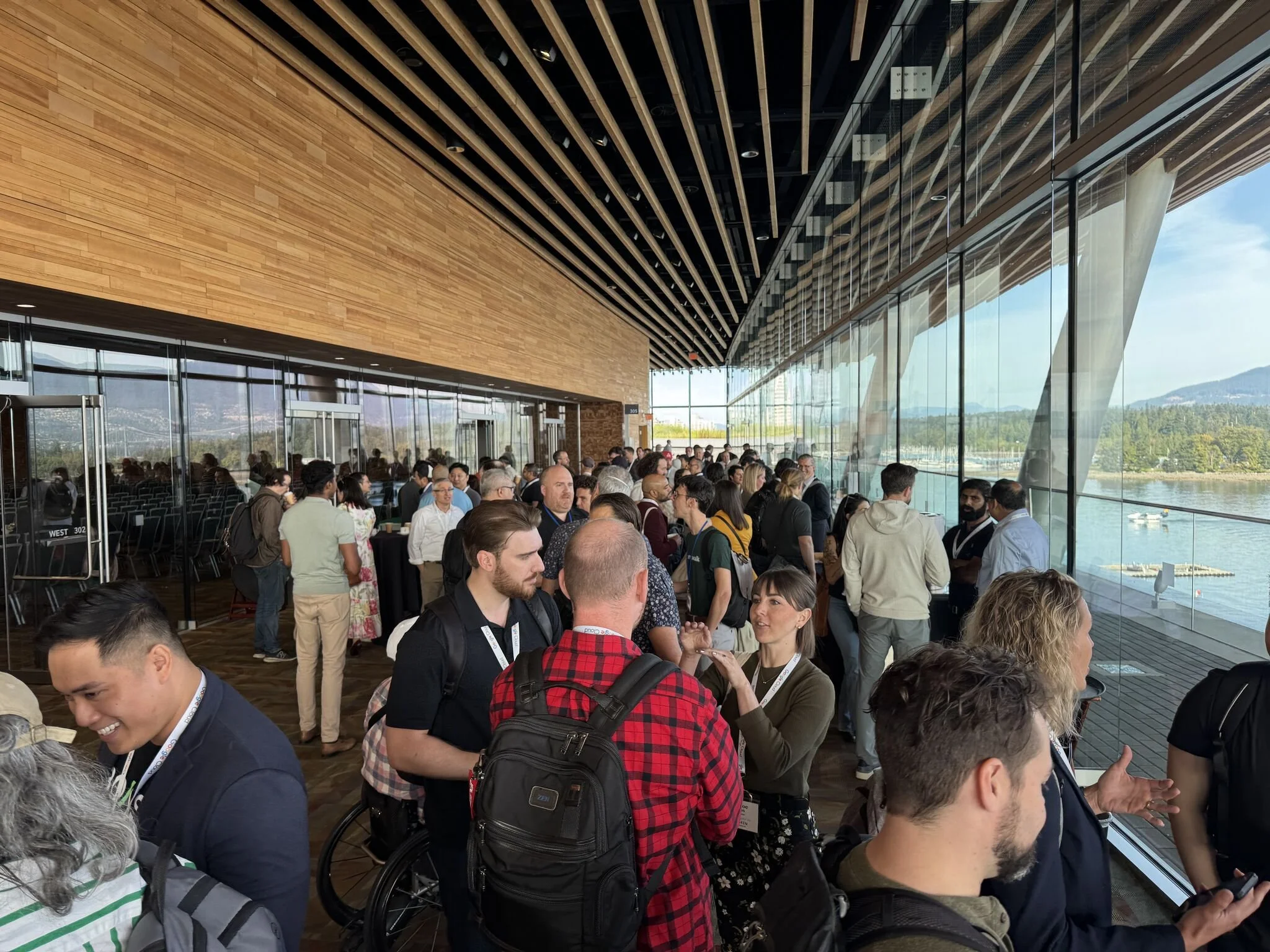
Look how sunny it is outside…
2. Delivery
Like any good early-stage startup, the first two Founders Days were a success in large part because of the shared willingness of everyone involved to roll up their sleeves and “get it done”. Sponsors showed up at 6:00 am to stuff badges into plastic name tags. Lawyers and bankers scanned attendees at registration and handed out lanyards. Speakers ran around trying to find their fellow panelists and ensure that everyone got on stage at the right time.
That’s fun and exhilarating once or twice, but it’s not sustainable. Especially not when the novelty wears off and the hiccups become more glaring to attendees.
Coming into this year, a big focus was on progressing from the inconsistency and unpredictability of a large, volunteer-driven meetup towards something more intentional and well-executed.
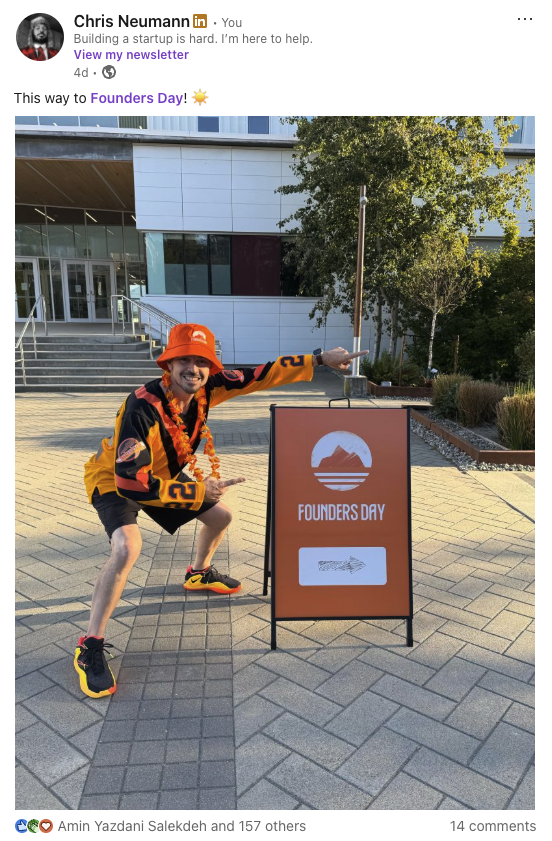
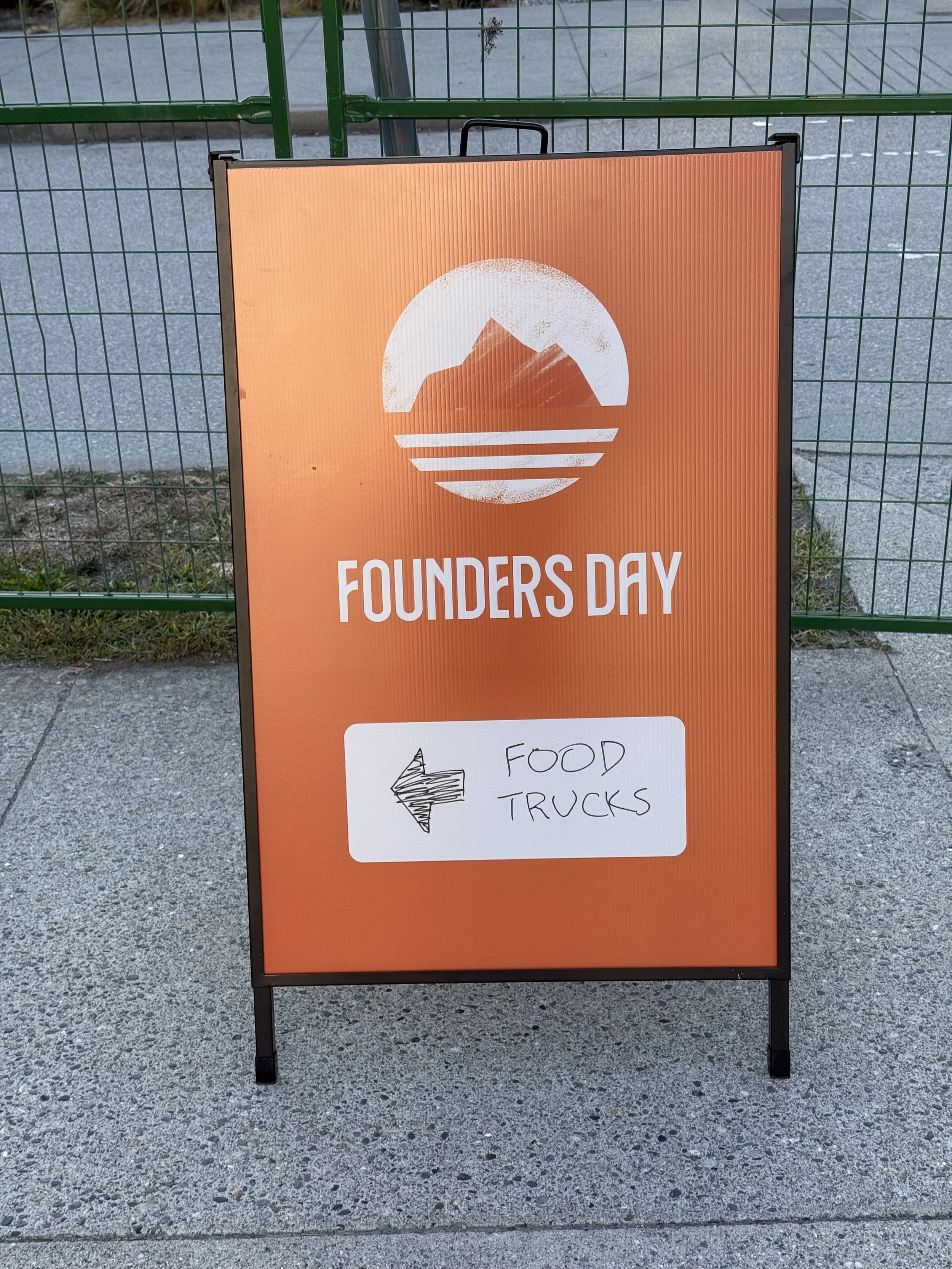
Look! An actual sign with an arrow →
3. Finances
Of course, added infrastructure comes with added costs. To-date, Founders Day has been entirely subsidized by corporate and government sponsors and myself. In order for Founders Day to cement itself as a permanent event in the annual Startupland™ calendar, it needs to be built atop a foundation that is long-term sustainable.
That means, like any startup, we needed to start the long march towards break-even.
The Journey towards Product-Market Fit
Continuing along with the startup analogy, year three of Founders Day came with many of the same questions that all early-stage startups face as they progress towards product-market fit:
Will free MVP users pay for it?
Can you maintain what makes the core offering special while adding new features and making it more robust?
How do you navigate conflicting user feedback and decide on a roadmap and priorities?
How will you evaluate the success of the new version?
We made a number of changes this year to both the event and the organization/infrastructure behind-the-scenes. In other words, we rebuilt the MVP from the ground up, added a bunch of new features and released version 3.0 to the world.
If I were to write technical release notes for this year’s Founders Day, they would look something like this:
Release Notes - Founders Day 3.0
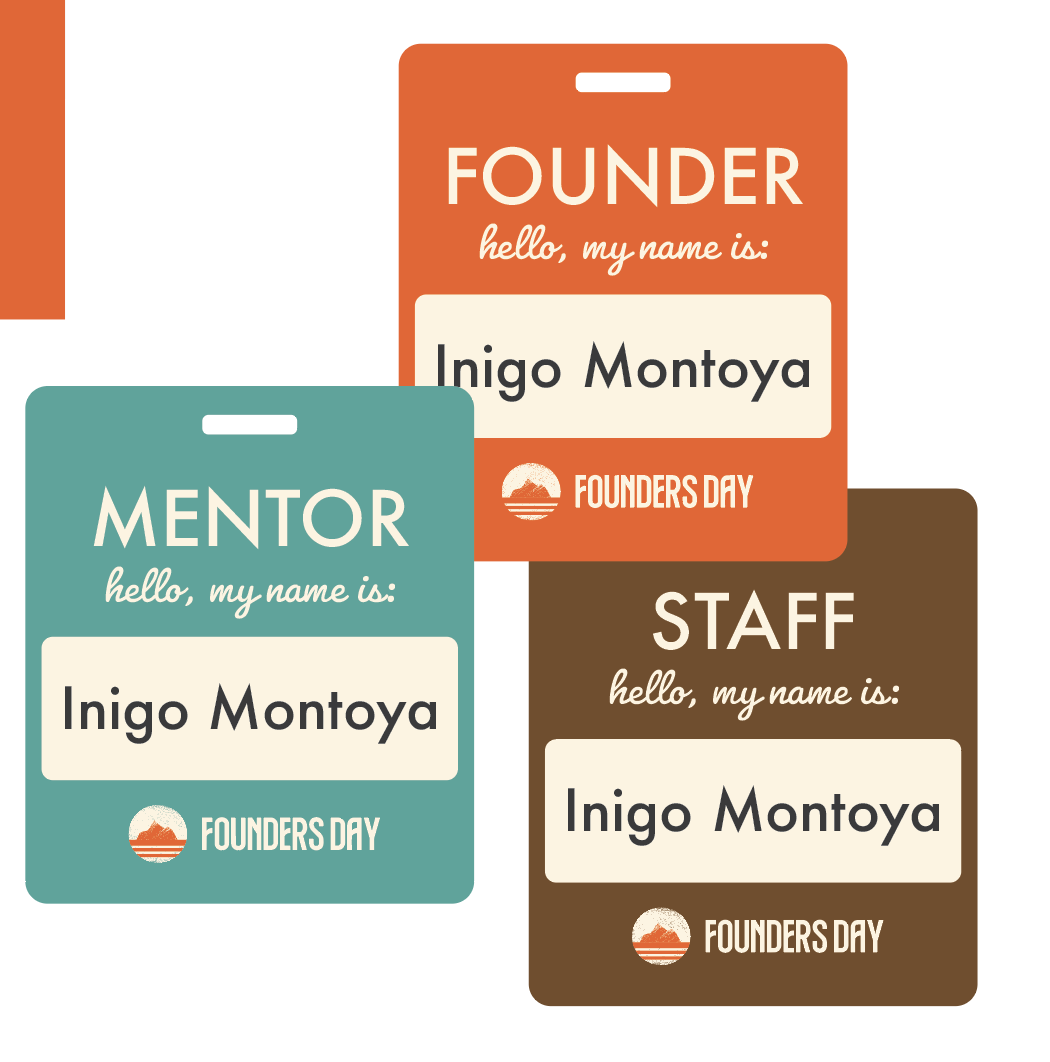
New branding and design languageCompletely redesigned UI/UX (new venue)Improved user onboarding (actual conference badges, expanded registration area with redesigned staffing, improved signage)Redefined user roles
Blue = Founders, studentsOrange = Speakers, mentors, ecosystem championsBrown = Sponsors, investorsWhite = Staff, volunteersEnhanced in-app user support (on-site F&B)Improved and expanded partner integrations (more sponsors and community partners, many of whom exhibited at Founders Day)Platform and stability upgradesMisc. bug fixes
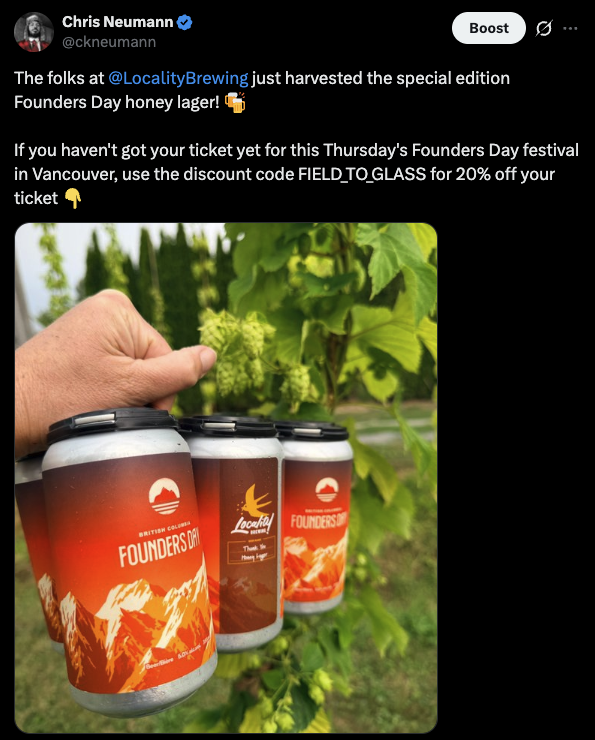
Enhanced user support 🍻
What does all of that look like, practically speaking? Here are some of the bigger changes we made for Founders Day 2026:
By far, the biggest change to Founders Day was the move from the Vancouver Convention Centre to a new outdoor venue. That was a huge undertaking, as it meant moving from a “turn key” venue to one where we had to bring everything in ourselves (from the stage, A/V setup and seating to fencing, garbage, and even porta potties).
The shift from “turn key” venue to custom experience wasn’t limited to the stage show. For the first two years of Founders Day, the networking event took place at a bar about 15 minutes from the convention centre. For year three, I wanted everything to be in one place. We brought in food trucks, concession stands, coffee bars, local beer and wine vendors and even an ice cream truck (the latter courtesy of local startup IcePanel). That kind of effort required procurement, power and permits. Lots and lots of permits…🤦♂️
Completely rethinking the venue for Founders Day meant a massive expansion to the team. The first two events relied heavily on convention centre staff for much of the behind-the-scenes logistics. For year three, we had to assemble a full-blown event and production team from scratch. That included event planners, a stage team, A/V staff, videographers and photographers, on-site security and more. Plus a whole lot of volunteers (shout out to Chris Hobbs for recruiting, training and supervising all of the amazing Founders Day volunteers 🙏).
Another seemingly simple but significant effort was on the design side. Founders Day 1.0 had a Luma page and a LinkedIn post. Version 2.0 had a Luma page, a LinkedIn post and a SquareSpace website. Founders Day 3.0 had my long-time collaborator Gail Yui. In the months leading up to this year’s Founders Day, Gail performed a top-to-bottom branding exercise that touched every aspect of the event, from signage and attendee badges to exhibiter booths and volunteer t-shirts to beer cans and bucket hats (plus, of course, the LinkedIn page).
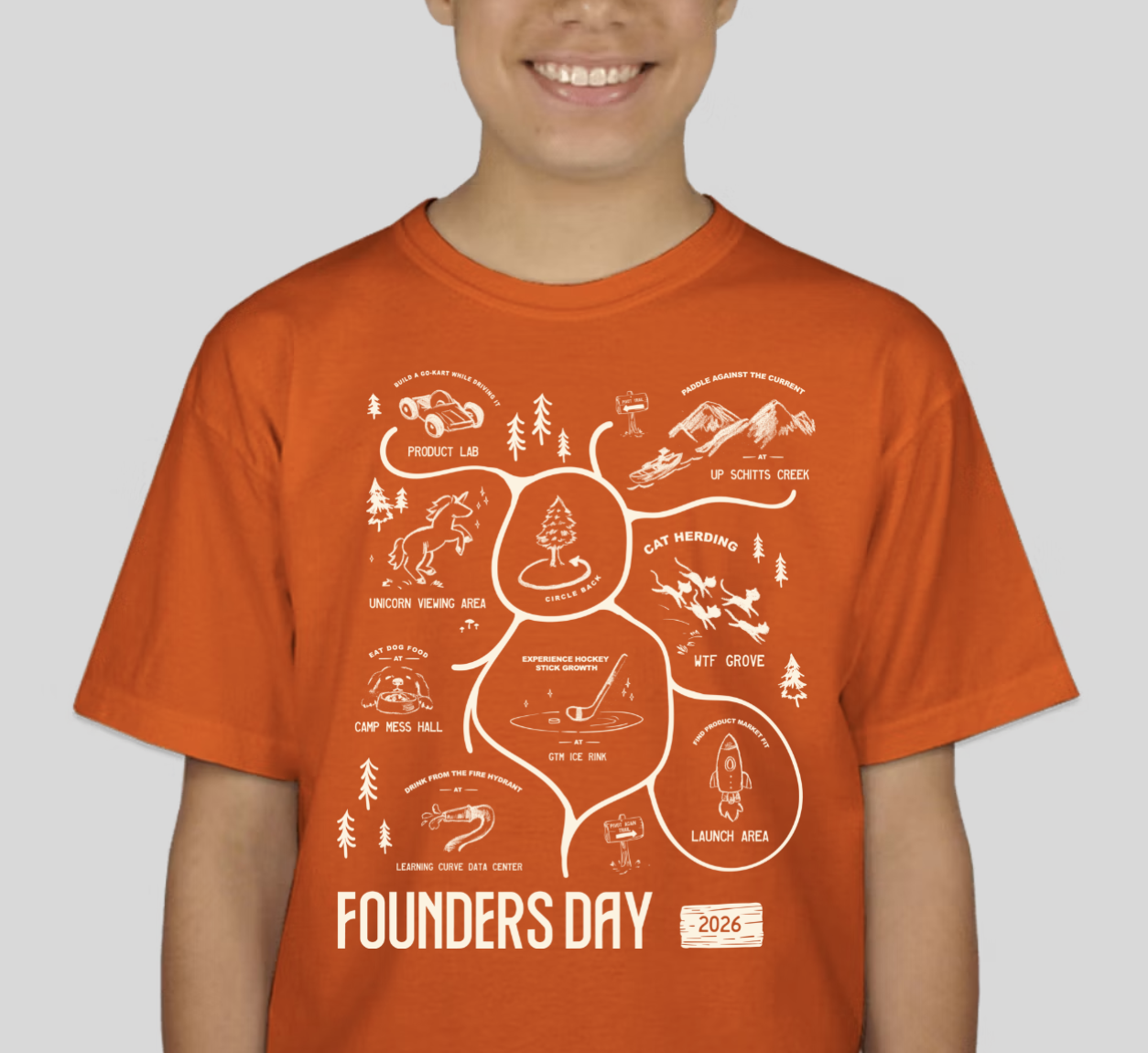
For all of the changes we made to this year’s event, we tried hard to stay true to the original vision of Founders Day: to facilitate and encourage connections between founders. In his seminal book, Startup Communities, Brad Feld observed that,
“Building a startup community is not a zero-sum game in which there are winners and losers: if everyone engages, they and the entire community can all be winners.”
This year’s Founders Day had nearly 100 experienced founders and investors speaking to and mentoring up-and-coming founders — many of whom flew in just for this event.
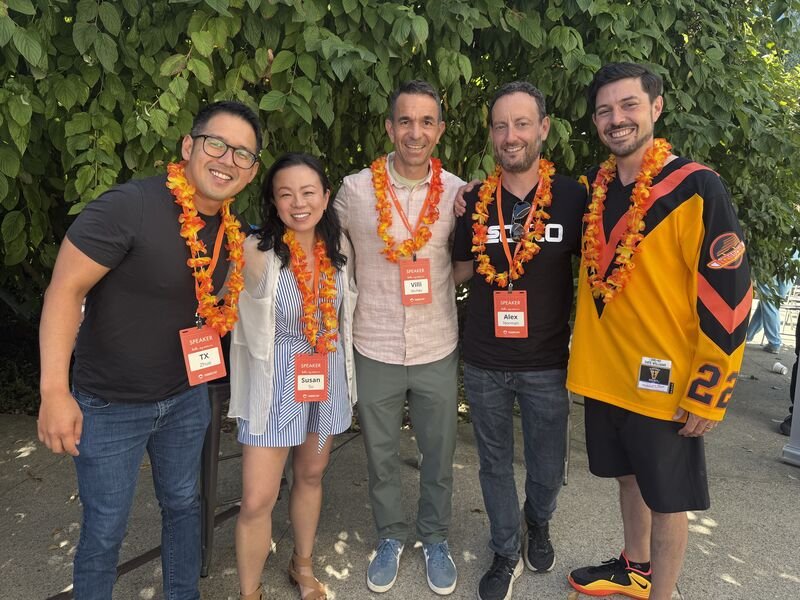
These speakers flew in from San Francisco, LA, Toronto and Seattle ✈️
The Results?
So what did attendees think of Founders Day 2026?
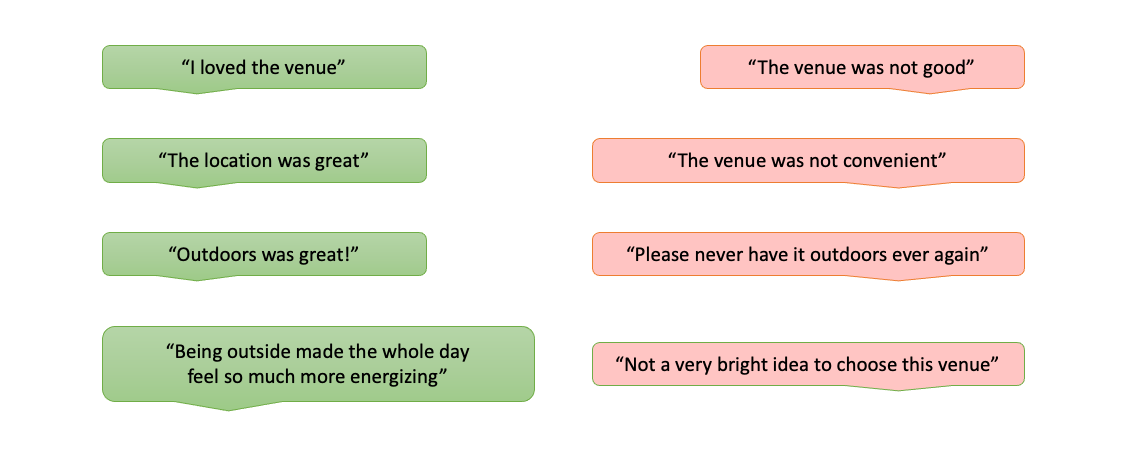
🫠
The thing about building in public is that if you’re doing something that matters to people, then they are going to have opinions.
Strong opinions.
And that’s okay. In fact, it’s great!
Genuine customer feedback is a signal that people care about what you’re building. They may not agree with everything you’re doing. They may not like all of the decisions you make. They might get really loud and upset when things break. But that means they care about your product and the problem you’re solving.
And it’s infinitely better than silence. (It’s also why the field of product management exists.)
If the volume of attendee feedback alone is any indication, then Founders Day is trending in the right direction:
Founders Day 2024: 7 people provided feedback
Founders Day 2025: 37 people provided feedback
Founders Day 2026: 102 people provided feedback (so far…)
Of course, that’s not the only metric that matters. So here is my honest review of Founders Day 2026:
Founders Day 2026: The Good, The Bad and the Ugly
Let’s start with the good:
From a product-market fit perspective, the biggest win of Founders Day 2026 was that we had almost as many founders, investors and ecosystem supporters buy paid tickets as attended for free in 2025. (We didn’t have as many registrations as last year, but that was to be expected given how many people register for free events without giving much thought to whether or not they actually plan to attend.)
At a more granular level, attendance figures for many ticket categories, including prospective founders/students, investors and ecosystem supporters, were up significantly compared to last year.
Other than running out of cold brew coffee towards the end of the day, the logistics for the food trucks, bars and concessions all went off without a hitch.
The registration process — which was a disaster in years past — was smooth and seamless.
Attendee feedback on the founder mentoring and networking portions of Founders Day 2026 was through the roof. 📈
We ever-so-slightly beat our revenue objective for this year’s event (revenue = sponsorship dollars + ticket sales).
Finally, we got strong subjective feedback from the majority of attendees at this years event, including a 4.3/5.0 event rating on Luma and broadly positive feedback both publicly on social media and privately through attendee surveys.
Next, the bad:
Overall attendance was slightly down compared to last year. We already know some of the reasons for this (e.g. marketing for this year’s event started later than planned due to delays in securing the venue). In the coming weeks, we will dig deeper into attendance statistics and feedback to see what other lessons are to be had.
Some of the decisions we made around the venue layout and configuration led to challenges with the A/V setup (e.g. in some areas of the venue the sound was too loud while in others it was inaudible).
Although we met our revenue target for this year’s event, expenses significantly exceeded our original estimates (primarily due to delays and unforeseen challenges with the new venue). Founders Day 2026 was never projected to break even, but the overruns definitely led to a larger deficit than planned.
Finally, the ugly:
This biggest miss of this year’s event came from the main stage seating layout. Our team spent significant time and effort developing contingency plans for rain, but we didn’t anticipate that last Thursday would be one of the hottest days of the year in Vancouver. The result? For significant portions of the day, it was entirely too hot and sunny for most people to watch the main stage presentations from the audience seating.
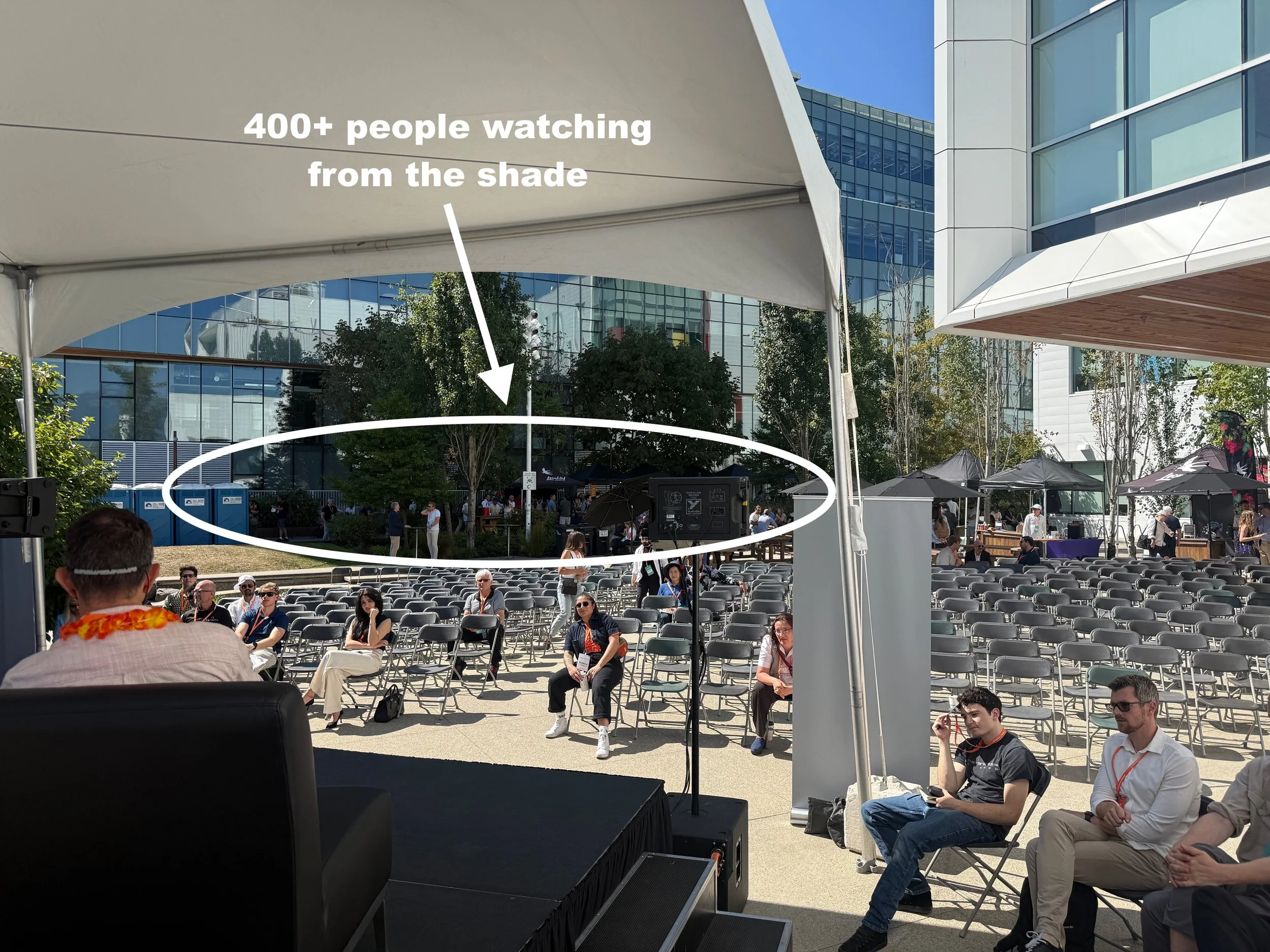
The change in audience flow resulting from the heat led to a number of additional challenges, most notably on the audio side. The speakers that lined the outside of the seating area weren’t configured to overcome the ambient noise from 400+ people mingling in close quarters. That meant many of the attendees standing in the shade were unable to clearly hear the panelists for significant portions of the day (though, rest assured, all of the sessions were recorded and we’ll post the videos soon!).
What’s Next for Founders Day?
Despite the hiccups that happened with this year’s event, Founders Day 2026 was an unquestionable success.
It delivered on the core value proposition we originally set forth while making considerable improvements over the “MVP” of years one and two. We also made meaningful progress on each of the three high-level objectives defined at the beginning of our planning cycle, which is a big deal when it comes to evolving into something that is long-term sustainable.
Of course, there is still plenty of work to be done on the journey towards product-market fit. Founders Day 3.0 had its fair share of “bugs” and there remains a healthy backlog of feature requests. In the coming weeks, we’ll dig deep into all of the feedback we received from speakers, mentors, sponsors and attendees and unpack the many lessons and learning’s from Founders Day 2026.
After that, it’s time to get to work on Founders Day 2027!
We’ve already got a tentative date soft-circled and clear ideas for how to make next year’s event even better, so stay tuned.
In the meantime, I want to thank all of the vendors, volunteers, speakers, sponsors, mentors and founders who made Founders Day 2026 happen. This year’s event wouldn’t have been possible without each and everyone one of you.
Thank you to our many corporate and government partners, including:
Presenting Partner: Fasken Emerging Tech
Gold Partner: Innovate BC
Silver Partners: AWS, Conference Badge, DuploCloud, IcePanel, Launch, New Ventures BC, Osler, Remitly and Web Summit Vancouver
And thank you to the many incredible people who contributed to Founders Day 2026 in ways big and small, including: Alex Conconi, Alex Norman, Alexandra Greenhill, Ali Pejman, Allen Pike, Amin Yazdani, Andrew Fursman, Andrew Harries, Andrew Vilcsak, Anthonia Ogundele, Arif Khimani, Ath Caramanolis, Bijan Sanii, Bill Tam, Brandon Waselnuk, Chris Albinson, Chris Hobbs, Colin Harris, Conrad Whelan, Daniel Eberhard, Darrell Kopke, David Luba, Dennis Pilarinos, Derrick Emsley, Diraj Goel, Edoardo de Martin, Edward Chiang, Gary Agnew, Glen Lougheed, Handol Kim, Ian MacKinnon, Irene Dorsman, Jack Newton, Jacob Shadbolt, Joel Hansen, Josh Nilson, Karm Sumal, Landseer Enga, Mayor Ken Sim, Kenndal McArdle, Kim Kaplan, Kris Hartvigsen, Michael Buhr, Michael Henson, Nejeed Kassam, Noah Stanford, Olivier Vincent, Praveen Varshney, Ray Walia, Reza Sanaie, Reza Arbabian, Serge Salager, Shivam Kishore, Sophia Millar, Susan Su, Tanis Jorge, Tifanee Po, TJ Rak, TX Zhuo, Vik Kambli, Villi Iltchev, William Johnson, Wilson Tang and Yen Lee (sorry if I missed anyone!!).
See you all at Founders Day 2027.